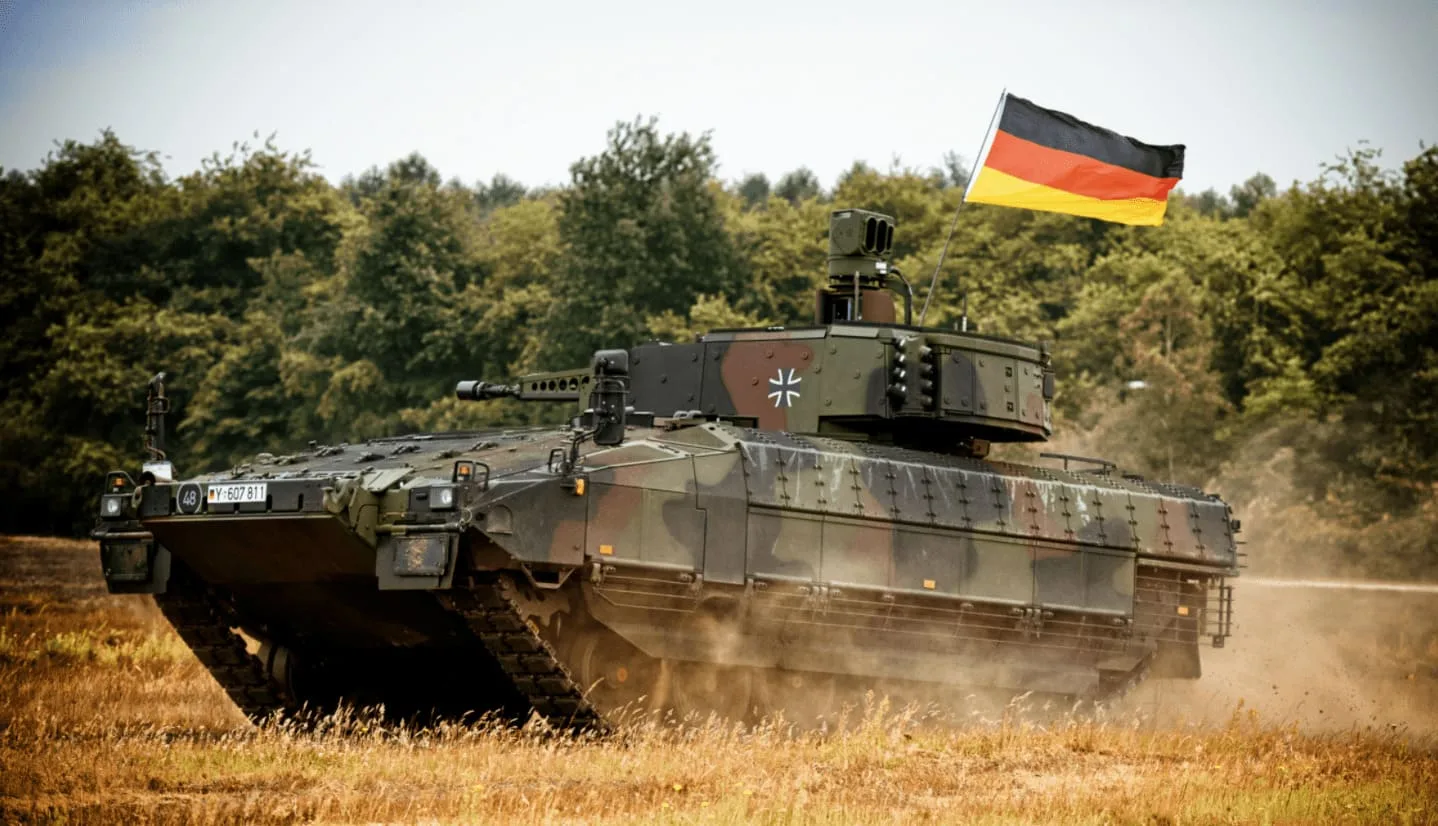
Through the publication of a brief press release dated December 19, the German companies Rheinmetall and KNDS announced that Germany has ordered the purchase of 200 new Puma Infantry Fighting Vehicles (IFVs) to equip its Armed Forces, in a deal that will require an investment of approximately €4.2 billion by Berlin. According to the information released, this is a contract that will enter into force during the current month, with the goal of completing deliveries by 2028, and which already bears the signature of the Federal Office of Bundeswehr Equipment, Information Technology and In-Service Support (BAAINBw).
It is worth recalling in this regard that the aforementioned office had already placed an order for an initial batch of 50 vehicles in May 2023, while also establishing a framework agreement that would allow the number of Puma IFVs acquired to be expanded in the future. This agreement also included the procurement of various additional elements, such as protection modules and those related to their storage. Now seeking to meet NATO’s new requirements for its mechanized units, the announcement of an order for the aforementioned 200 vehicles represents a considerably higher figure than that estimated in June 2025, when investments of up to €1.5 billion were projected for a batch of 61 vehicles.
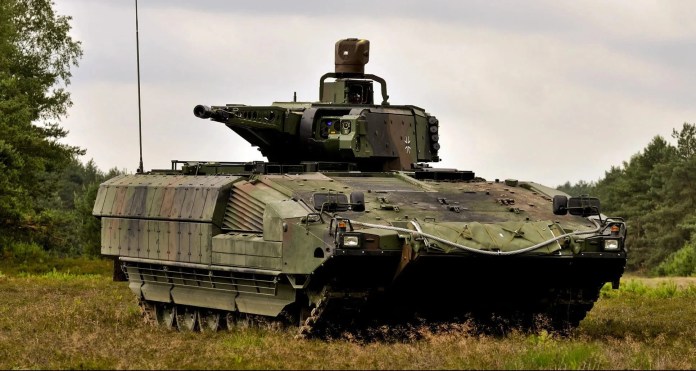 Puma Infantry Fighting Vehicles (IFVs)
If we briefly review the technical characteristics of the Puma IFV to understand what it brings to German troops, it can be noted that it offers the capacity to transport teams of up to six soldiers, not including the three-man crew (commander, driver, and gunner). These personnel can be protected until deployment on the battlefield by armor meeting STANAG Level 6 standards, as well as by the MUSS 2.0 active protection system. It is also known that these armored vehicles are powered by a propulsion system consisting of a 1,090 hp MTU V10 diesel engine coupled to a Renk HSWL 256 transmission, allowing for road speeds of up to 70 km/h.
As its main armament, the Puma is equipped with a fully stabilized 30 mm MK30-2ABM automatic cannon, in addition to a coaxial 5.56 mm HK MG4 machine gun for engaging enemy infantry. Furthermore, as part of this new batch of 200 vehicles, Germany would also equip the Puma IFVs with MELLS missiles, a European variant developed by Rheinmetall and Diehl Defence of the Spike LR missile produced by the Israeli company Rafael. According to the manufacturer, this weapon system will allow attacks against targets at distances of up to 4 kilometers, without the vehicle needing to be in the enemy’s line of sight, as is the case with current gun systems.
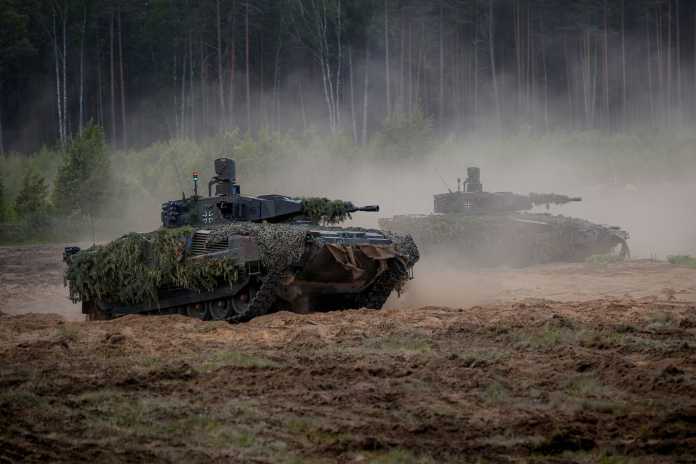 Puma Infantry Fighting Vehicles (IFVs)
In addition, Berlin has already planned the modernization of up to 297 vehicles from the current inventory to the standard known as “S1,” which not only предусматриes the integration of the aforementioned MELLS missiles. Along these lines, Rheinmetall has indicated that this upgrade will also include the incorporation of a new high-resolution day- and night-vision camera system, as well as digital radio equipment that will facilitate integration with other units as part of a networked force. If current schedules proceed without major issues, the listed work should be completed by 2029.
Finally, it should be noted that Rheinmetall and KNDS expect to receive a further contract amendment by mid-year, which would set out the details of a new S2 standard for the Puma IFVs. In particular, this measure is intended to integrate new counter-drone defense capabilities onto the platform, based on the design of the Jackal armored vehicle turret, thereby enhancing the vehicle’s ability to operate in modern combat environments.
*Images used for illustrative purposes
You may be interested in: The British Army’s new RCH155 wheeled howitzers will undergo testing and evaluation in Germany