Published on
January 7, 2026
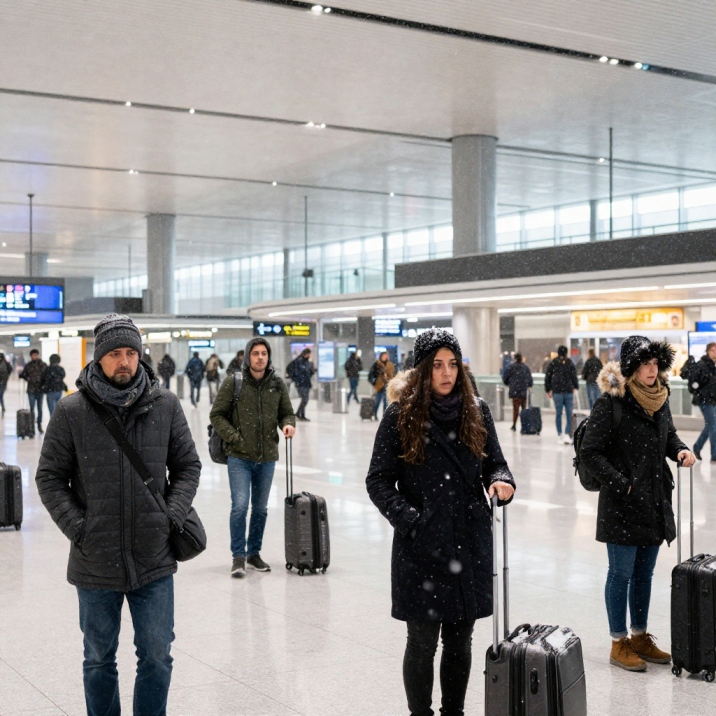
Flight operations across Germany are currently facing severe disruptions, creating a challenging environment for thousands of travelers. Major aviation hubs including Frankfurt and Munich report the highest frequency of service interruptions today. Passengers in Berlin and Hamburg are also experiencing significant wait times as schedules shift unexpectedly. Meanwhile, the terminals in Düsseldorf, Stuttgart and Hanover remain crowded with displaced commuters seeking alternative routes. Heavy operational pressure is being felt by prominent carriers like Lufthansa and KLM, both of which have canceled numerous flights. Additionally, regional partners such as Air Dolomiti are struggling to maintain their planned departures. These delays ripple through the entire European network, making real-time updates essential for everyone involved. There’s a total of 63 flight cancellations and 1,110 delays reported. Travelers should monitor their flight status closely before heading to the airport. This report provides a detailed breakdown of the current statistics and offers guidance for those navigating this logistical crisis.
The logistical challenges are distributed across the country’s most vital air corridors. The following airports have reported the most significant deviations from their scheduled operations:
Frankfurt (FRA): As Germany’s busiest terminal, Frankfurt has recorded 11 total cancellations and a staggering 474 delays. The sheer volume of delayed flights here serves as a primary source of network-wide tension.Munich (MUC): In the southern hub of Munich, 12 cancellations and 203 delays have been reported, significantly impacting transcontinental and regional connections.Berlin-Brandenburg (BER): The capital’s airport, Berlin, is grappling with 12 cancellations and 119 delays, primarily affecting short-haul European routes.Dusseldorf (DUS): Operations in Düsseldorf have been hampered by 9 cancellations and 110 delays, leading to significant congestion in the terminal buildings.Hamburg (HAM): Northern Germany travel has been disrupted in Hamburg, where 7 cancellations and 104 delays were confirmed today.Stuttgart Echterdingen (STR): Regional traffic in Stuttgart has seen 7 cancellations and 73 delays.Hanover/Langenhagen (HAJ): In Hanover, 5 cancellations and 27 delays have been registered, reflecting the broad geographical reach of the day’s disruptions.
Several major European and domestic carriers are at the center of this travel crisis. The data indicates that the following airlines have been most severely impacted by the current conditions:
KLM: The Dutch flag carrier has faced heavy losses across multiple German stations, totaling 36 cancellations and 13 delays spread across Frankfurt, Munich, Berlin, Hamburg, Düsseldorf, Stuttgart and Hanover.Lufthansa: The German national carrier has experienced 5 cancellations and a massive 312 delays, with the majority of these occurrences centered at its primary hubs in Frankfurt and Munich.Lufthansa Cityline: This regional subsidiary reported 5 cancellations and 37 delays, further straining the domestic network.Air Dolomiti: Focused on southern connections, this airline has faced 1 cancellation and 45 delays today.German Airways: Impacted by 9 cancellations and 2 delays, this carrier’s schedule has been notably thinned at Frankfurt, Düsseldorf and Stuttgart.Air France: The carrier recorded 2 cancellations and 7 delays between its operations in Munich and Berlin.Wizz Air: Two cancellations were specifically noted at the Stuttgart terminal.
The concentration of flight disruptions in Germany is expected to have a tangible effect on local tourism and business hospitality. In cities like Frankfurt and Munich, which serve as major centers for international trade fairs and corporate tourism, the high volume of delays may lead to missed registrations and shortened stays. Hotels in Berlin and Hamburg often rely on a steady influx of weekend and short-term visitors; the cancellation of flights, particularly by regional carriers like KLM and Lufthansa Cityline, often results in last-minute booking cancellations and a reduction in immediate footfall for the local hospitality sector.
In Düsseldorf and Stuttgart, where seasonal tourism and automotive industry travel are prominent, the lack of reliable air connectivity can lead to a temporary downturn in restaurant and local transport revenue. Furthermore, travelers facing delays in Hanover may find their itineraries truncated, reducing the time spent exploring local cultural landmarks. While the long-term impact on German tourism remains stable, the immediate economic ripple is felt by service providers who cater to the hundreds of passengers currently navigating these terminal disruptions.
For those currently caught in the travel chaos across Germany, several immediate steps are recommended to mitigate the impact on their journeys. Under European passenger rights regulations (EC 261/2004), travelers departing from airports like Frankfurt, Munich, or Berlin are entitled to specific forms of assistance.
Verify Flight Status: Before proceeding to the airport in Hamburg or Düsseldorf, passengers are advised to check the latest updates via airline mobile applications or official airport websites.Request Care and Assistance: If a delay exceeds two hours, airlines are generally required to provide vouchers for meals and refreshments. In instances where an overnight stay becomes necessary—particularly relevant for those stranded in Stuttgart or Hanover—the carrier is responsible for providing hotel accommodation and transport.Explore Rebooking Options: Passengers whose flights have been cancelled should seek immediate re-routing to their final destination. Many airlines allow this to be managed through digital platforms, avoiding long queues at service desks.Documentation for Claims: It is essential to retain all boarding passes, receipts for out-of-pocket expenses (such as food or emergency transport) and any written communication from the airline regarding the cause of the delay or cancellation. This documentation is vital for any subsequent claims for reimbursement or compensation.
As the situation continues to evolve, travelers are encouraged to remain in close contact with their respective airlines to ensure they receive the most current information regarding the restoration of normal flight schedules across the German aviation network.
-The information provided is sourced from FlightAware.
