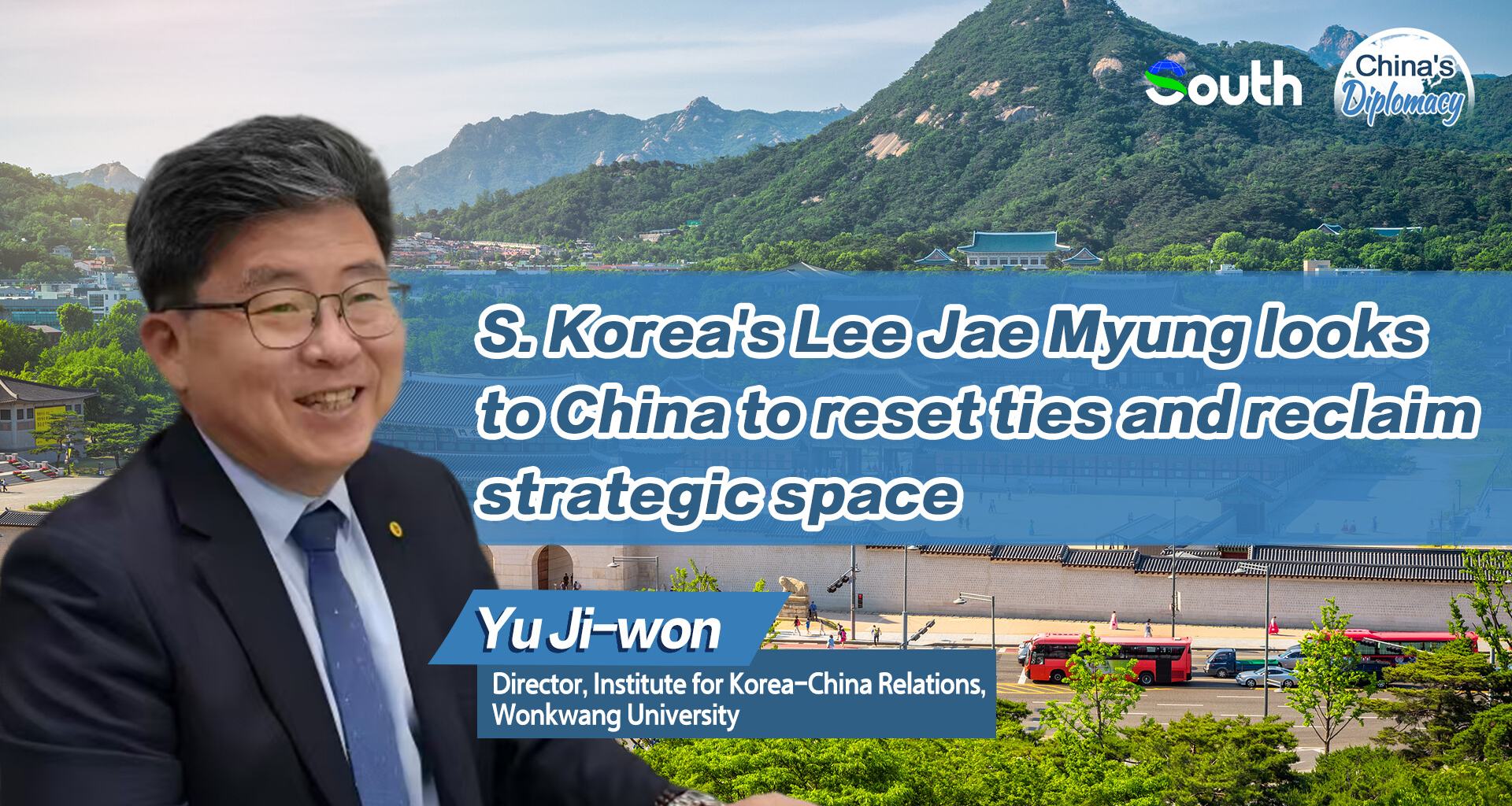
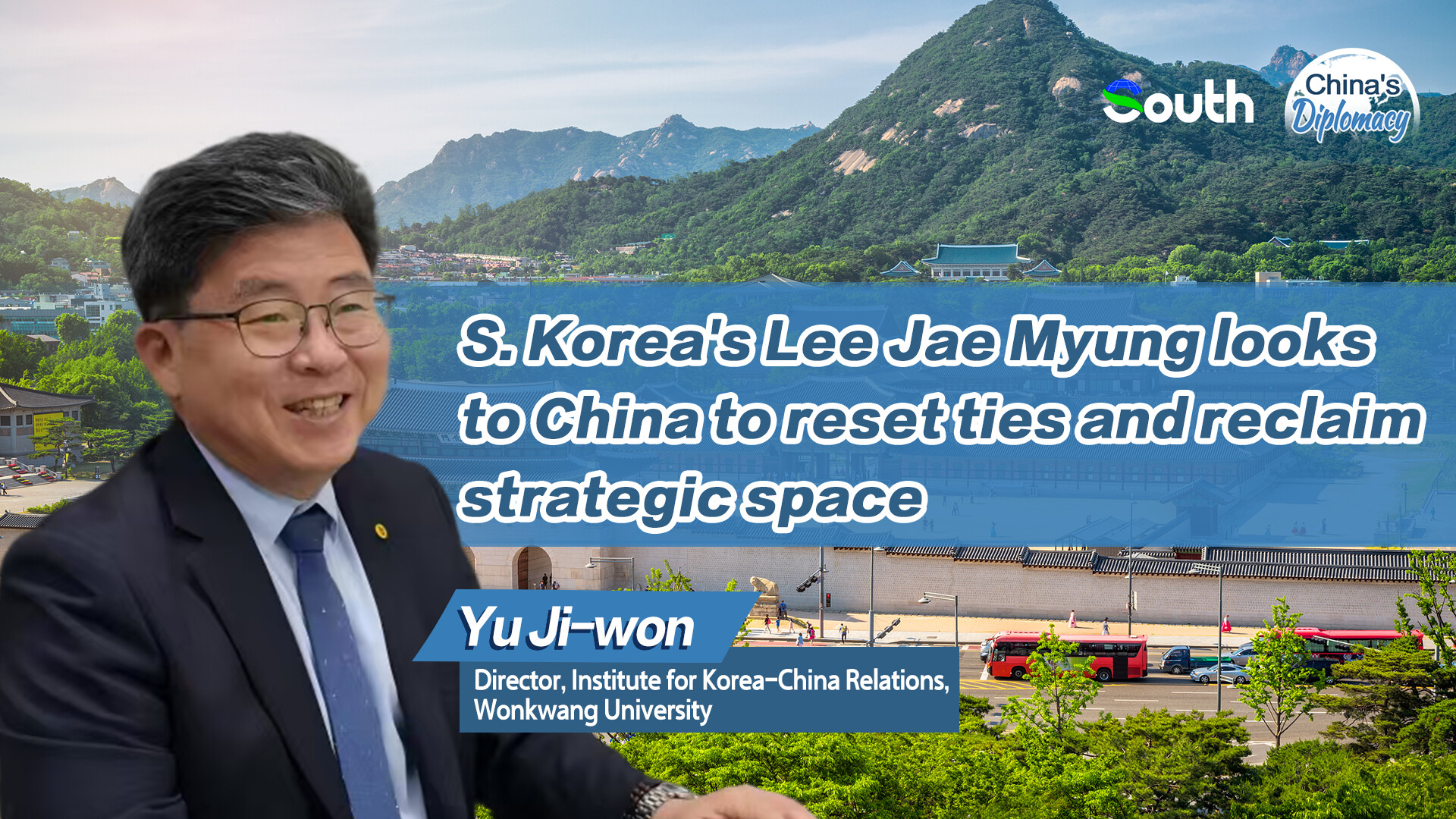
“South Korea has been trapped in the false choice of ‘security with the U.S., economy with China’—and President Lee Jae Myung has decided to break out of it,” said Yu Ji-won, director of the Institute for Korea-China Relations at Wonkwang University, in an interview with South on January 6. “He understands that security and economic interests are not separate spheres but a single strategic whole.”
Yu’s assessment captures the essence of Lee’s ongoing state visit to China, a trip that Beijing and Seoul both frame as a turning point after years of strained ties.
Coming just seven months after Lee took office—and following an earlier visit by the Chinese leader to South Korea—the trip completes a rare round of reciprocal leadership exchanges. The four-day visit from January 4 to 7 is Lee’s first to China as president and the first by a South Korean leader in six years. He is also the first foreign head of state received by Beijing in 2026.
More than 200 South Korean business leaders, including the heads of Samsung, SK, Hyundai Motor, and LG, accompanied Lee, underscoring the economic significance of the visit.
Technology and emerging industries take center stage
“Among all aspects of President Lee’s visit, cooperation in science, technology, and future emerging industries is undoubtedly the most noteworthy,” Yu said.
He noted that the clearest signal of the visit’s priorities came even before formal talks between the two heads of state began, when Lee was welcomed at the airport by Yin Hejun, China’s minister of science and technology.
“This was a powerful message,” Yu said. “China is signaling that it now sees South Korea as a core partner in technological cooperation, not merely as a trade counterpart.”
The substance of the visit reinforced that signal. While Seoul had initially indicated that around 10 cooperation documents would be signed, the final number reached 15, covering scientific and technological innovation, ecological environment, transportation, and economic and trade cooperation.
According to Yu, these agreements point to a structural shift in the bilateral economic relationship.
“For decades, the model was vertical—Korean technology combined with Chinese manufacturing,” he said. “What we are now seeing is a horizontal and more equal model, combining Korean applied technologies with China’s upstream innovation capabilities and its vast domestic market.”
The stakes are high. China has been South Korea’s largest trading partner for over two decades, and bilateral trade has continued to expand despite mounting geopolitical headwinds.
The year 2025 marks the 10th anniversary of the China-South Korea Free Trade Agreement. According to Yonhap News Agency, bilateral trade has increased from $227.4 billion in 2015 to $272.9 billion in 2024, an increase of nearly 20 percent.
During the talks, the Chinese side highlighted that the two nations share close economic ties with industrial and supply chains deeply interwoven, and the bilateral cooperation is mutually beneficial.
Lee, for his part, said Seoul hopes to seize opportunities arising from China’s 15th Five-Year Plan to deepen practical cooperation.
China’s 15th Five-Year Plan opens new avenues for tech cooperation
Yu said South Korean companies should closely watch China’s 15th Five-Year Plan, which places less emphasis on headline growth and more on innovation-driven development—what Chinese policymakers describe as “new quality productive forces.”
He identified three priority areas. The first is the silver economy, as both countries face rapid aging and China’s vast elderly population creates demand in biotechnology, healthcare, and service robotics.
The second is green industries, particularly hydrogen energy and environmentally friendly shipbuilding, as China accelerates its carbon-neutral transition.
The third is digital transformation, combining China’s large-scale data resources with South Korea’s strengths in applied services to develop AI-driven and platform-based business models.
“Korean firms must avoid being locked into manufacturing alone,” Yu warned. “They need strategies that embed them into China’s innovation value chains.”
Yu also pointed to the 2026 APEC Economic Leaders’ Meeting in Shenzhen, scheduled to follow this year’s summit in South Korea’s Gyeongju, as another platform for expanding South Korea’s technological cooperation with economies across the Asia-Pacific.
“Shenzhen is not just another host city—it is the heart of China’s technological rise,” Yu said, citing companies such as Huawei, Tencent, and DJI. He noted that the meeting is likely to underscore China’s position as a major innovation power amid intensifying China-U.S. technology rivalry.
In that context, Yu argued that South Korea should work with other participants to ensure APEC functions as a platform for Asia-Pacific technological cooperation, rather than a geopolitical battleground—focusing on practical, non-political issues such as digital trade rules and climate-related supply chains.
Pursuing strategic autonomy
According to Yu, another noteworthy aspect of Lee’s visit was his deliberate use of historical symbolism in his diplomatic messaging to Beijing.
“The year 2026 marks the 150th anniversary of the birth of Kim Koo, a leader of South Korea’s independence movement, and President Lee chose the former site of the Provisional Government in Shanghai as the final stop of his visit,” Yu said. “This is not a symbolic flourish, but a strategic signal.”
Yu described this as a calculated effort to use shared historical memory—particularly resistance against Japanese aggression, which resonates strongly in China—to lower the salience of sensitive security issues and rebuild political trust as a foundation for cooperation.
Yu believes the visit was also designed to expand South Korea’s diplomatic room for manoeuvre.
“Restoring shuttle diplomacy within seven months of taking office, and travelling with such a large business delegation, sends a clear message,” he said. “South Korea is not choosing sides between Beijing and Washington. If it serves national interests, it will engage with both.”
Yu elaborated that the current South Korean government defines its relationship with China as a pragmatic cooperative partnership based on seeking common ground while reserving differences.
Lee reinforced that position in a recent interview with China Central Television, reaffirming adherence to the one-China stance and emphasizing a development path centered on national interests.
“Through this visit,” Yu said, “President Lee has signaled to both domestic and international audiences that South Korea is pursuing strategic autonomy in its foreign policy.”
Reporter | Liu Xiaodi, Rong Miu Tung (intern)
Poster | Guo Junyan (intern)
Editor | Yuan Zixiang, James Campion, Shen He