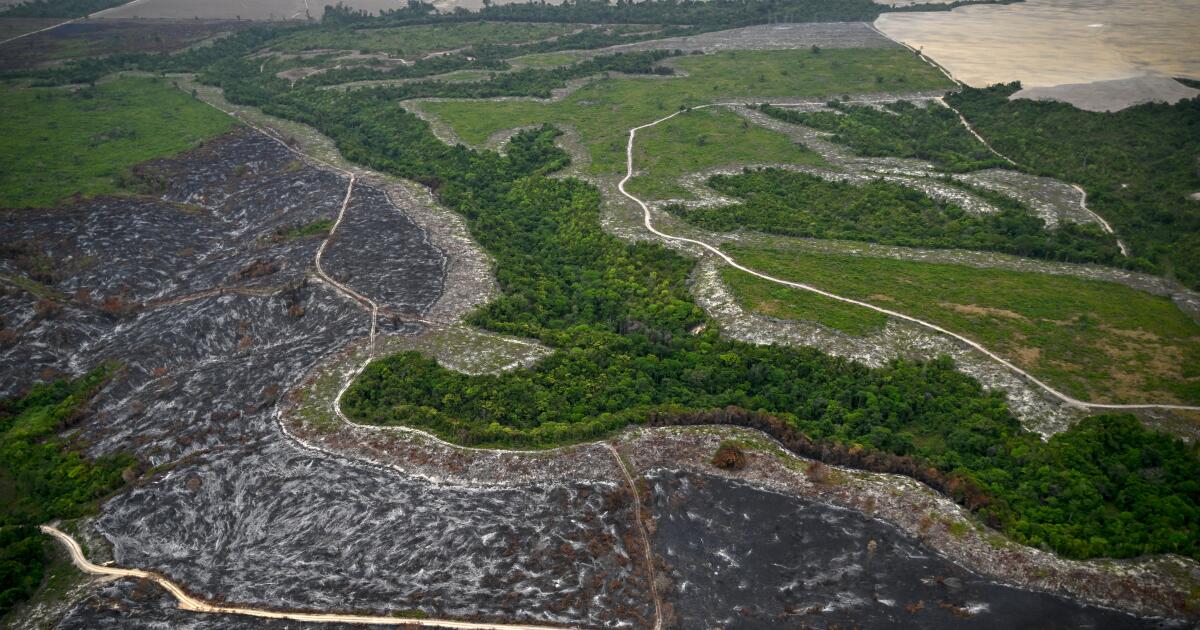
A group representing some of the world’s largest soybean traders is exiting a landmark deal created in Brazil to protect the Amazon rainforest against deforestation. Many of the trees cut down or burned in the region are leveled by people to grow soybeans to feed to livestock.
The industry group Abiove, which has among its associates trading giants Archer-Daniels-Midland Co., Bunge Global SA, Cargill Inc. and Louis Dreyfus Co., said in a statement Monday it is withdrawing from the Soy Moratorium, adding the agreement created in 2006 “fulfilled its historical role.”
The move is a major setback to a 19-year-old initiative that is praised but has faced increasing criticism from farmers in the country.
The moratorium is a pact in which traders promise not to deal in soybeans grown on Amazon lands deforested after 2008. The agreement was contested by agricultural groups such as Aprosoja Mato Grosso, who argue the deal imposes a stricter rule than Brazil’s own national legislation on forest protection.
Abiove’s announcement comes after the top soybean-growing state of Mato Grosso enacted a law removing tax benefits from traders who obey the moratorium. A November Supreme Court decision ruled partly in favor of the state, and as of Jan. 1, traders supporting the pact no longer receive tax benefits. The attorney general has requested a four-month delay to implementing the law.
“The Soy Moratorium was not abolished by legal imposition: It still exists, but it was consciously undermined by the voluntary decision of companies to withdraw,” WWF Brazil, an environmental nonprofit, said in a note. “In doing so, these companies signaled their willingness to prioritize access to tax incentives funded with public resources, to the detriment of tackling deforestation and taking responsibility for the climate crisis.”
(Corrects that the moratorium bans soy grown on land deforested after 2008 in the fourth paragraph.)
Sousa writes for Bloomberg.