Members of the Iowa Business Council (IBC) are feeling more optimistic about the state’s economy over the next six months. IBC’s 2025 fourth-quarter Economic Outlook Survey puts the overall index at 63.16, up 3.16 points from last quarter and above the long-term average. Any score above 50 is positive. The most significant improvement came from sales expectations, while spending plans and hiring intentions also remained solidly positive. “Such a large increase in sales expectations from IBC members provides important insights into growing demand,” Gage Kent, Chairman of the Iowa Business Council, wrote in a news release. “The next six months are critical as we look to take advantage of this optimism and expand business growth and investment in Iowa.” The survey also asked members about their biggest challenges. The top concern was an unfavorable business climate, including issues like supply chain conditions, infrastructure and federal regulations. It was followed by workforce attraction and retention, and health care/insurance costs.
Members of the Iowa Business Council (IBC) are feeling more optimistic about the state’s economy over the next six months.
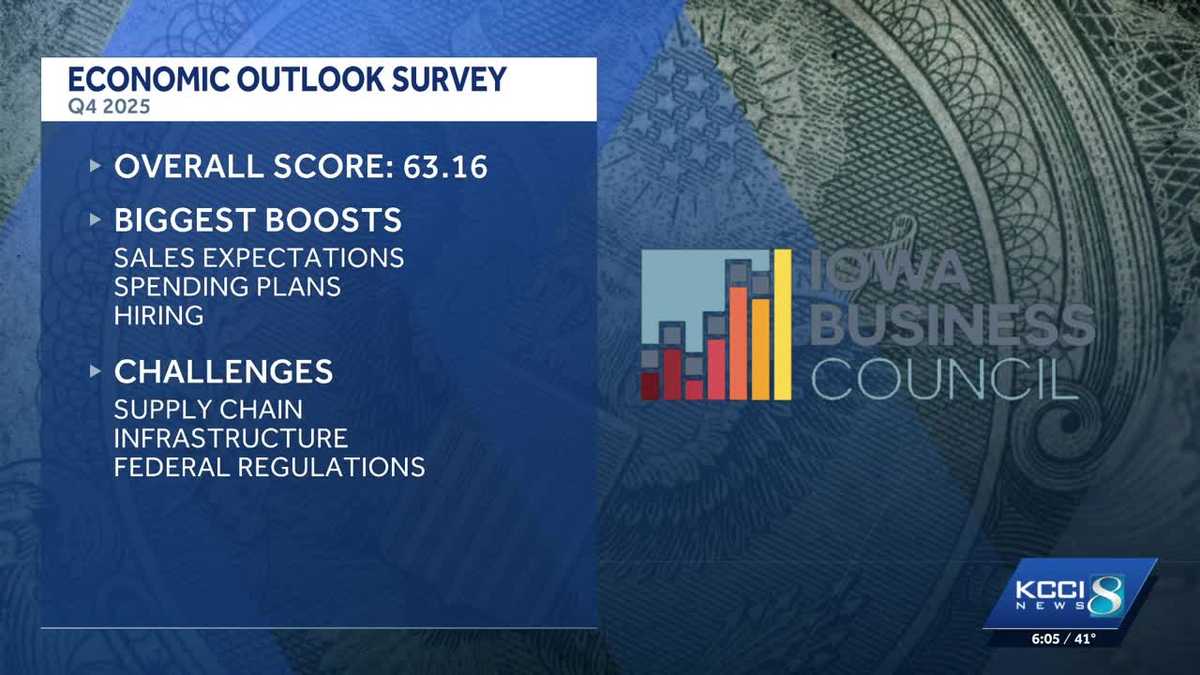
IBC’s 2025 fourth-quarter Economic Outlook Survey puts the overall index at 63.16, up 3.16 points from last quarter and above the long-term average. Any score above 50 is positive.
The most significant improvement came from sales expectations, while spending plans and hiring intentions also remained solidly positive.
“Such a large increase in sales expectations from IBC members provides important insights into growing demand,” Gage Kent, Chairman of the Iowa Business Council, wrote in a news release. “The next six months are critical as we look to take advantage of this optimism and expand business growth and investment in Iowa.”
The survey also asked members about their biggest challenges. The top concern was an unfavorable business climate, including issues like supply chain conditions, infrastructure and federal regulations. It was followed by workforce attraction and retention, and health care/insurance costs.