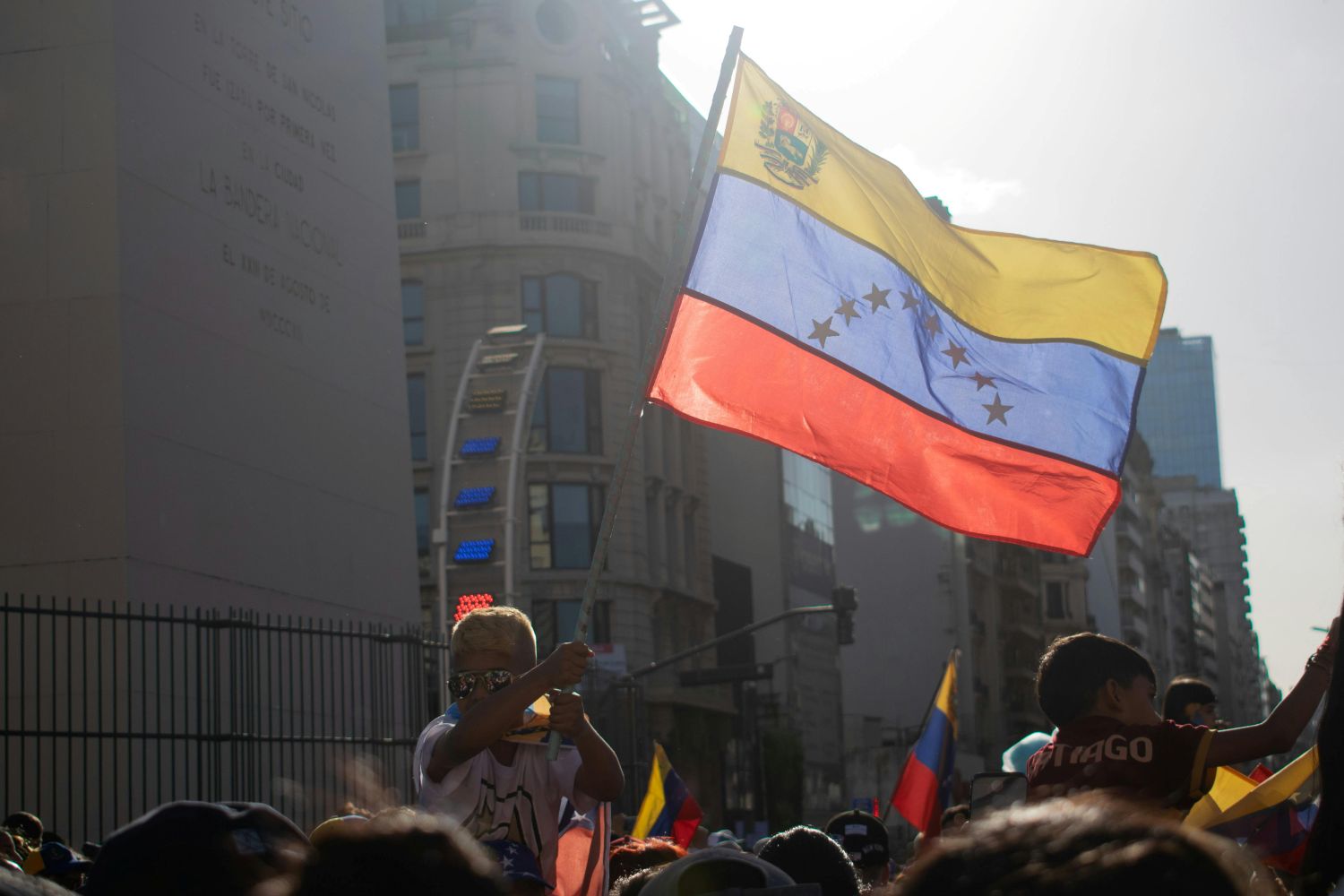
Across Colombia, Ecuador and Peru and beyond, the diaspora of Venezuelan entrepreneurs over the last decades have helped build investment networks to improve conditions for farmers, urban residents and natural ecosystems. They’re eager to do the same for their own country.
“We think about the possibility of returning and applying everything we have learned and built over the years,” says Adriana Mata of Agile Impacts, an impact measurement startup based in Valencia, Spain. (see, “Impact measurement was very complicated — before AI”). “Because we are so deeply connected to the entrepreneurship ecosystem, when we hear this kind of news we feel a lot of hope.”
Proximity to Venezuela was reflected in the range of reactions to the dramatic US seizure of Venezuelan President Nicolás Maduro and his wife, Cilia Flores, on January 3. From afar, the exercise of gunboat diplomacy raised alarms about the rule of law and US designs on Venezuela’s vast oil reserves. Europeans in particular, keenly aware of the fragility of national sovereignty and the threat of force, shuddered at the precedent. A remarkable joint statement from European leaders on Arctic (read: Greenland) security pointedly reminded the US of its 1951 defense treaty with Denmark as well as its NATO obligations.
In Latin America as well, many investors and others rued the broader implications of the possibly extralegal actions. But fund managers and field builders close to the ground also are assessing possible opportunities to play a constructive role in materially improving livelihoods and communities in the once-prosperous country – if and when conditions improve.
“Alongside Venezuelans around the world who have opposed authoritarianism for decades, we remain cautiously optimistic,” Impaqto Capital’s Michelle Arevalo-Carpenter told ImpactAlpha from Quito, Ecuador. “As impact investors, we unequivocally oppose authoritarianism, lack of rule of law and the criminalization of opposition and protest in Venezuela.”
Impaqto Capital is a spin out from Impaqto, the Ecuadorian ecosystem builder co-led by Caroline Brito, a Venezuelan who moved to Ecuador in 2015.
“The key question now is how Venezuela might transition peacefully toward the democracy its people deserve; and, how impact capital could help by leveraging Venezuelan entrepreneurial talent, rebuilding trust in the private sector, and creating inclusive pathways for development rooted in dignity and opportunity,” Arevalo-Carpenter texted.
Over 9 million Venezuelans have left the country since 2014, citing food shortages, violence, and lack of economic opportunity. Not because they wanted to, but because there was simply no other option.
A 2024 poll found that more than 65% of Venezuelan migrants said they would return to their country if the opposition leader, Edmundo González, prevailed in that year’s presidential election. That vote was widely seen as being marred by fraud. Now, with Maduro gone and the country’s leadership in limbo, many Venezuelans are assessing what comes next.
The country’s painful situation, and this week’s events, make her anxious, of course, said Mata, who left Venezuela about a decade ago. Still, “There is a genuine belief among us that entrepreneurship and likely venture capital as well could truly take off if Venezuela opens up,” she told ImpactAlpha. “We do believe that, and we would be willing to work actively to make it happen.”
A new report from Bancolombia, Colombia’s largest private commercial bank, says that an orderly transition and pro-market reforms in Venezuela could attract foreign investment into infrastructure, financial services and other sectors. The report pointed to renewed trade between Venezuela and its neighbors, including Colombia, as well as trade agreements with the US as a result of South America’s new energy and political map.
“The prevailing sentiment at present is one of shock and uncertainty,” says Carolina Suárez Visbal, CEO of Latimpacto, a network of over 1,100 Latin America-focused impact investors . “I’m cautiously optimistic that it could eventually have a positive impact — not only for Latimpacto, but for the region as a whole.”
Suárez Visbal emphasized the importance of democratic principles and respect for people’s self-determination. “At moments like this, it’s essential to keep the focus on citizens and communities,” she said. “Our role is not to pass judgment, but to remain engaged, attentive, and prepared to act in ways that support people and generate positive impact as circumstances evolve.”
Oil and gas mirage
What if you grabbed the world’s largest reserve of oil and nobody wanted it?
Venezuela is thought to have reserves of more than 300 billion barrels of oil, about 17% of the world’s reserves, according to the US Energy Information Administration. On Tuesday, President Trump claimed Venezuela would send the US 50 million barrels of oil, “and that money will be controlled by me,” to benefit the people of both countries.
His administration is already inviting in US oil and gas companies to develop Venezuela’s capacity to pump out that oil (and Venezuela’s oil production of about one million barrels per day is about one-third of its earlier level. Oil industry experts say the president may not get many takers.
“Venezuela doesn’t have the world’s largest supply of easy oil – it has the world’s largest inventory of very difficult oil,” say Guy Prince and Harry Benham of UK-based CarbonTracker. Three-quarters of Venezuela’s reserves are extra-heavy and hard-to-refine crude from the Orinoco Belt, not a stockpile of easy barrels ready to flood the market. It is also some of the dirtiest oil to burn. (Venezuela may also have reserves of critical minerals and rare earth elements.)
With oil supplies already glutted, that high-cost oil will have to compete against lower cost conventional supplies, not to mention cheap renewable alternatives. The reserves may be more likely to remain underground than to ever be burned.
“The political narrative revolves around controlling a vast resource, but the geological and market reality renders that resource largely stranded in place,” say Prince and Benham.
“The oil majors do not need or want more oil,” agreed Andrew Behar of climate-focused shareholder group As You Sow. The lack of interest, he says, shows “low industry confidence due to high costs and a global glut that will bring oil prices down and make renewables even more price competitive.”
Behar points to the Trump administration’s earlier opening up of Alaska’s Arctic National Wildlife Refuge for oil drilling through lease sales. Expectations of a competitive auction for vast revenue did not materialize, he notes. Major oil companies showed very little to no interest; one sale drew no bids at all. Alaska’s own Industrial Development and Export Authority emerged as the primary bidder.
“The Venezuelan colonial grab,” he adds, “is 1950’s thinking back when there was growing demand for oil.”
Experts say attracting private investment into Venezuela’s oil industry would have to include improvements in safety and environmental standards, as well as financial restructuring. One possibility: debt-for-climate swaps or methane-reduction credits that could finance environmental upgrades.
Political risk
The US “is itself unwinding its own global order,” the Eurasia Group proclaims in its overview of top risks for 2026.
In Latin America, where President Trump’s “Donroe Doctrine” asserts American primacy, “This posture will heighten the risk of policy overreach and unintended consequences,” the consultancy concludes.
Markets had already largely priced in the likelihood of regime change in Venezuela, after the months-long US military buildup in the region, according to a report from Wells Fargo. Bonds from the Venezuelan government and PDVSA, the state-owned oil company, have roughly doubled in value in the past 12 months, even though both are in default.
The Wells Fargo report says geopolitical alignment will be the largest factor in Venezuela’s long-term economic outcome. Argentina strongly supported the US intervention, for example. Colombia and Brazil expressed criticism of the US action and may be forced to shift their strategic alignment toward China. Nicaragua already has reaffirmed its ties with China. And Chile can go either way: their president has previously expressed commitment to China, yet also strongly supported Maduro’s removal.
In Europe, people are shaken, at least as much by President Trump’s bellicose posturing around Greenland as by events in far-off Venezuela. Eurasia Group made “Europe under siege” No. 4 on its list of global risks.
Carbon Equity’s Jacqueline van den Ende called the events in Venezuela “the most brazen act of new-age imperialism since Russia’s invasion of Ukraine.” Amsterdam-based Carbon Equity makes small ticket investments in climate solutions. Van den Ende used the development to issue a call for Europe to become independent “as fast as we can.”
“That means, first and foremost, energy independence by tapping our vast renewable resources. It means building a European defence industry. It means investing heavily in education to ensure long-term innovation and competitiveness. It means investing in European technology and tapping our vast pension and household savings to power European progress,” she wrote. “It means putting Europe first, and doing so fast.”
Impaqto’s Arevalo Carpenter agreed the current situation raises serious questions about international law and long-term regional stability.
“For investors committed to sustainable development, the priority remains rule of law, predictability, and peaceful pathways forward,” she said. “Those are the conditions under which impact capital can genuinely serve people.”
ImpactAlpha’s Danielle Rossingh contributed reporting to this article