Venezuela’s state-run oil company, Petróleos de Venezuela S.A. (PDVSA), has begun reducing crude output as U.S. sanctions and restricted export routes intensify the country’s energy crisis.
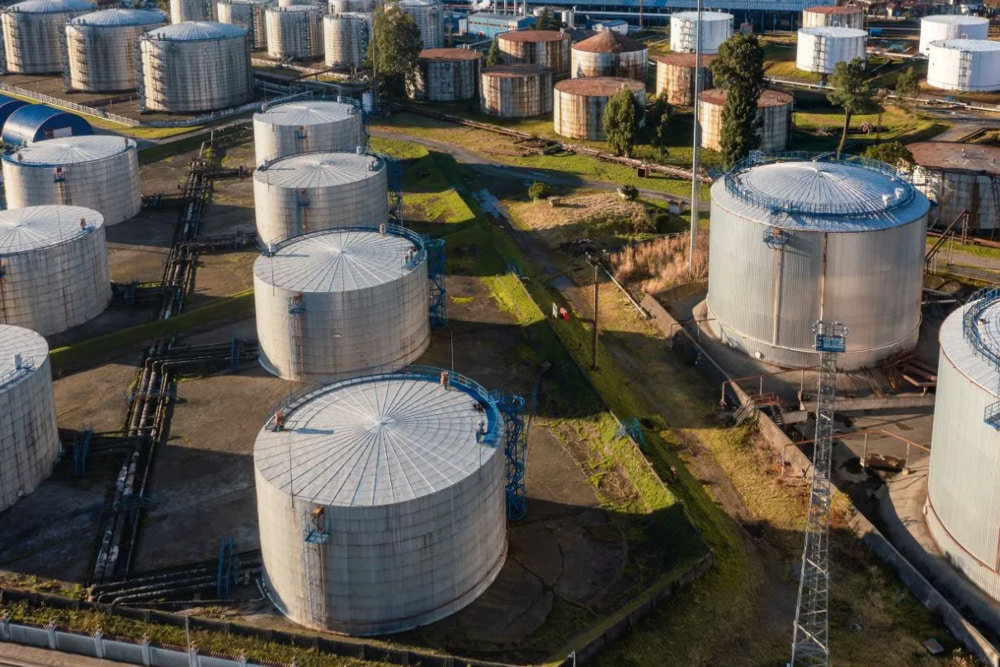
The production cuts come in response to dwindling storage capacity and a blockade that has severely hampered exports — the backbone of Venezuela’s economy.
Reuters reported that PDVSA directed its joint venture partners — including China National Petroleum Corporation (CNPC) and Chevron — to scale back production operations after crude inventories surged and facilities ran out of space to store unexported volumes.
Compounding these difficulties are shortages of diluents — light hydrocarbons vital for blending the country’s extra-heavy crude into exportable grades.
The production slowdown affects several major joint ventures, particularly Petrolera Sinovensa, Petropiar, Petroboscan, and Petromonagas.
The latter, once operated jointly with Russia’s Roszarubezhneft, is now under full PDVSA control after Moscow’s withdrawal due to the tightening web of Western sanctions.
Field sources cited by Reuters said workers at Sinovensa are preparing to disconnect well clusters as stockpiles exceed handling limits.
These wells, however, could be reactivated should exports resume or new storage solutions become available.
The disruption follows the U.S. reinstatement of oil sanctions in late 2025, reversing the temporary easing announced in October 2023 that had allowed Chevron to export Venezuelan crude under special license.
According to Bloomberg and Al Jazeera, the renewed embargo aims to pressure Caracas following escalating political instability and the capture of President Nicolás Maduro and his wife by U.S. Special Forces in December 2025.
In their absence, Oil Minister Delcy Rodríguez has assumed control as interim president, pledging that “production and exports will continue despite external aggression.”
With onshore tanks nearing full capacity, the company has increasingly relied on using oil tankers as floating storage — a practice last seen during the height of sanctions in 2020.
TankerTrackers, which monitors maritime exports, reported that more than 17 million barrels of crude are currently being stored offshore, while no tankers are actively loading at the José oil port, Venezuela’s main export terminal.
The crisis has already halved exports.
Data compiled by Refinitiv Eikon show that Venezuela shipped around 950,000 barrels per day (bpd) in November 2025, but that figure plunged to roughly 500,000 bpd by December under the embargo’s tightening effects.
Analysts warn that production — hovering near 1.1 million bpd before sanctions — could fall below 700,000 bpd if diluent shortages persist and upstream operations remain constrained.
Energy analysts point out that Venezuela’s heavy reliance on crude exports for state revenue threatens not only its economy but its fragile political transition.
The interim government faces mounting public pressure as domestic fuel shortages worsen and refinery feedstock dwindles.
With the U.S. maintaining its embargo and few willing buyers outside sanctioned networks, Venezuela’s path to recovery appears uncertain — one again hindered by the same resource that long sustained it.
Share this story