AIS (automatic identification system) tracking data for the tanker, which can be spoofed or faked, suggests it was in the North Atlantic approximately 2,000km (1,200 miles) west of continental Europe on Tuesday.
Under international law, vessels flying a country’s flag are under the protection of that nation but Dimitris Ampatzidis, senior risk and compliance analyst at maritime intelligence firm Kpler, told BBC Verify changing the ship’s name and flag might not change much.
“US action is driven by the vessel’s underlying identity [IMO number], ownership/control networks, and sanctions history, not by its painted markings or flag claim,” he said.
Ampatzidis added that changing to the Russian registry might cause “diplomatic friction” but would not stop any US enforcement action.
“At present, our vessel is sailing in the international waters of the North Atlantic under the state flag of the Russian Federation and in full compliance with the norms of international maritime law,” Russia’s foreign ministry said.
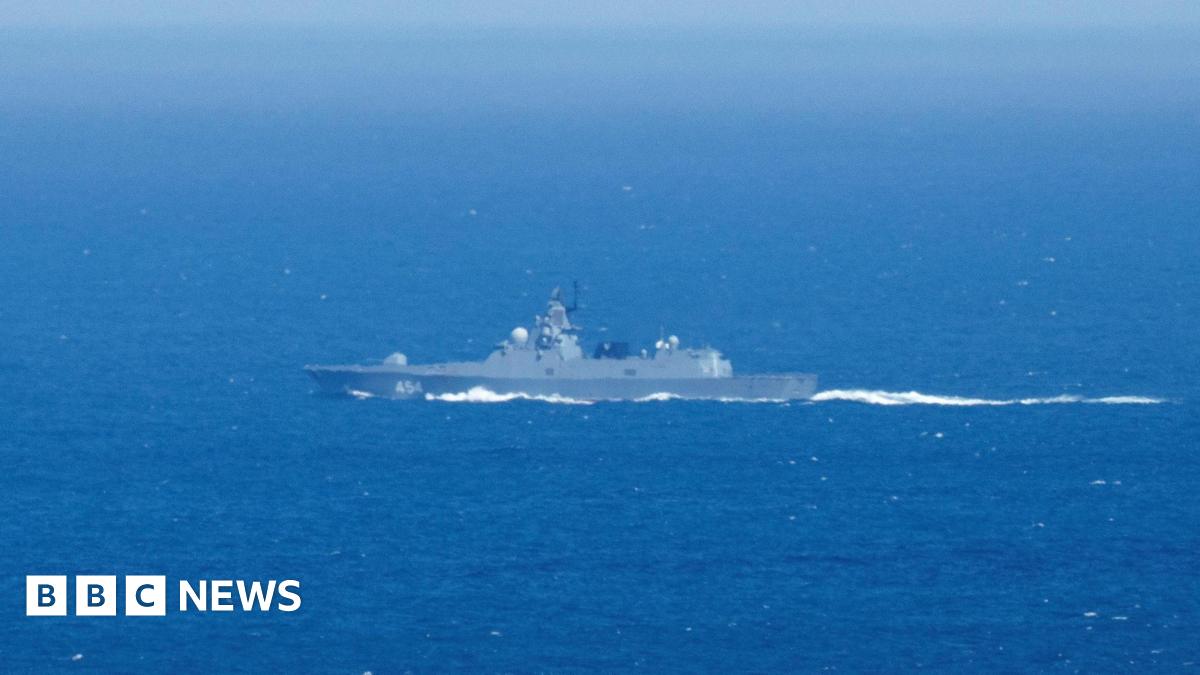
“For reasons unclear to us, the Russian ship is being given increased and clearly disproportionate attention by the US and Nato military, despite its peaceful status,” it said.
“We expect that Western countries, which declare their commitment to freedom of navigation on the high seas, will begin adhering to this principle themselves.”
The potential stand-off over the oil tanker comes days after the US shocked the world with the Maduro seizure from the capital Caracas. It bombarded targets in the city during the operation to extricate him and his wife on suspicion of weapon and drug offences.