Western democracies are just as gloomy as Britain about the failings of their governments and the chances of life getting better any time soon, an international poll has found.
The survey, carried out in 27 countries, including France, Germany, Japan, the United States and Canada, found overwhelming pessimism about the state of politics and the ability of leaders to improve things. Over two-thirds of voters said the political system in their country was “failing people” and needed fundamental reform, while about half believed their public institutions were mostly wasteful, ineffective and badly run. There was little optimism that things were going to improve, with 73 per cent saying life would be harder for the next generation, while 69 per cent said democracy was weakening.
The findings come against a backdrop of growing disillusionment with traditional centrist parties well beyond the UK. In Germany Friedrich Merz has seen support for his ruling CDU party slip from 29 per cent at elections in February to 25 per cent, behind the hard-right Alternative for Germany party on 26 per cent. In France Marine Le Pen’s National Rally is polling at 34 per cent, while Emmanuel Macron’s political grouping is at just 15 per cent.
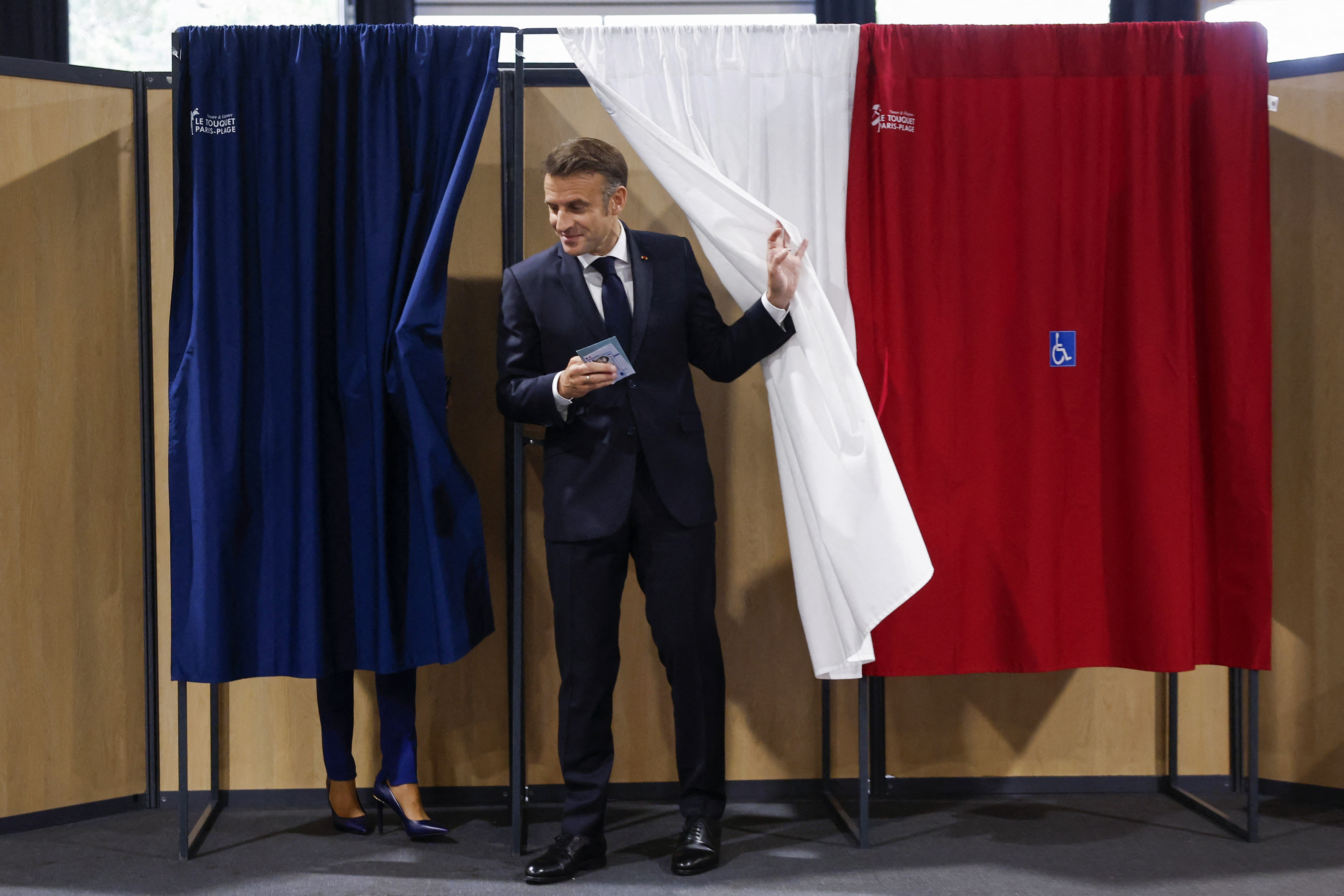
President Macron exits a polling booth to vote in the second round of France’s legislative election in 2024
MOHAMMED BADRA/POOL/AFP/GETTY IMAGES
Even in the US, President Trump’s approval ratings have fallen from plus two when he re-entered the Oval Office in January to minus 17 in the days leading up to Christmas.
The survey of almost 20,000 voters by the consultancy FGS Global found the same political issues dominated voters’ concerns across the different countries. Inflation and the cost of living was cited as the most pressing issue by well over half of all voters in the UK, EU, Japan, Canada and America, followed in Britain and Europe by healthcare and immigration. Two fifths of the public feel worse off than a year ago, versus only 18 per cent who say they are better off.
In the UK, pessimism has markedly increased since a similar survey was carried out last year with more voters saying they expected to be worse off next year than was the case at the start of 2025. More than half of voters now think that the UK’s best days are behind it.
The poll found that voters largely blamed political leaders and the failings of public services for their financial predicament rather than external factors such as inflation triggered by higher energy prices and increased government debt resulting from higher spending during the Covid-19 pandemic.
More than 70 per cent of voters said they were entitled to expect more from their government, while 66 per cent said a competent government committed to spending on the right priorities and cutting waste could deliver what voters expect without needing to increase taxes.
Almost 40 per cent of voters said that none of the political parties in their countries closely represented their views and values, with around the same number saying their country needed a strong leader who was willing to break the rules to get things done.
The poll revealed some differences in views. UK voters were more likely to say their country was divided (89 per cent) compared to the US (84 per cent). British voters were also marginally more likely to say that they felt disconnected from the society around them. There was less vaccine scepticism than the EU, the US or Canada, an issue which is sometimes used to assess trust in government institutions like the NHS.

Sir Keir Starmer
EPA/TOLGA AKMEN
Craig Oliver, a partner at FGS who was David Cameron’s director of communications, said that although the public mood in many Western democracies had been “gloomy” for some time, things had got significantly worse in the last year.
“What is striking from this polling is that pessimism has now reached crisis levels in democracies with significant worries about the cost of living getting worse and the abilities of governments to get things done,” he said, adding that the research identified a “stark” mismatch between the views of the public and those of political and business leaders who were also interviewed.
“Establishment thinking favours things like incentivising entrepreneurs, containing public spending and letting AI flourish,” he said. “The public is diametrically opposed.”