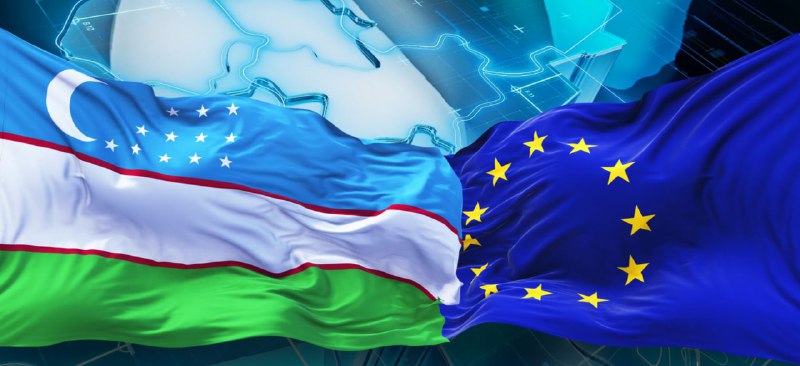
BAKU, Azerbaijan, January 7. The Enhanced
Partnership and Cooperation Agreement (EPCA) represents a major
upgrade in relations between the European Union and Uzbekistan,
Ambassador of the European Union to Uzbekistan Toivo Klaar told
Trend.
“Politically, the EPCA deepens dialogue on governance, the rule
of law, and human rights, clearly signalling the EU’s support for
Uzbekistan’s ongoing reform agenda,” he said.
According to the ambassador, the agreement also carries
important social implications, fostering stronger people-to-people
ties and encouraging further reforms. It helps civil society and
media freedom grow, as well as exchanges between youth, cultures,
and academics. It also helps people work together on migration
problems.
“The EPCA opens up a lot of economic possibilities. By
simplifying trade procedures, reducing technical barriers, and
providing greater regulatory certainty, it creates a solid
foundation for increasing Uzbek exports to Europe and attracting
European investment to Uzbekistan,” Klaar noted.
He added that the agreement also advances cooperation in
critical raw materials and the green economy, aligning with the
EU’s strategic priorities and helping channel investment into
infrastructure and connectivity projects under the EU’s Global
Gateway strategy.
“I would like to highlight the comprehensive nature of this
agreement, which is typical for the EU. The EPCA’s key chapters are
political dialogue, security, trade and investment, environmental
sustainability, digital transformation, and social cooperation.
These chapters are meant to support each other,” he said.
Klaar emphasized that improved market access and increased EU
investment depend on credible reforms in areas such as justice,
anti-corruption, and regulatory quality. He noted that working
together on immigration and border control is closely tied to
overall security and foreign policy. According to Klaar, getting EU
money for green and digital projects is based on promises to be
open about standards and international norms.
He asserted that the EU and Uzbekistan have reached a consensus
over the need of fulfilling all bilateral obligations in a balanced
and mutually beneficial manner in order for concrete benefits to
become a reality.