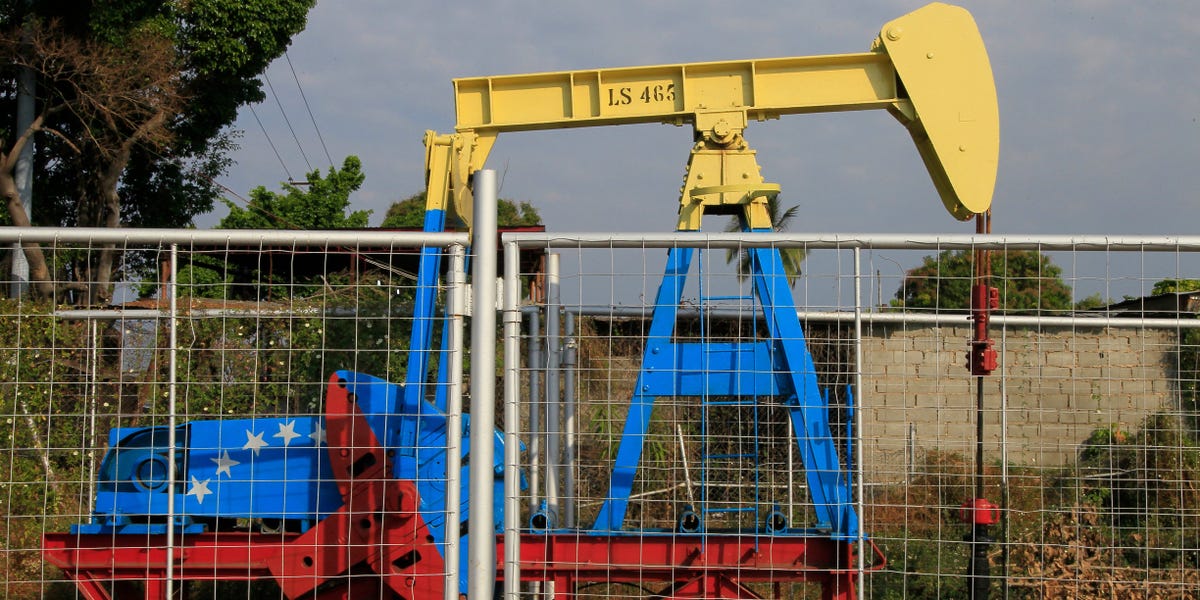
Not all American energy companies stand to benefit from a potential revival of Venezuela’s oil industry following the US’s capture of Venezuelan leader Nicolás Maduro.
Energy stocks rose on Monday as investors priced in potential gains from renewed US access to Venezuela’s massive oil reserves. But analysts say smaller companies could struggle to benefit from a recovery in the country’s energy sector.
Additional Venezuelan oil supply over the coming years could be “negative for shale producers” that don’t have a footprint in Venezuela, Daan Struyven, the head of oil research at Goldman Sachs, said on the firm’s “Exchanges” podcast, published on Tuesday.
That’s because prices and volumes could come under pressure if supply growth over the next five to 10 years comes from Venezuela rather than from US shale, he added.
The potential strain on shale reflects a key difference in oil quality. Venezuelan crude is heavy and sulfur-rich, while US shale production is dominated by lighter oil. Many US Gulf Coast refineries were originally designed to process heavier crude, making Venezuelan barrels a better fit.
Greater access to Venezuelan crude could therefore benefit refiners while undermining demand for lighter shale barrels.
While light shale oil and heavy crude like Venezuela’s are not directly interchangeable, increased supplies of heavy oil can still reshape refinery demand and pricing across the broader market. That kind of change would indirectly pressure US shale producers, who have long been the engine of America’s shale revolution.
“In the US, the first casualties would likely be some oil producers, particularly smaller shale firms with high debt and thin margins,” Philippe Le Billon, a professor at the University of British Columbia who studies the political economy of natural resources, wrote in The Conversation on Sunday.
Furthermore, oil prices have already been under pressure in recent years due to ample supply and sluggish demand growth.
US benchmark West Texas Intermediate crude futures are trading around $56 a barrel, while Brent futures are around $60 a barrel. Both are down around 2% so far this year after falling 20% last year.
Even an increase in Venezuela’s oil production in the medium term could put downward pressure on oil prices, making it harder for higher-cost US shale producers to justify new drilling, researchers at Columbia University’s Center on Global Energy Policy said in a Sunday post.
That dynamic could intensify the pressure on US shale producers.
“This complicates the notion that the US would unambiguously ‘win’ from a Venezuelan oil revival. Energy geopolitics creates winners and losers on all sides,” wrote Le Billon.