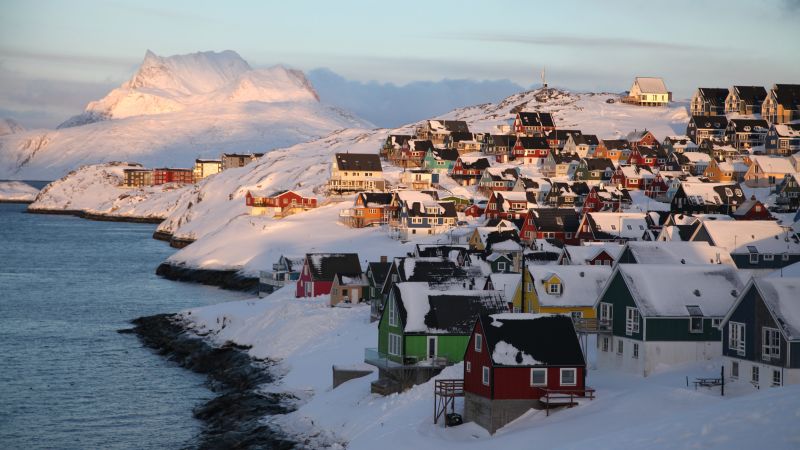
America’s next conquest might become Trumpland.
President Donald Trump is looking for new acquisitions for his 21st-century empire-building project after removing the head of Venezuela’s hateful regime.
During his first term, his designs on Greenland were considered a joke — just another brazen boast of a president who loves to shock.
Even last year, when Donald Trump Jr. flew to the vast island on his father’s jet with a presidential bobblehead in the cockpit and, later, when Vice President JD Vance donned a parka for his own whistle-stop visit, there was an element of US trolling.
But no one’s laughing anymore.
European leaders, who on Tuesday reaffirmed the island’s sovereignty and Denmark’s claims over its autonomous territory, are taking the president’s threats seriously.
This is hardly surprising, since the administration — flush with hubris after its Venezuela win — now claims the entire Western Hemisphere as Trump’s domain. And his top aide Stephen Miller warned Monday on CNN that the US was not following the “iron laws” of a world governed by strength, force and power.
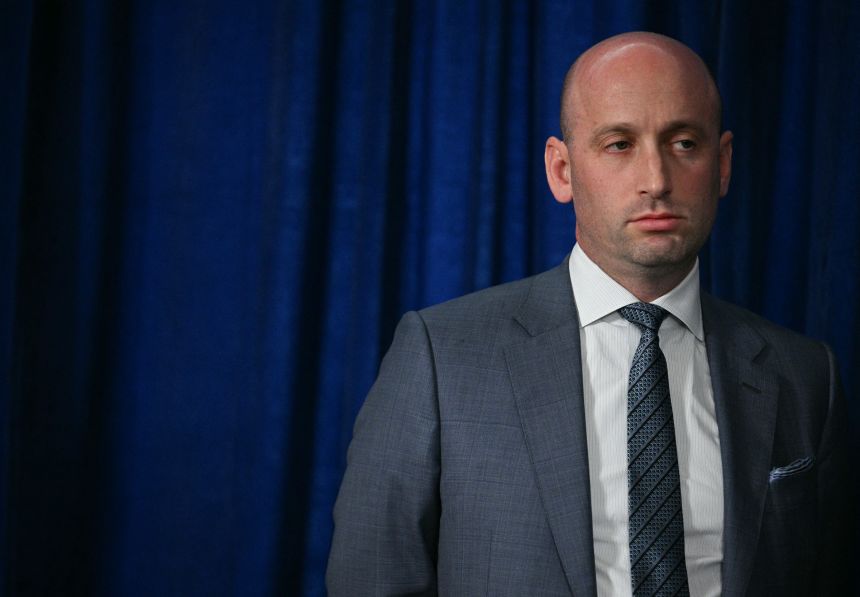
But Trump’s public rationale that the US must have the icebound territory for its own national security didn’t fully add up — even before the White House on Tuesday rocked jittery NATO allies by refusing to rule out military force to get it.
The president is spot-on that Greenland is strategically vital and getting more so.
It’s always been an important mid-Atlantic bridgehead. In World War II, it gave its name to the feared Greenland Air Gap ocean tract, out of range of land-based aircraft, that Nazi U-boats turned into a killing ground for Allied merchant convoys.
In any new major war, whoever controls Greenland would master the vital Atlantic Sea lanes. And an existing US base on the territory already plays an important role in US early-warning missile detection systems.
Eight decades after World War II, Greenland is becoming a hotter spot literally and geopolitically, as melting ice opens new shipping routes on the roof of the world. China and Russia understand just as well as Trump how strategically critical it could be.
But the flaw in Trump’s argument is that there’s nothing stopping him from reinforcing Greenland if he believes US national security is at risk.
After all, Greenland is a semi-autonomous territory of a NATO member. Its vast empty spaces could easy accommodate a new garrison, bases and thousands of military personnel. Despite offensive jokes by administration leaders that Denmark is only defending the island with dog sleds, the US has a treaty with Copenhagen that permits huge latitude for US landings and takeoffs; anchorages; harbors; living facilities; and other basing needs.
Greenland is also rich in yet-to-be-tapped offshore oil and gas fields, and as its tundra thaws, its rare earth mineral deposits, which could fuel new age technologies and weapons, will become easier to mine.
If it’s rare earths that Trump cares about, then both Danish and Greenland officials have said they are open to partnership agreements.
But there’s no sign that Trump — who is coming to resemble 19th-century US presidents who craved new lands, wielded tariffs as weapons and dreamed of matching European empires — is looking to share. The US base on Greenland flies the Danish flag as well as the Stars and Stripes. This administration leans more towards the thinking of Miller’s wife, Katie, who posted a social media picture of the entire island covered in the red, white and blue.
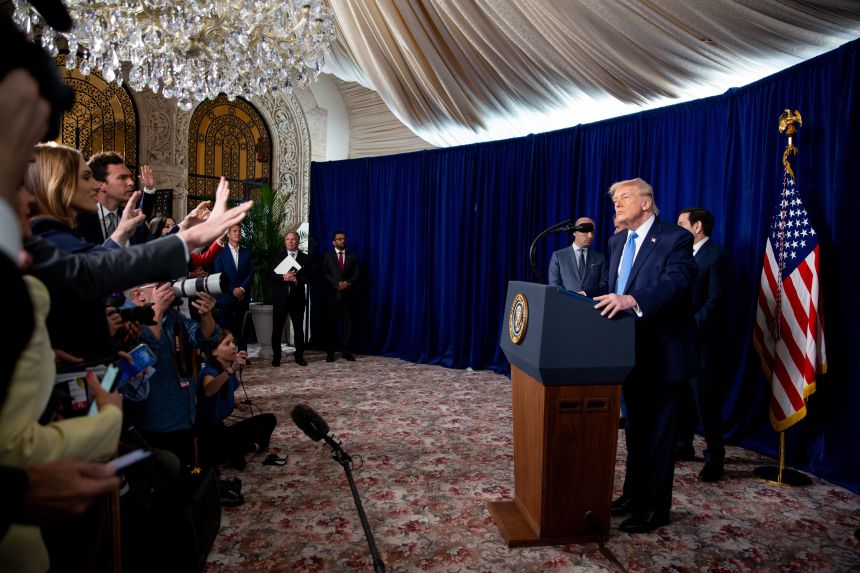
The world has changed in the last few days.
Trump’s insistence that he was “running” Venezuela and was in charge following Maduro’s capture suggests he’s moved from a being a rhetorical imperialist to a practicing one.
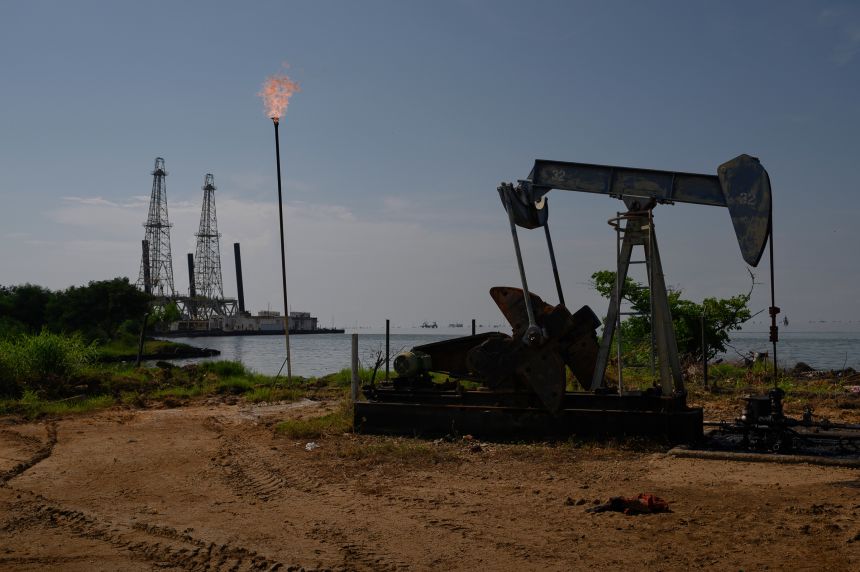
An announcement Tuesday that Venezuela would turn over up to 50 million barrels of sanctioned oil to the US to be sold — and that Trump would control the proceeds to benefit Americans and Venezuelans — further fueled concerns that he is bent on gaining plunder from sovereign states.
Trump’s aggressive new pitch for total control of the Western Hemisphere coincides with his accelerating obsession with his physical legacy, including his plans for a huge White House ballroom and the splashing of his name above that of an assassinated American president on the Kennedy Center in Washington.
How Trump would love to go down in history alongside President Thomas Jefferson, who purchased Louisiana for 1803 for $15 million and almost doubled the size of the United States. Or one of his administration’s historical heroes, President William McKinley, who annexed Hawaii in 1898. Trump would almost surely go one better and name the vast new icy American territory after himself.
It still seems almost unfathomable that the world is now coming to see Trump as a threat to Greenland.
It’s not that there haven’t been concerns about its security in the past. But almost everyone thought that the danger to NATO would emanate from Moscow or Beijing — not from the alliance’s mightiest power.
For all of Trump’s belligerence, there’s no imminent sign that the president is planning a military venture, which would raise the unthinkable theoretical possibility of American troops raising their guns against their NATO brethren.
The Wall Street Journal reported on Tuesday that Secretary of State Marco Rubio told lawmakers Trump wanted to buy Greenland, even though its leaders and Denmark have repeatedly made clear it is not for sale.
But these are unhinged times. No one can predict what Trump will do next. And unlike his first term, there’s almost no one penning him in. It’s hard to see Defense Secretary Pete Hegseth trying to talk the commander in chief out of an order to send Marines to plant a flag on Greenland.
“I know the Danes pretty well. They’re tough people. It wouldn’t surprise me to see them put a military force there to stand in opposition to a US force,” retired Adm. James Stavridis, a former NATO Supreme Commander, told CNN’s Jake Tapper on Tuesday. “This is the end of NATO we’re talking about. Let’s avoid that.”
But reality is in the eye of the beholder. After all, on the fifth anniversary Tuesday of the assault on the Capitol by supporters trying to overturn Trump’s election loss, the official White House website was transformed into a propaganda organ. It blamed Democrats and the Capitol Police for a MAGA mob that beat up officers and desecrated the chambers of Congress.
Democratic Sen. Chris Murphy warned Tuesday that Trump’s designs on Greenland were no joke. “I certainly was among those who, 12 months ago or six months ago, dismissed his talk of taking over Greenland as an intentional distraction,” Murphy told CNN’s Kasie Hunt. “I think now you have to really think about what’s in the president’s brain.”
The leaders of France, Germany Italy, Poland, Spain and the United Kingdom joined Danish Prime Minister Mette Frederiksen in declaring Tuesday that “Greenland belongs to its people.” Mark Carney — the prime minister of Canada, which shares a small land border and a vast maritime boundary with Greenland — announced a high-level delegation to the country next month.
Carney has had his own brushes with Trump’s territorial expansionism. If the president had not alienated millions of Canadians with his demands that their country become the 51st US state, conservative leader Pierre Poilievre — a MAGA-lite-style populist — probably would have won last year’s election.
Geo-strategic implications of any US swoop on Greenland are enormous. Frederiksen has already warned that any US attempt to take Greenland by force would immediately destroy NATO and its mutual defense guarantee, which has been the bedrock of Western security since World War II. An attempt to seize a European territory would fracture US relations with Europe.
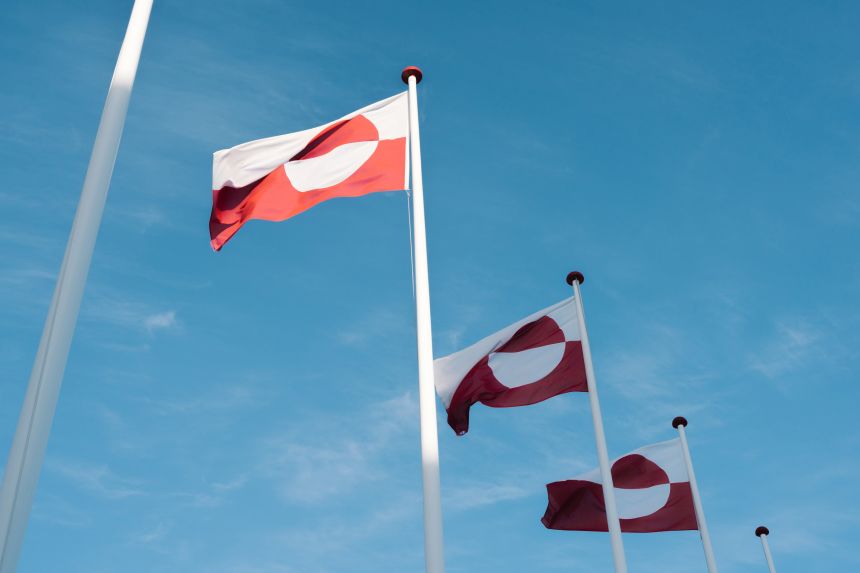
Growing ill-feeling toward Trump’s America would also intensify. Denmark might be weaker than the United States. But it was strong enough to send 43 of its soldiers to die in US wars in Afghanistan and another 7 in Iraq, according to icasualties.org. This is an extraordinary rate per capita in a country of 6 million people. Friends treated in such an insulting manner may not be around next time America calls.
But the White House is applying power because it can.
Europe’s reliance on the United States for its defense gives Trump great leverage. It’s surreal to say so, but there’s no prospect that European or Danish forces could defend Greenland from US troops if it came to it. “Nobody is going to fight the United States over the future of Greenland,” Miller said.
Europe’s strong statement in support of Greenlanders on Tuesday came after several days of its leaders dancing on the head of a diplomatic pin as they struggled to respond to the Venezuela raid without alienating Trump. Most opted for condemning Maduro while citing the need to uphold international law, which the US trampled with its incursion.
The European Union’s delicate position, given the continent’s defense needs, was also evident last year with the bloc’s decision not to wage a counter-attack with its own tariffs against Trump. No one is sure, given Trump’s anti-NATO rhetoric, that he won’t just quit the world’s most successful military alliance.
This imbalance in the power dynamic between Europe and the United States gives Trump an advantage if he seeks to lure Denmark into an “Art of the Deal” showdown over Greenland. And it’s surely not a quirk of history that he’s appointed Jeff Landry, the Republican governor of Louisiana — the state that America bought — as his special envoy to Greenland.
Still, a Greenland purchase might be beyond even Trump. The logistics of such a move might require acts of Congress, ratification by the European Union, and complex negotiations and treaty arrangements.
Then there’s the question of how much it would cost, even if it’s not currently for sale. And are US lawmakers really going to stump up hundreds of billions of taxpayer dollars, at a minimum, to buy the world’s largest island when their constituents are struggling to pay for health care, housing and groceries?
Some American statesmen hope that Trump’s bluster cools before it destroys the West.
“Let’s not push this into an apocalyptic ending. We can work with the Europeans. We have for decades,” Stavridis, a senior CNN analyst, said. “It simply needs to be done with diplomacy, military engagement, economics.”
But such temperance isn’t in vogue in a White House that is only becoming more belligerent after its humiliation of Venezuela.