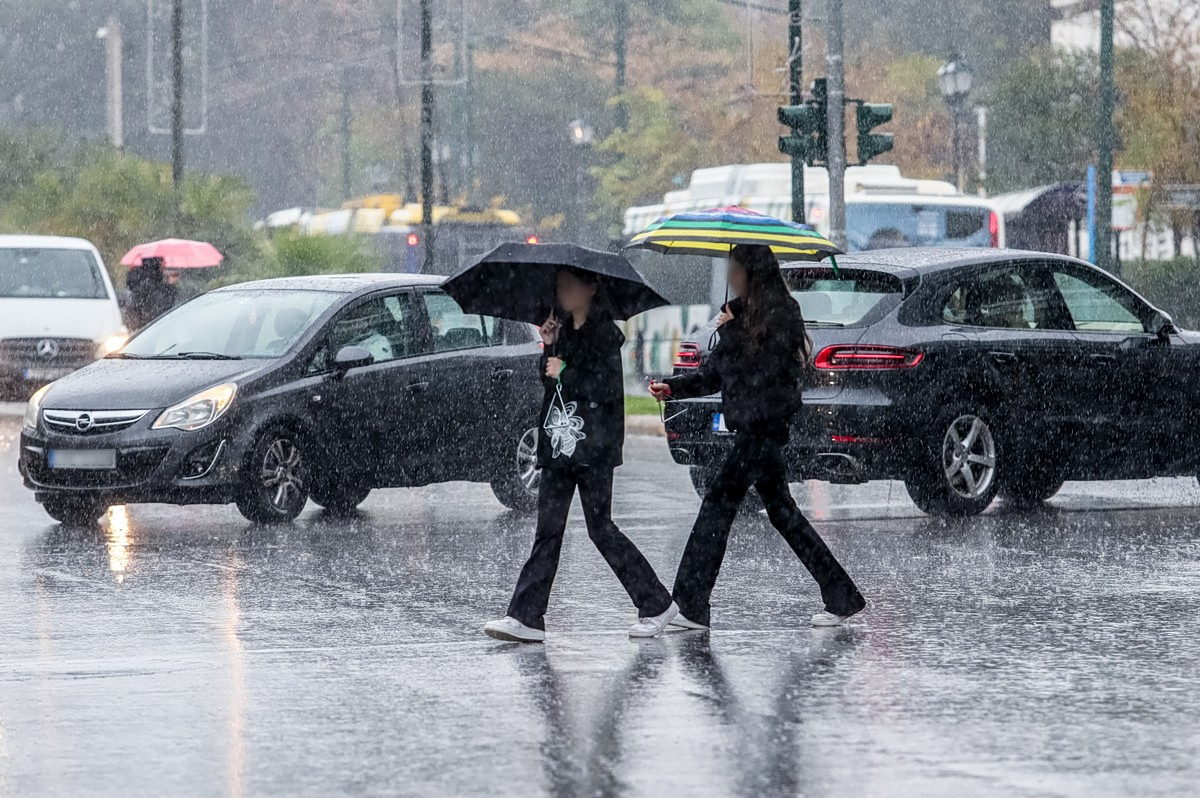
A severe and unstable weather system is impacting Greece on Wednesday, bringing heavy and persistent rain, thunderstorms, and strong winds to large parts of the country, according to the national weather service. An emergency weather bulletin remains in effect, warning of dangerous conditions through Thursday morning.
The most intense weather is expected in western and northern regions, including coastal and island areas in the Ionian Sea, parts of northwestern Greece, and sections of northeastern Greece. In these areas, storms may last for several hours, with a risk of localized hail and damaging winds.
Southern winds are forecast to reach gale force in many regions, particularly over the Aegean Sea, where gusts could reach near-storm strength. At the same time, unusually mild temperatures for this time of year are expected, with highs ranging from the upper 60s to low 70s Fahrenheit in several areas. Weather conditions are also favoring the transport of African dust, mainly affecting eastern and southern parts of the country.
In the greater Athens area, light rain is expected during the early morning hours and again late at night, while the daytime will see intermittent cloud cover and brief sunny intervals. Temperatures in the capital are forecast to range between the mid-50s and low 70s Fahrenheit.
Northern Greece’s largest city, Thessaloniki, is expected to see increased cloud cover with rain in the morning and a renewed deterioration later in the day, including thunderstorms.
Snowfall is forecast for mountainous areas in northwestern Greece, while authorities caution that intense rainfall combined with strong winds could create hazardous conditions in several regions.
The emergency weather alert issued by the national meteorological service states that the severe phenomena are expected to gradually weaken from Thursday onward. A noticeable drop in temperatures is forecast nationwide, especially in western, central, and northern regions. Frost is expected to develop late Thursday night in parts of northwestern mainland Greece, signaling a shift to colder conditions after the storm system passes.