Since Russia’s invasion of Ukraine, the number of companies whose owners or ultimate beneficiaries have changed their citizenship from ‘Russian’ and ‘Belarusian’ has increased rapidly, and the most common changes have been to citizenship of Israel, Latvia and Antigua and Barbuda, reports Latvian Radio.
Experts have attributed this trend to two main reasons: a desire not to finance the Russian war machine, or simply to avoid inclusion in sanctions lists.
Last June, important amendments to the law on liability for violating international sanctions came into force. Sanctions are becoming increasingly tough, and liability for violating sanctions is being imposed on individuals as well as companies.
The penalty for supplying goods or services to a sanctioned person can be up to 10 thousand euros for an individual, and up to 30 thousand euros for a legal entity such as a company. In order to identify these sanctioned persons, it is important to know information about the company’s owners and beneficiaries.
However, these individuals are in some cases changing their nationality. The number of people changing their nationality experienced a sharp jump after Russia’s invasion of Ukraine, when the number of such cases quadrupled within a year, said Ainārs Brūvelis, a member of the board of “Lursoft”, a business data company.
“In 2022, it can be observed that there have already been 116 such cases in just one year. So – four times more. This has continued in 2023, and in 2024 we also see a certain jump in the change of nationality,” said Brūvelis.
Last year, the number of such cases was twice as high as before the war in Ukraine. Perhaps one of the reasons why business owners and beneficiaries change their stated nationality is the desire to avoid violating sanctions. However, there are also some taking a moral stand.
“In my opinion, it is more related to the relatively moral aspect. Quite a few Latvian companies have announced that they will not continue financing the Russian war machine. Because we understand that if the owner of a company in Latvia is a Russian citizen, then, logically, he will receive and use dividends and so on in Russia as well, not just in Latvia,” said the member of the board of Lursoft.
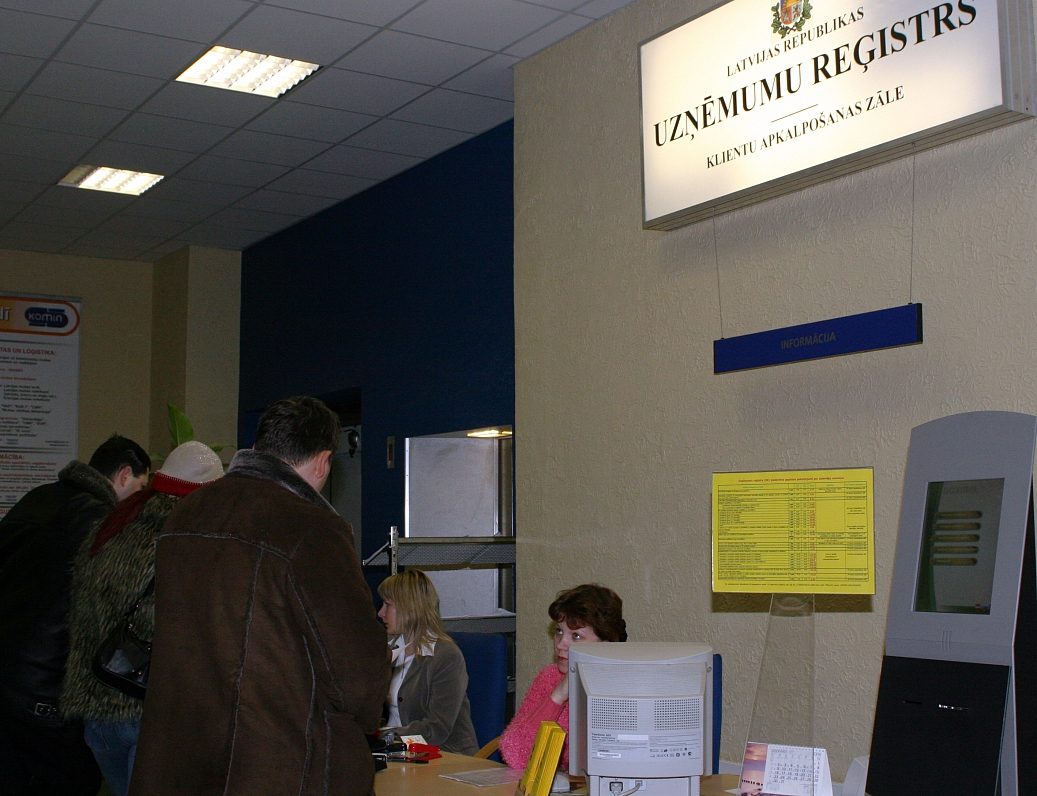
Laima Letiņa, the chief public notary of the Enterprise Register (UR), also did not rule out that the company owners’ desire to change their nationality can be related to a genuine attempt to reduce ties to Russia.
“Of course, it is entirely possible that someone has a motivation to somehow avoid the restrictions imposed on citizens of Russia and Belarus. In other cases, the person may no longer have any connection with this country. And this is not about avoidance, but about the desire to separate from the aggressor states as a person,” Letiņa assessed.
The UR has information available that allows for the identification of such persons by checking whether they are on the sanctions list and from a risk group.
Currently, entrepreneurs have to evaluate potential cooperation partners, especially in the real estate sector, so clarifying nationality is important. However, more changes are expected soon, when new regulations come into force which could potentially bring problems.
“Persons who believe that they are threatened by the disclosure of beneficial owner information may request the institution, in this case the Company Register, to declare such information as restricted access information. At the same time, these amendments to the law, which will enter into force in April, do not state anywhere what will happen in cases where the hidden beneficial owner is on this sanctions list,” said Brūvelis.
Currently, sanctioned companies are not excluded from the business register. Brūvelis thinks that this procedure should be changed. The definition of the beneficial owner should also be changed so that it cannot be circumvented, as is currently the case.
However, the head of the Saeima’s Legal Committee, Andrejs Judins (New Unity), said that this is not so simple, because one cannot disrespect the citizenship of another country. “You can amend the law, but if it doesn’t work, then there is no point in it,” he suggested.
Select text and press Ctrl+Enter to send a suggested correction to the editor
Select text and press Report a mistake to send a suggested correction to the editor
Tell us about a mistake