Islamabad (TDI): Islamabad is projecting an unexpected economic opportunity following a tense military standoff with neighboring India in May last year, as increased international interest in its domestically produced military aircraft could help lessen the country’s longstanding reliance on International Monetary Fund (IMF).
Defense Minister Khawaja Asif said, on Tuesday, that Islamabad has seen a notable rise in orders for its fighter jets after a brief but intense four-day aerial conflict with India.
If these sales materialize, they could significantly bolster Pakistan’s foreign exchange inflows and ease external financing pressures.
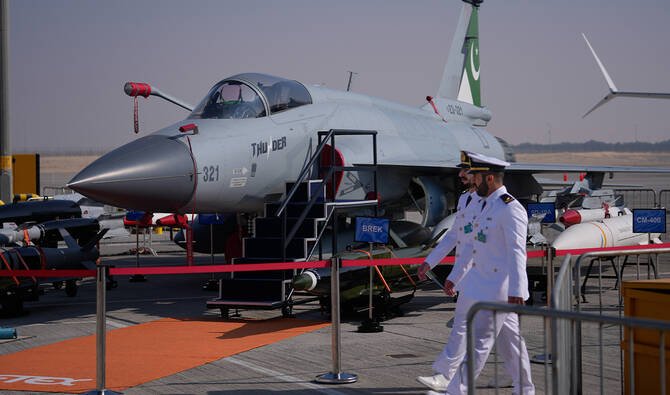
The surge in interest follows Pakistan shooting down several Indian aircraft during the May 2025 standoff, a move that drew global attention to the performance of Pakistan Air Force (PAF) jets, particularly the JF-17 Thunder.
Read More: Romanian Air Chief Lauds PAF’s Success Against Indian Aggression
The multi-role fighter, jointly developed with China, has become the backbone of Pakistan’s air power and is now being marketed to foreign militaries looking for cost-effective alternatives to Western aircraft.
A high-level delegation from Bangladesh recently met with Air Chief Marshal Zaheer Ahmed Baber Sidhu to discuss potential purchases, highlighting Dhaka’s growing interest in the fighter jets.
Islamabad believes that several other countries are exploring similar defense deals, drawn by the PAF’s “multi-domain” capabilities demonstrated during the standoff and at international air shows.
Asif said the increase in aircraft orders could be transformative for Pakistan’s economy. “Right now, the number of orders we are receiving after reaching this point is significant because our aircraft have been tested,” he said.
Read More: Pakistan’s JF-17 Thunder Steals Spotlight at Dubai Airshow
Pakistan’s relationship with the IMF has been a defining feature of its economic policy in recent years. The country has repeatedly turned to the global lender for financial assistance to stabilize its economy.
The country still relies on a $7 billion bailout under an extended program and another loan to enhance climate resilience; both of which come with strict conditions, including subsidy cuts and revenue-enhancing measures that have been politically and socially challenging.
The government hopes that success in defense exports can help diversify Pakistan’s revenue streams and reduce its dependence on external loans.
If these aircraft orders convert into firm contracts, they would represent not only a validation of Pakistan’s defense manufacturing capabilities but also a potential catalyst for economic resilience.
