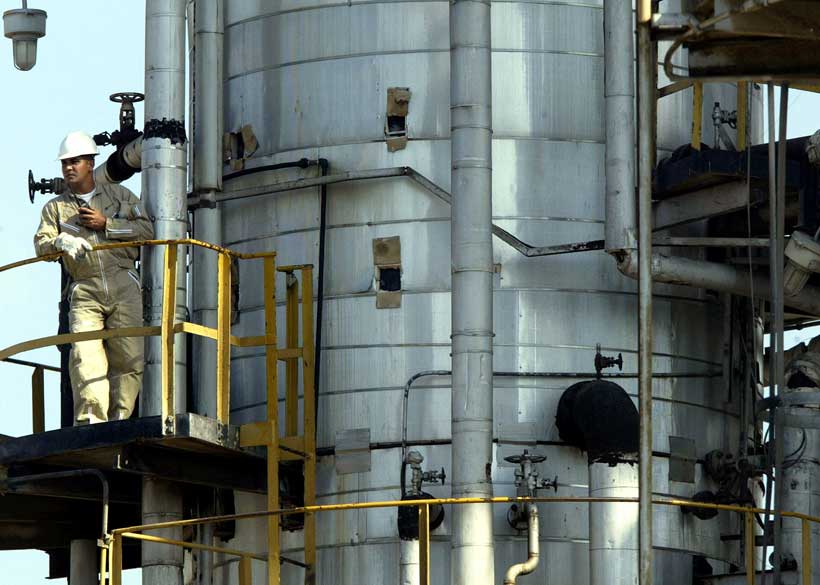
The United States and Venezuela have reached an agreement allowing the export of up to $2 billion worth of Venezuelan crude oil to U.S. ports, President Donald Trump said on Tuesday. The deal follows weeks of intensified U.S. pressure on Caracas, including a blockade on Venezuelan oil exports imposed in mid-December.
The blockade left millions of barrels stranded on tankers and in storage, forcing Venezuela’s state oil company PDVSA to curb production. Washington framed the new arrangement as a way to redirect “sanctioned oil” to the United States while ensuring revenues are tightly controlled.
Trump said between 30 million and 50 million barrels of oil would be transferred to the U.S., sold at market prices, with proceeds overseen by the U.S. administration. The agreement comes days after U.S. forces captured Venezuelan President Nicolas Maduro, an act Caracas has denounced as a kidnapping.
Deal Structure and Oil Flows
Execution of the deal will be overseen by U.S. Energy Secretary Chris Wright, with oil taken directly from Venezuelan tankers and shipped to U.S. ports. Initial supplies are expected to be diverted from cargoes previously destined for China, Venezuela’s largest oil buyer over the past decade.
The arrangement would significantly increase Venezuelan oil flows to the U.S., where imports are currently handled exclusively by Chevron, PDVSA’s main joint venture partner. Chevron has continued exporting 100,000–150,000 barrels per day under a U.S. authorization, even as the broader blockade disrupted other shipments.
It remains unclear whether PDVSA will gain access to any of the proceeds, as U.S. sanctions keep the company excluded from the global financial system and block dollar transactions.
Why It Matters
The deal marks a sharp shift in U.S.–Venezuela relations and highlights how energy policy is being used as a geopolitical tool. For Washington, the agreement weakens China’s access to Venezuelan crude while easing supply constraints for U.S. refiners that rely on heavy oil.
For Venezuela, the deal provides an urgent outlet for trapped crude and may help avert deeper production cuts that could cause long-term damage to oil fields. Venezuelan heavy crude grades are well suited to U.S. Gulf Coast refineries, which imported about 500,000 bpd before sanctions were imposed.
Oil markets reacted quickly, with U.S. crude prices falling more than 1.5% on expectations of increased supply.
United States: Seeking to secure energy supplies, pressure Caracas politically, and reduce China’s role in Venezuelan oil trade.
Venezuela: Attempting to prevent further production cuts and economic collapse while operating under severe sanctions.
China: Likely to lose access to some Venezuelan crude as cargoes are rerouted to the U.S.
Chevron and other oil majors: Potential beneficiaries if new licenses are issued, allowing broader participation in Venezuelan oil exports.
U.S. refiners: Particularly Gulf Coast operators that depend on heavy crude grades.
Talks on Sales Mechanisms
Officials from both countries discussed possible auctions to allow U.S. buyers to bid for Venezuelan cargoes, as well as new licenses for PDVSA’s partners. Past licenses have allowed companies including Chevron, India’s Reliance, China’s CNPC, and Europe’s Eni and Repsol to access Venezuelan oil.
Some companies have already begun preparing to receive cargoes again, sources said. Discussions have also included the possibility of Venezuelan oil being used for the U.S. Strategic Petroleum Reserve, though Trump did not confirm this.
Market and Industry Reaction
U.S. Interior Secretary Doug Burgum welcomed the prospect of increased Venezuelan oil flows, saying they could support U.S. jobs and stabilize gasoline prices. Oil traders reacted by pushing down differentials for heavy crude grades in the U.S. Gulf, reflecting expectations of additional supply.
Without new export channels, PDVSA would face further production cuts due to limited storage capacity, raising the stakes for Caracas to implement the deal quickly.
What’s Next
Key details remain unresolved, including which companies will be authorized to lift Venezuelan crude and how revenues will be allocated. The speed at which licenses are issued and cargoes redirected will determine whether the deal has a real impact or remains largely symbolic.
Further negotiations could expand U.S. access to Venezuela’s oil sector, potentially reshaping the country’s energy industry under tight U.S. oversight.
Analysis
This deal is less about oil volumes and more about leverage. For Trump, it offers a high-visibility political win: redirecting oil away from China, easing domestic fuel concerns, and asserting control over Venezuelan resources under the banner of “helping the Venezuelan people.” For Venezuela, the agreement underscores how little bargaining power remains under sanctions and political isolation.
The most striking feature is not the $2 billion figure, but who controls the proceeds. By placing revenue oversight in U.S. hands, Washington is effectively redefining sanctions enforcement into a managed extraction model. If expanded, this could set a precedent for how sanctioned energy producers are integrated into global markets not through relief, but through conditional access.
Whether this stabilizes Venezuela’s economy or deepens its dependency will depend on how much autonomy Caracas retains. For now, the balance of power in this deal is unmistakably tilted toward Washington.
With information from Reuters.