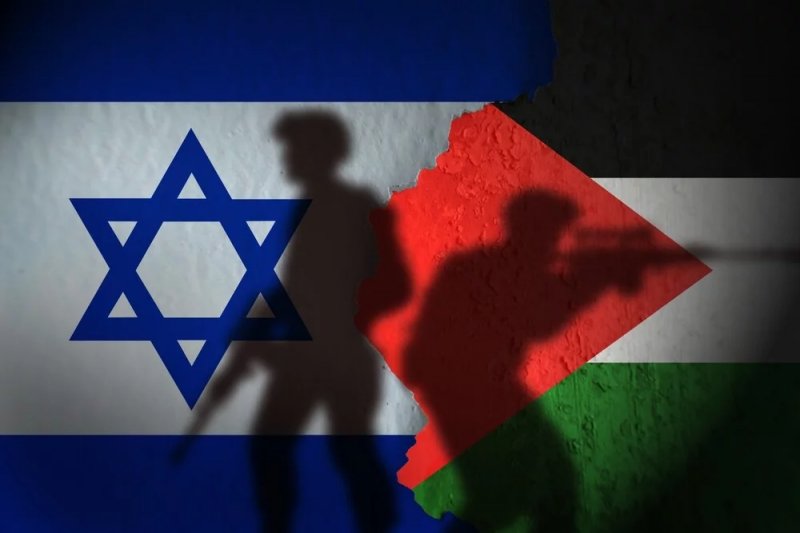
The latest 24 hours in the Israel–Gaza war have underscored how complex, volatile and destructive the conflict remains — both on the battlefield and across the wider humanitarian landscape, News.az reports.
Military operations, airstrikes, rocket fire, shifting diplomatic signals and continuing humanitarian challenges all combined to show that the crisis continues to evolve with little sign of immediate resolution. What emerges from the past day is a picture of a war where strategic objectives, security concerns and human suffering remain tightly intertwined.
Military operations continue in multiple areas
Reports from the ground indicate that Israeli forces continue operations in several parts of Gaza, focusing on areas described as key strongholds or strategic corridors. The latest 24 hours included urban fighting, raids, and targeted actions against what the Israeli military describes as militant infrastructure and command facilities.
At the same time, Palestinian armed groups have continued sporadic rocket launches and attacks targeting Israeli territory, although at a lower intensity than earlier stages of the conflict. Air raid sirens have sounded in parts of Israel, with officials reporting attempted interceptions. These exchanges underline that while the intensity of the conflict may fluctuate, neither side has fully disengaged from active hostilities.
The fighting remains heavily concentrated in densely populated urban environments, complicating operations and increasing risks for civilians still present in conflict zones.
Civilian conditions remain extremely difficult
The humanitarian situation inside Gaza continues to be one of the most serious consequences of the war. The latest 24 hours have brought renewed reports of shortages of food, medical supplies, fuel, and clean water. Aid organisations warn that humanitarian access remains limited and often unpredictable, with many residents facing displacement and uncertainty.
Hospitals and medical centres continue to struggle with overcrowding, staffing shortages and a lack of essential equipment. Many civilians remain in temporary shelters, schools, or damaged buildings, dependent on limited relief assistance.
Winter weather conditions in some areas have further complicated living conditions, especially for displaced families lacking stable shelter and heating.
Airstrikes and bombardments continue to shape the conflict
Airstrikes and artillery fire have continued across parts of Gaza during the last 24 hours. Israeli officials state that these strikes are aimed at militant sites, weapons storage locations, rocket-launching areas and tunnel networks. Footage from the ground shows widespread damage to infrastructure, residential areas and commercial districts.
The ongoing strikes underline Israel’s insistence that it must continue military pressure until its stated objectives — including neutralising militant capabilities and preventing future attacks — are achieved.
Palestinian authorities continue to report casualties and damage, while local rescue workers attempt to reach people trapped under rubble or isolated in damaged neighbourhoods. Communication disruptions also persist at times, complicating both coordination of aid and verification of developments.
Diplomatic messages highlight widening global concern
The past 24 hours have also seen continued diplomatic engagement. Regional and global powers have reiterated calls for restraint, protection of civilians, and increased humanitarian access. While some countries continue to press for an extended ceasefire or a political settlement, others emphasise Israel’s security concerns and the need to prevent cross-border attacks.
International institutions have repeated appeals for international law to be upheld. At the same time, political leaders across the Middle East remain concerned about the potential for escalation or spillover into neighbouring areas.
Despite growing global involvement, there remains no clear sign of an imminent diplomatic breakthrough capable of halting the fighting in the short term.
Hostage and detainee issues remain central
Another theme reflected in the past day has been continued attention on the fate of hostages held by militant groups and Palestinians detained by Israel. Families of hostages have renewed public appeals for negotiated releases, while Israeli officials continue to insist on securing the return of captives as a core war objective.
Discussions about future exchanges or mediation — often involving international actors — continue to be reported, but progress remains opaque and sensitive. The emotional weight of the hostage issue continues to shape public opinion inside Israel and influence political debate.
Regional security tensions remain elevated
The last 24 hours have again highlighted concerns about wider regional escalation. Cross-border incidents involving Lebanon, Syria, the Red Sea or other surrounding regions continue to draw scrutiny from security analysts and governments. While most of these incidents remain contained, they contribute to an atmosphere of tension that extends well beyond Gaza itself.
Western militaries and regional states remain on heightened alert in case of sudden escalations or miscalculation. This environment increases pressure on diplomatic channels already working under strain.
Humanitarian corridors and aid deliveries face obstacles
Efforts to deliver aid into Gaza continue, but humanitarian organisations report significant operational challenges. The most recent reporting indicates that convoys must still navigate security risks, inspection delays and infrastructure damage.
Queues for bread, water and fuel continue to be reported across parts of the enclave. International relief groups warn that aid flows — although continuing — remain insufficient given the scale of humanitarian need.
The most vulnerable include displaced children, the elderly, the sick and people with disabilities — many of whom lack access to essential care.
Economic collapse deepens inside Gaza
The economic impact of the conflict again came into focus over the past 24 hours. Large parts of Gaza’s commercial infrastructure have been damaged or shut down. Local markets are limited in both stock and purchasing power. Many residents no longer have employment or income, while businesses that once served entire communities have ceased to exist.
Outside Gaza, the war continues to affect regional trade, shipping lanes, tourism flows and investment sentiment — contributing to broader economic uncertainty in parts of the Middle East.
Political narratives harden on both sides
The last day has also shown that political rhetoric remains firm. Israeli leaders continue to stress the necessity of ongoing military operations, framing the war as a response to security threats and attacks against its citizens. They argue that withdrawing pressure would leave future attacks likely.
Palestinian leaders and representatives of regional political movements, meanwhile, continue to condemn Israeli actions and highlight civilian suffering and occupation-related grievances. Calls for international pressure on Israel remain strong among Arab and Muslim publics.
These hardened positions make space for compromise more difficult — a reality increasingly recognised by diplomats and analysts.
Public opinion remains polarised globally
The Israel–Gaza war continues to divide opinion far beyond the Middle East. Demonstrations, statements and political debates have continued during the last 24 hours across multiple countries. Universities, media organisations and political parties remain deeply engaged in discussions over responsibility, proportionality and humanitarian obligations.
This polarisation reflects not only current events, but also longer-term unresolved political and historical disputes surrounding the Israeli-Palestinian conflict.
The humanitarian cost keeps rising
The most sobering message emerging from the latest 24 hours remains the human impact of the conflict. Families remain separated, communities displaced, and entire neighbourhoods altered or destroyed.
Children continue to face disruption to schooling, healthcare and basic safety. Trauma, grief and long-term psychological effects are increasingly discussed by mental-health professionals and aid workers operating in the region.
Meanwhile, in Israel, communities near the border continue to live with security fears, displacement concerns and the ongoing uncertainty surrounding hostage returns.
Ceasefire discussions remain uncertain
Although there are ongoing diplomatic conversations about ways to calm the situation — including temporary humanitarian pauses or longer-term ceasefire frameworks — there is little concrete evidence from the last 24 hours that a durable agreement is imminent.
The central disagreement remains whether military objectives must be completed before diplomacy advances, or whether a ceasefire is a prerequisite for addressing humanitarian and political issues.
A conflict with global consequences
The last day has reinforced the fact that the Israel–Gaza war is more than a local or regional dispute. It has become a major international security concern with ripple effects on diplomacy, global alliances, trade and energy stability.
Global institutions warn that prolonged fighting risks deepening radicalisation, increasing refugee pressures, and creating new strategic challenges in an already unstable region.
No clear end in sight
As the latest 24 hours demonstrate, the Israel–Gaza conflict remains deeply entrenched. Military operations, humanitarian distress, diplomatic pressure and regional security concerns all continue in parallel — with no obvious pathway toward a comprehensive political resolution.
What is clear is that the longer the fighting persists, the greater the human, political and economic costs will become — for Israelis, Palestinians and the wider international community.