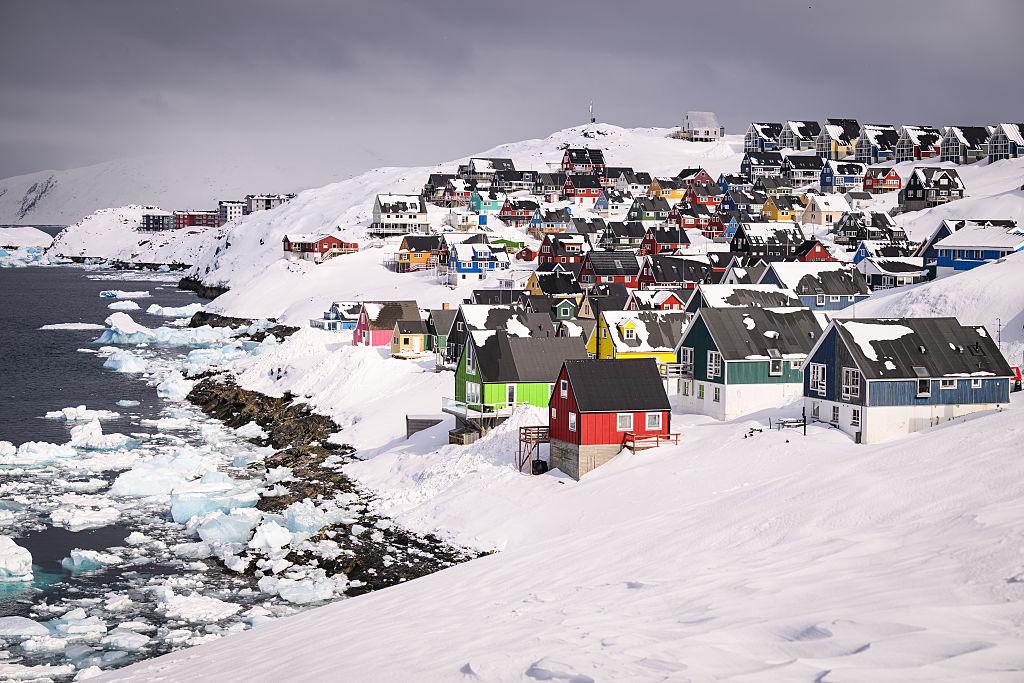
Following the 2 January capture by the United States of Venezuelan dictator Nicolás Maduro, the administration of President Donald Trump has returned to a theme from early in his second presidency: that the US should take over Greenland, supposedly for reasons of national security. Unsurprisingly, the Danish and Greenlandic prime ministers, Mette Frederiksen and Jens-Frederik Nielsen, have pushed back against the US claims, emphasising sovereignty.
Greenland is not a distant outpost but is of great importance to the whole of Europe. It is an Overseas Country and Territory of the European Union with special rights. Greenlanders are citizens of the Danish Kingdom and thus EU citizens with freedom-of-movement rights. Greenland has great strategic value: militarily as a key area in the Arctic, economically because of its raw materials and geopolitically in the context of new sea routes opened up by a changing climate. Whoever controls Greenland influences a core area of European security policy.
So how should Europeans respond to US provocation and the risk of a US invasion? The first option is to wait and see, in the hope that US institutions and the Constitution will limit foreign policy adventures. This strategy is convenient but risky. It signals a strategic vacuum and invites the creation of facts on the ground. Since US troops are already in Greenland (at the Pituffik base), it would in principle be easy for the US to depose the legitimately elected government in the Greenlandic capital of Nuuk and exploit Greenland’s natural resources as it sees fit.
There is a second, bolder option for Europe: discreet but substantial cooperation with Denmark and the Greenlandic government. This could include sending additional European military forces to Nuuk to support existing structures, supplemented by air and naval defence. These capabilities would send a political signal, but would also be objectively necessary to secure Greenland against a variety of threats at a time when the Arctic is becoming increasingly contested.
France, Germany and the Nordic countries share a common assessment of Greenland’s importance. French President Emmanuel Macron visited Nuuk in June 2025 and has reaffirmed his “unwavering support” for Greenlandic territorial integrity. Finnish President Alexander Stubb has taken a similar line. Though the German government initially held back, major European countries have now issued a joint statement in support of Greenland.
However, a common assessment of Greenland’s importance and words of support for Denmark do not yet constitute a common strategy for guaranteeing Greenland’s security. EU countries must understand that a strategy without close military cooperation is ineffective. Trump is right about one thing: Greenland’s security cannot be guaranteed by Denmark alone. Security can only be achieved through structured European cooperation. The instruments for this have long existed. With the EU rapid deployment capacity, the EU has an appropriate military instrument at its disposal. Using it would not be an act of provocation, but a sign of strategic maturity and European unity.
European leaders must develop a strategy in close cooperation with the government in Nuuk. As Alexander Stubb put it, “No one decides for Greenland and Denmark but Greenland and Denmark themselves”.
Of course, the US could annex Greenland despite the deployment of Danish and European troops. However, a greater European military presence would massively increase the political and military costs for the US. These higher costs would also make it more likely that domestic political checks in the US would prevent such a foolish move.
A signal of European strength could also lead to serious negotiations with the US. The US base in Greenland could then even be expanded, cooperatively, in the interests of transatlantic security. During the Cold War, there were almost 10,000 US troops in Greenland on the basis of the 1951 defence agreement, which still obliges the US and Denmark to defend Greenland. By acting robustly, Europe would also change the domestic political calculus in the US and thus define a new transatlantic relationship. It would also empower the people of Greenland to pursue their own path.
Europe must act now, together with Copenhagen and Nuuk: calmly, decisively and in a coordinated manner. Expressions of solidarity must be translated into a common military strategy. A European show of strength could even lead to greater cooperation with the US in Greenland.
Versions of this First Glance have been published in Le Monde and in Handelsblatt.