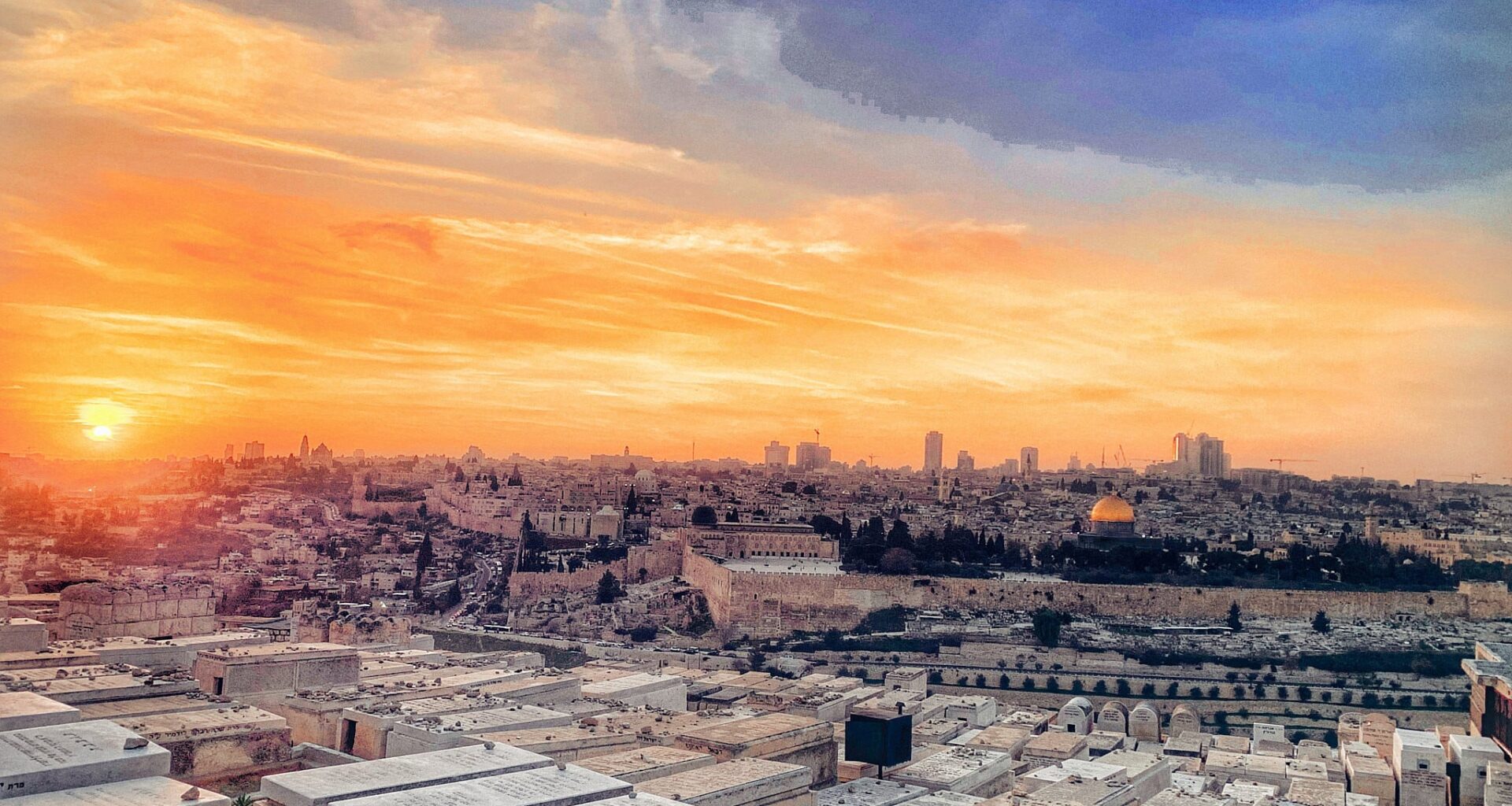
Some of you might call this blasphemy , but I’m going to call it as I see it.
Fun fact: The Mount of Olives is not a cemetery in the usual sense.
It’s a very well-organized waiting room.
People lie there politely, shoulder to shoulder, wrapped in limestone and sunlight, facing the city like theatergoers who arrived early and got excellent seats. No one is rushing.
Everyone is convinced the show will start any minute now.
And yes — everyone is also dead.
But the Mount of Olives is actually less about death and more about timing.
According to a beloved strand of Jewish tradition, when the Messiah finally arrives — possibly before the Jerusalem Light Rail is complete — all property agreements become null and void.
Deeds? Void.
Titles? Void.
That contract your cousin’s lawyer cousin notarized in triplicate? Especially void.
Jerusalem resets.
No inheritance law.
No zoning committee.
No “this was my grandmother’s cousin’s best friend’s acupuncturist.”
Just a cosmic wink and a celestial announcement that says:
First come, first serve.
This explains the Mount of Olives.
Because if the messianic era is (among many other things) a divine real-estate reboot, you want to be nearby when the paperwork disintegrates.
The people buried here are not morbid. They are wise and strategic.
The Mount is essentially the VIP line for a housing lottery that hasn’t happened yet.
Picture it:
The dead rise.
The gates open.
Centuries of legal disputes evaporate like morning mist.
And suddenly, Jerusalem belongs to whoever is standing in it with intent.
No squatting — this is holy, not anarchic.
No shoving — it’s still Jerusalem, not a bus stop.
But still:
Show up.
Stand somewhere.
That’s your house now.
This is why every grave on the Mount of Olives face the Temple Mount.
You don’t want to wake up backwards on the day when all housing claims are reset. You don’t want to sit up, rub your eyes, and realize someone else has already claimed that stone house with the good breeze and the fig tree.
The Mount catches the light first.
Early risers win eternity.
Jerusalem, after all, has never been impressed by ownership.
Empires come with deeds.
Jerusalem comes with disclaimers.
The Mount of Olives cemetery understands this. It is a quiet, orderly congregation of people who opted out of long-term leases and placed their trust in a future moment when the city will finally belong to presence, not paper.
Until then, they wait.
Patiently.
Politely.
With excellent seats.
And when the announcement comes, they will rise not in panic, but with the calm confidence of people who knew all along that real estate is temporary — but location, location, location… is forever.
Sarah Tuttle-Singer is the author of Jerusalem Drawn and Quartered and the New Media Editor at Times of Israel. She was raised in Venice Beach, California on Yiddish lullabies and Civil Rights anthems, and she now lives in Jerusalem with her 3 kids where she climbs roofs, explores cisterns, opens secret doors, talks to strangers, and writes stories about people — especially taxi drivers. Sarah also speaks before audiences left, right, and center through the Jewish Speakers Bureau, asking them to wrestle with important questions while celebrating their willingness to do so. She loves whisky and tacos and chocolate chip cookies and old maps and foreign coins and discovering new ideas from different perspectives. Sarah is a work in progress.