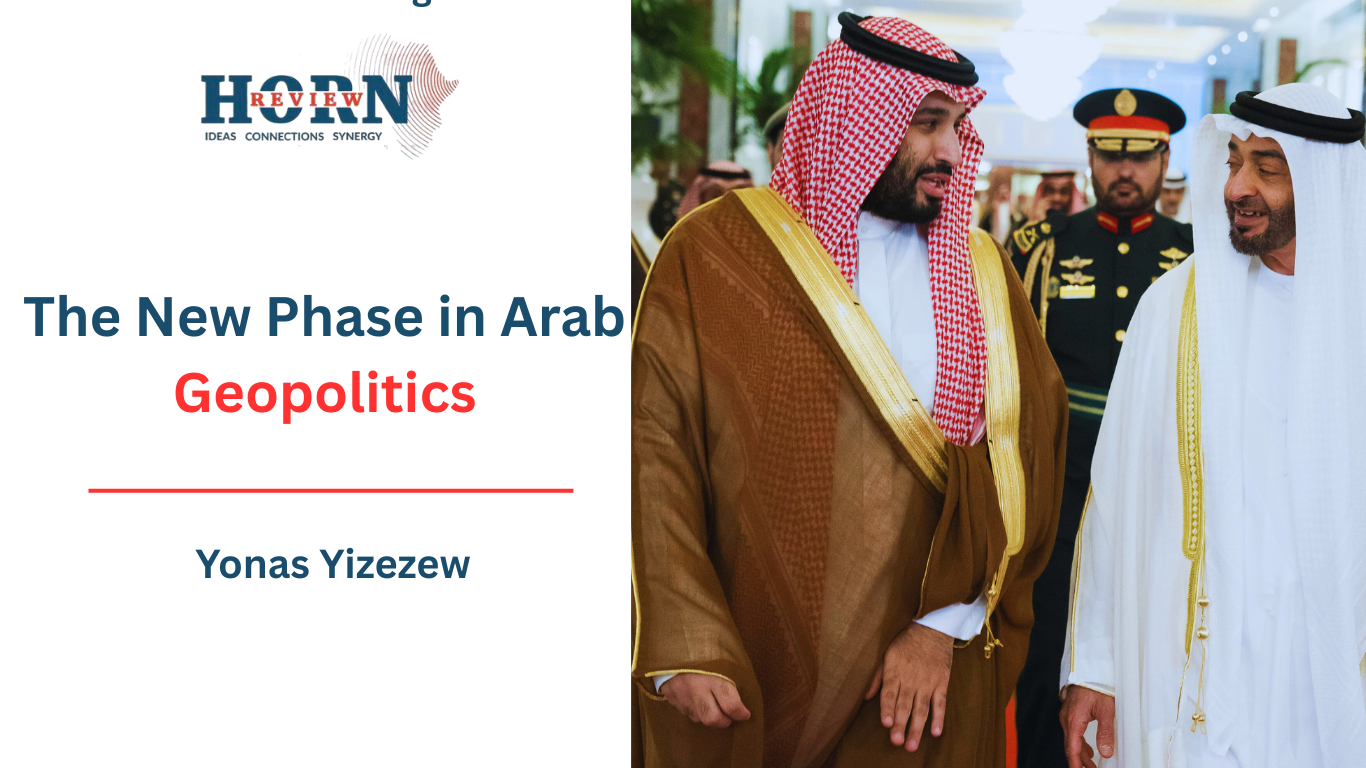
The Arab geopolitics is entering a new phase, defined not merely by the surfacing of bilateral tensions but by the crystallization of fundamentally incompatible regional visions. These visions, rooted in distinct threat perceptions, have evolved from manageable divergences into a source of open strategic competition. The critical shift is that these differences now actively shape concrete policy choices, fostering a deeper and more consequential rivalry between Abu Dhabi and Riyadh than previously assumed. Where once such friction could be mediated within broader alignment frameworks, the divergence has become directional, reflecting a core dispute over the very architecture of regional security.
At the heart of this divide are two competing regional visions. On one side are de-escalationist states such as Saudi Arabia, whose primary objective is about border management and threat insulation. Saudi Arabia’s Yemen posture today reflects this logic. Egypt’s approach to Sudan and Libya in part fits the same pattern.
Opposite this stands a more pragmatic, risk-acceptant approach, most clearly associated with Abu Dhabi’s worldview. From this perspective, the current regional order is not stable at all. It is a temporarily frozen instability in which unresolved conflicts, ideological currents, and latent crises are certain to re-emerge. In this reading, the explosion of problems under the surface, which will create a new and potentially more destructive order, is inevitable. Iran remains a structural challenger, internal contradictions within apparently “stable” systems persist, and today’s ceasefires and de-escalation gestures are seen as tactical pauses rather than genuine turning points.
Accordingly, this camp prioritizes early intervention, structural reshaping, and proactive influence-building. The aim is not disruption for its own sake, but to force the emergence of a new equilibrium before the old one collapses. Within this broader conceptual divide, the security perceptions of Saudi Arabia, the United Arab Emirates, and Egypt illustrate how convergent threat assessments are now producing divergent and sometimes colliding responses on the ground. This divergence stretched from Yemen, Sudan, the Red Sea and the Horn of Africa.
Saudi views the prospect of a hostile, Iran-aligned power on its southern border in Yemen as an intolerable security breach and its evolution has been striking. After years of maximalist aims and a heavily militarized campaign, the Kingdom has shifted toward damage control and exit management. The cross-border attacks on Abqaiq and Khurais in 2019, the persistent Houthi missile and drone strikes on southern Saudi cities, and the economic centrality of Vision 2030 have together pushed Riyadh toward de-escalation with Iran and toward a negotiated arrangement with the Houthis. The Omani-facilitated talks and the increased direct Saudi–Houthi channels, even amid continued fighting elsewhere in Yemen, reflect a strategic prioritization of stabilizing the border over re-engineering Yemen’s internal politics. Riyadh’s endorsement of the Presidential Leadership Council in 2022 was in part an attempt to unify anti-Houthi factions, but the Kingdom’s more recent behavior shows growing impatience with the centrifugal dynamics encouraged by its nominal coalition partner, the UAE. Its current opposition to the UAE-backed STC moves in Southern Yemen culminated in late December 2025 Saudi airstrikes on Mukalla port targeting alleged UAE weapons shipments to separatists, making the UAE to withdraw its forces following the pressure. This stems from the belief that a secessionist south would create another unstable, contested entity on its frontier, perpetuating the very insecurity it seeks to end.
Abu Dhabi’s Yemen policy has moved in the opposite direction. While the UAE drew down much of its front-line presence from 2019, it consolidated influence through proxies and de facto partners, especially in southern and coastal areas. The empowerment of the STC and Emirati backing for local actors around key ports and islands such as Aden, Mukalla, and Socotra signal a deliberate strategy. For Abu Dhabi, the priority is securing ideological and logistical corridors: controlling or influencing key maritime nodes in the Gulf of Aden and the Red Sea, and preventing Islamist-aligned actors, whether Islah or others, from dominating any future political settlement.
This divergence is not only about Yemen’s internal map, but about what each capital is trying to prevent. Riyadh wants to avoid another Gaza-like or southern Lebanon–like security environment directly on its border, in which non-state actors operate with strategic reach. Abu Dhabi wants to preempt the emergence of any political order in Yemen that includes actors it categorizes as radical Islamist threats. The former’s horizon is border stability and the shielding of internal economic transformation. The latter’s horizon is regional ideological engineering, with Yemen as one of several arenas. As a result, Saudi–Emirati coordination in Yemen has deteriorated from joint intervention to managed friction and, increasingly, to open policy divergence.
On the other hand, Egypt’s overwhelming perceived threat is the collapse of state authority along its extended borders. Cairo’s security doctrine is dominated by the imperatives of controlling the Nile River and securing the Sinai Peninsula. The war in Sudan directly threatens both. It risks drawing in regional actors who could influence Nile water politics, and it fuels weapon smuggling and militant movement into Libya and toward Egypt’s west. Egypt supports the Sudanese Armed Forces since it represents the institution most likely to restore a controllable state authority.
Its contradictory support from Khalifa Haftar in Libya to cultivating ties with Aguila Saleh, served the same purpose, to create a predictable, military-led authority on its western border, even at the cost of Libya’s formal unity. Its dependence on the UAE financially constrains its ability to act, but its security choices are consistently aimed at erecting buffer zones of controlled stability.
The UAE has taken a markedly different course. Abu Dhabi’s reported support for the RSF and its use of Sudan as a logistical hub for both economic extraction and regional influence demonstrate a preference for leverage through non-state or quasi-state actors that are personally dependent on Emirati patronage. In this sense, Sudan resembles earlier Emirati patterns in Libya and Yemen, where fragmentation was not an accidental by-product but potentially acceptable, condition for maximizing influence. For Egypt, Sudan’s fragmentation is an existential problem that threatens refugee surges, arms flows, and strategic vulnerability along the Nile valley, while also depriving Cairo of a single centralized authority it can influence, thereby weakening its leverage over Sudan’s political and security trajectory.
These tensions are not occurring in isolation but are layered over previous theaters of competition. In Libya, the earlier coordination between Cairo and Abu Dhabi in supporting Haftar gradually gave way to different priorities as the regional environment shifted. Egypt’s focus has increasingly narrowed to its immediate western border and energy interests in the Eastern Mediterranean, whereas the UAE has explored influence networks stretching from eastern Libya to the Sahel and up to coastal North Africa. In the Horn of Africa and Red Sea, Emirati investments and security footprints in ports from Berbera and beyond have often moved faster than, and sometimes at cross-purposes with, Saudi attempts to institutionalize a more state-centric Red Sea architecture.
In the Horn of Africa, the divergence among the three becomes especially visible around control of the Red Sea, where Saudi Arabia’s restraint focused approach and Egypt’s security driven agenda, shaped by concerns over regional influence, Nile security, and limiting Ethiopia’s access to the Red Sea, increasingly collide with the UAE’s more assertive and interventionist strategy across the Horn. Moreover, Saudi Arabia and Egypt are increasingly wary of a UAE-Israel dominated Red Sea corridor, concerned that it would create a rival strategic axis that directly diminishes their own control over vital maritime routes and chokepoints from Bab el-Mandeb to Suez approach. The UAE’s extensive basing and port network—linking Berbera, Aden, and Socotra—coupled with Israel’s Somaliland recognition and access to these facilities, is perceived as a deliberate effort to bypass and encircle their spheres of influence.
Turkey’s assertive foreign policy further complicates this regional schism, by directly challenging core Emirati and Egyptian interests across multiple fronts. In Libya and Sudan, Turkish military backing for the Tripoli-based government and SAF respectively, make it at odds with UAE, transforming the conflict into a proxy battleground that deepened Arab divisions. In the Horn of Africa, Ankara’s substantial economic and security partnership with Somalia, including its largest overseas military base, provides a sovereign counterweight to Emirati and Israeli influence in Somaliland, forcing both Riyadh and Cairo to navigate an increasingly crowded and fragmented strategic landscape.
Despite these divergences, there remain important points of convergence that explain why Riyadh and Cairo, in particular, still see each other as strategic anchors. Saudi Arabia and Egypt share a profound interest in having controllable neighbors. The next phase of Arab geopolitics will therefore be shaped less by ideological labels than by which of these strategic logics proves more durable under sustained economic, security, and international pressure. As economic constraints sharpen and external powers recalibrate their engagement, the gap between these visions is likely to widen further, turning what began as quiet tactical differences into a central structuring axis of regional politics.
By Yonas Yizezew, Researcher, Horn Review