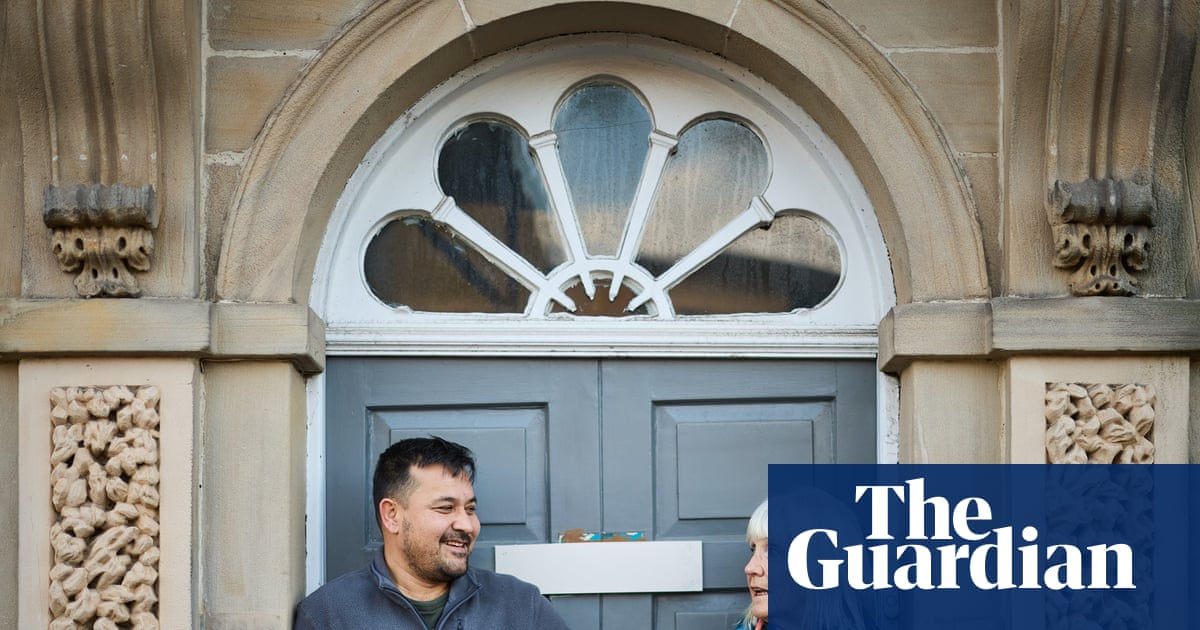
“Our children correct us when we don’t pronounce some words with the proper Derbyshire accent,” says Samir*, an Afghan refugee whose family have settled into their new lives in the north of England.
Initially, he says, it was difficult for the family to get used to rural life in Derbyshire, but after a while they had integrated into the local community so well that his children, who have adopted the Derbyshire accent, tease him about his.
“Now our community is turning into a diverse community,” says Samir, who along with his family was relocated to the UK after Afghanistan fell to the Taliban in August 2021.
Part of the ease with which they have settled into the community is down to support from a community sponsorship scheme. It provides refugees withwraparound support from a group of residents who agree to fundraise, source affordable accommodation, and help with the basic challenges of life in a new country such as learning English, accessing work, study or benefits, and registering with a GP and dentist.
Samir says that thanks to their sponsorship group, the family have integrated well – including the Derbyshire accents.
The government oversees the scheme, one of four different refugee resettlement programmes. Shabana Mamood, the home secretary, said last November that she hoped to further develop this model.
“With control [over Britain’s borders] restored, we will open up new, capped routes for refugees for whom this country will be the first, safe haven they encounter. We will make community sponsorship the norm, so we know that the pace and scale of change does not exceed what a local area is willing to accept,” she said.
Sue Wall says she sees herself as a grandmotherly figure, ‘an identity that the families recognise’. Photograph: Mark Waugh/The Guardian
Sue Wall, part of the Ashbourne group supporting Samir and his family and other refugee families in the area, says that as a grandmother, she slips into the same role with the newcomers.
“That’s an identity that the families recognise. If you help people become integrated they are more able to resume their original career or something akin to it, which helps with their sense of identity and self-esteem. If it takes a village to raise a child, it takes a town to raise a family,” she says.
Susannah Baker, the chair of Community Sponsorship Alliance, welcomes the government’s plan to develop named sponsorship, allowing communities to match with refugee families they think will be a good fit with them.
“This places control firmly in the hands of communities, allowing them to identify and welcome refugees they are ready to support,” she says. “It is both compassionate and controlled, delivering strong integration outcomes because communities are active partners from the outset. When local people are involved early, newcomers learn English more quickly, find work sooner, and become part of community life.”
Maryam*, a 17-year-old Syrian refugee, arrived in Bristol with her family in 2018. The family was supported by a group of sponsors who call themselves Westbury Welcome.
“When I was three I walked with my family from Syria to Jordan because of the big war in my country,” says Maryam. Initially, the change between the bustling area of Jordan the family had left and the quiet street where the sponsors had found them a house was a shock, she says.
“In Jordan there are many people. When we arrived here we were given a house but when we looked out of the window and saw there was nobody in the street, it was really scary for me. I said to my mum, ‘should we just go back to Jordan?’ I think without Westbury Welcome we would have been stuck in a cycle of not understanding things.”
She says one of her first memories was the meal the group prepared for the family after collecting them from Bristol airport. “They cooked us Middle Eastern rice and chicken. I think it was the biggest meal I had eaten in my life.”
Now the family are part of their community. Maryam is studying for her A-levels and is hoping to then take a gap year before going to university.
“Not everyone understands why we came to the UK. We didn’t come for fun. Having Westbury Welcome help us with everything from finding a GP to understanding how the buses work made things so much better for us.”
Members of Westbury Welcome including Eveline Johnstone (centre, in pale green cardigan) with Maryam* (right) and her mother. Photograph: Sam Frost/The Guardian
Eveline Johnstone, part of the group supporting Maryam and her family, said they set themselves up under the auspices of Citizens UK, one of the groups supporting those who want to become community sponsors for refugees.
The group has subsequently supported other families. “It’s great for the families to have a whole group of people to support them and it’s great for us to do something positive and to welcome people. I have learned so much from the people who have come here,” Johnstone says.
For Ori*, a Syrian mother, one of the joys of living in Bideford in Devon – along with the huge support she has received with everything from accessing English classes to sorting out the TV – is having a garden.
“Back home we lived in an apartment block and the garden was on the roof. Here we live in a house with an upstairs and a downstairs, and I can grow roses, camellias, jasmine and mint,” she says.
Jane Kivlin is a member of the group that has supported Ori and her family after being inspired by Ken Loach’s film The Old Oak, about how a Syrian refugee family who arrive in a poor community are at first greeted with hostility by some but ultimately welcomed. She says of Ori’s family: “They are incredibly resilient. They find a lot of things quite challenging but I don’t think I have seen any despair.”
Abby Boutlee, part of a group who are supporting an Afghan family who arrived in their village in Scotland earlier this year, says: “It has gone really well. The family have a traumatic history and some health problems but they are ready to be ‘new Scots’ and are keen to contribute to the life of the village. There are 14 of us supporting them and we hope to be a springboard for them into a new life where they can find their feet.”
“When we first arrived in Ashbourne life was hard for us,” says Samir. “We found it a very quiet place compared to the city which we had come from. We felt very isolated and didn’t know anyone. Now I’ve passed my driving test and have been offered a postgraduate course by Derby University. We have made lots of friends here.
“Although we come from a completely different country and culture, we have so much in common with the people of this country. Community sponsorship is a brilliant way to support people in crisis, and to build trust between people from different backgrounds.”
*Names have been changed