
Researchers at Tel Aviv University report that the tiny, automatic facial movements people make while listening to someone else can predict what they will choose—sometimes before they can explain their preference—offering a new window into how decisions form and how persuasion works. The study, led by doctoral student Liron Amihai at the School of Psychological Sciences in the lab of Prof. Yaara Yeshurun, and conducted with colleagues including Elinor Sharvit and Hila Man in collaboration with Prof. Yael Hanein of TAU’s Fleischman Faculty of Engineering, was published in Communications Psychology.
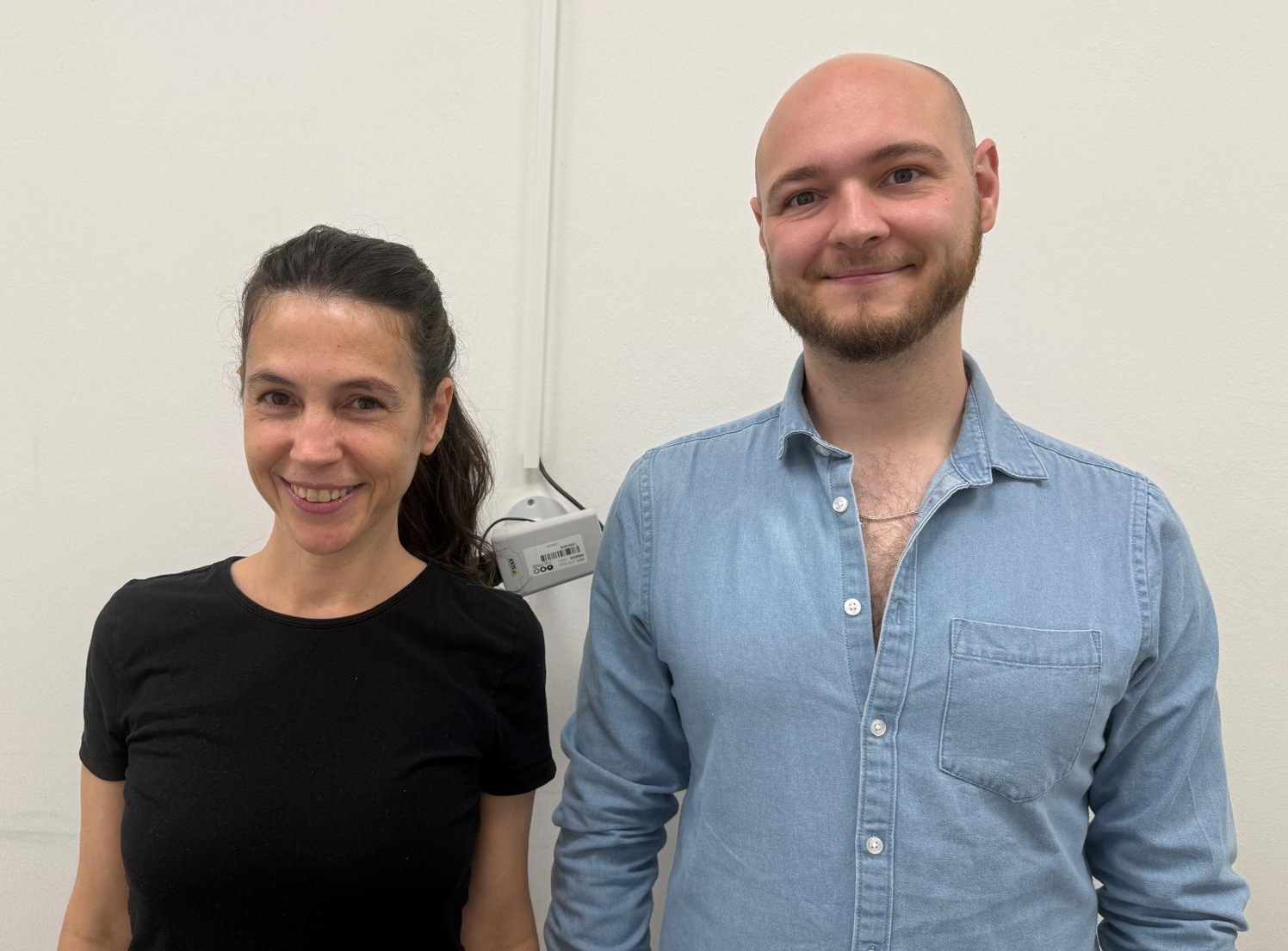
The research team (L-R) Prof. Yaara Yeshurun and Liron Amihai. (Tel Aviv University)
In the experiment, paired participants heard one person describe two films, then selected which movie they would rather watch. Using technology designed to detect micro-movements not easily visible to the naked eye, the researchers measured how closely listeners mirrored the speaker’s expressions. Participants tended to pick the film discussed during the moments when they showed greater mimicry of the speaker’s positive expressions—even when told to decide strictly based on personal taste.
Notably, it was not the listener’s general expressiveness that mattered. The best clue was how much the listener’s face matched the speaker’s signals.
The team also tested an audio-only version, with an actress reading the same summaries. Even without video, participants still mirrored what the researchers described as a “smile in the voice,” and that response again tracked with their eventual selection.
“The study indicates that facial mimicry is not only a social mechanism that helps us connect with other people. It likely also serves as an ‘internal signal’ to the brain that is indexing agreement.”