
Introduction:
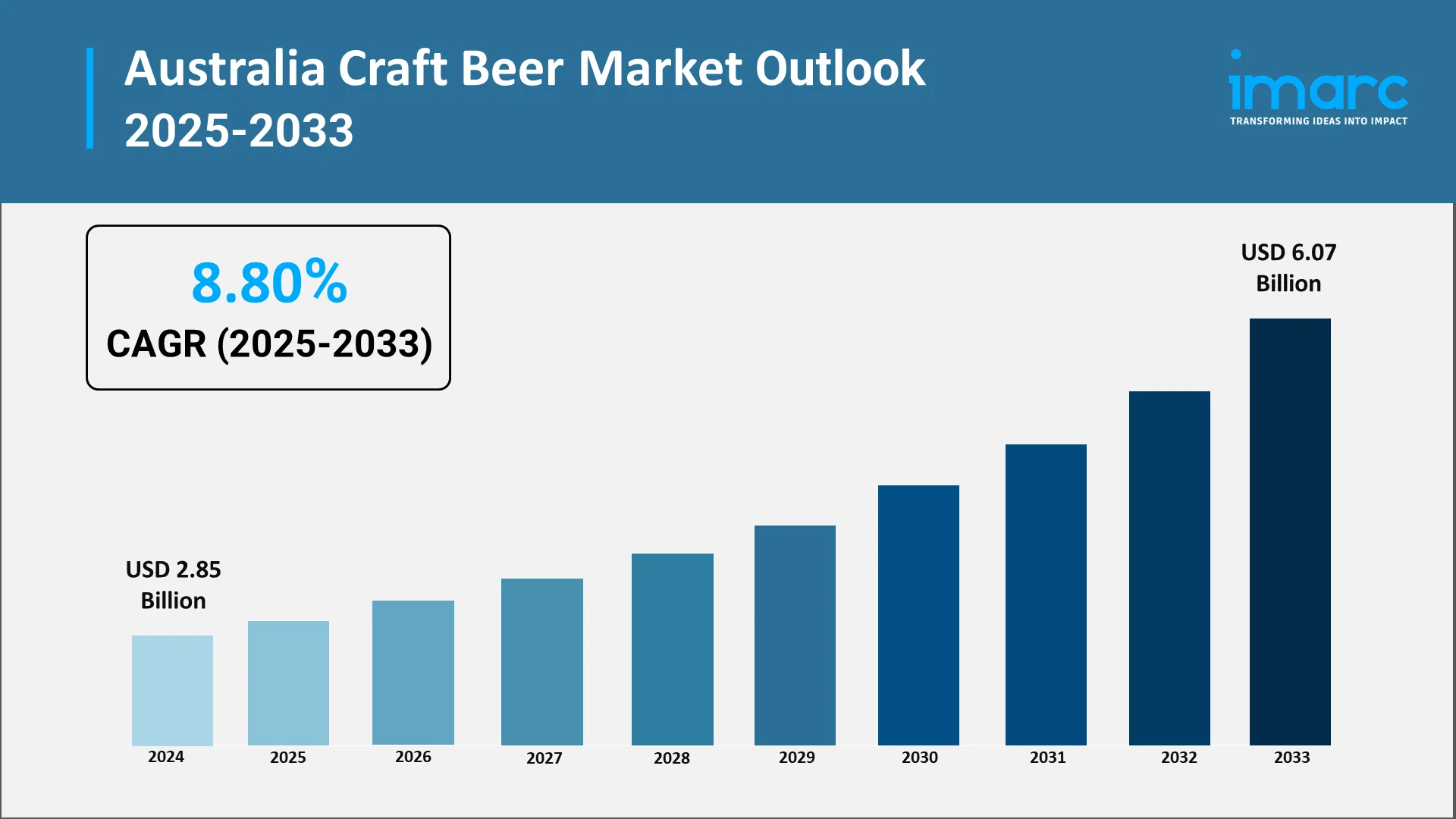
The Australian craft beer industry has emerged as a significant segment of the broader alcoholic beverages market driven by evolving consumer preferences, rising disposable incomes, and a growing appreciation for artisanal and premium products. Over the past decade, the market has witnessed substantial expansion with craft breweries increasingly occupying a distinct niche in the highly competitive beer sector. In 2024, the Australia craft beer market was valued at USD 2.85 Billion. Consumers today are seeking authenticity, quality, and unique flavor profiles, favoring products that demonstrate innovation, sustainability, and local sourcing.
Craft beer is characterized by its low volume of production and special attention to quality ingredients, combined with unique brewing methods. Recently, it has gained rapid consumer acceptance in Australia’s urban centers and regional markets. The product portfolio has been very diverse due to the growth of boutique breweries, taprooms, and microbreweries offering a range of different tastes from hoppy pale ales to rich stouts and seasonal brews. The movement away from mass-market beers toward specialty craft choices follows larger trends in consumer behavior that focus on personalization, experimentation, and paying more for higher quality.
Besides, the craft beer market corresponds closely with lifestyle and cultural trends as consumers increasingly value experiences associated with tasting, pairing, and consuming craft beverages. Events such as beer festivals, brewery tours, and interactive tasting sessions have become an integral part of the marketing strategies of craft breweries in a bid to improve brand visibility and community engagement.
Growth is not constrained to mere consumer demand, it is also being aided by regulatory support, innovation in techniques of production, and the adoption of technology in giving shape to the competitive landscape. The Australian craft brewers are increasingly incorporating digital platforms in marketing, distribution, and engagement with consumers while leveraging data analytics to anticipate trends and refine product offerings. Thus, the industry remains dynamic and presents tremendous opportunities for investors, distributors, and related stakeholders.
Explore in-depth findings for this market, Request Sample
Role of AI, Impact, and Benefits in the Australian Craft Beer Industry:
Artificial intelligence has increasingly become a transformative force within the Australia craft spirits market, influencing everything from production efficiency and consumer engagement to sophisticated market analysis. Applications are numerous, ranging from predictive analytics used for demand forecasting to quality control and supply chain optimization. In the case of breweries, AI-powered systems enable real-time monitoring of fermentation processes, while allowing for precise control of temperature, pH, and ingredient ratios for consistent product quality and minimization of production errors.
Beyond operational efficiency, AI allows for improvements in consumer experience through personalization of marketing and engagement. Data-driven algorithms analyze purchase patterns, social media interactions, and consumer feedback to predict trends and recommend flavor profiles or seasonal products likely to resonate with target audiences. This kind of personalization reinforces brand loyalty, repeat purchases, and positions craft breweries competitively in an increasingly crowded market.
AI also plays a role in supply chain optimization, particularly in inventory management and distribution logistics. Predictive analytics can help breweries anticipate demand fluctuations across retail outlets, direct-to-consumer channels, and export markets. This reduces wastage, minimizes overproduction, and enhances overall profitability. Furthermore, AI can streamline product development by analyzing flavor trends, competitor offerings, and regional consumer preferences, allowing breweries to introduce innovative products that meet emerging market demands.
Another significant impact of AI is its integration into quality assurance processes. Machine learning models can detect subtle variations in ingredient composition or fermentation conditions identifying potential quality deviations before they affect the final product. This capability not only safeguards brand reputation but also supports regulatory compliance, a critical factor for breweries operating in a highly regulated industry.
Recent Market News & Major Research and Development:
In November 2025, Sydney Brewery launched its Rozelle venue transforming a historic steel mill. Operating Wednesday to Sunday, the brewpub features an on-site brewery, expanded drinks menu, and a new food offering. The venue is family- and dog-friendly, with plans for future entertainment and events.
In November 2025, Gage Roads Brew Co launched its Huey Coastal Lager in Queensland, supported by lifestyle brand The Mad Hueys. Celebrating the brewery’s 20th anniversary, the lager is a clean, mid-strength beer brewed with all-Aussie ingredients. The partnership highlights a shared commitment to Australian coastal living and authentic local business.
Opportunities and Challenges in the Australian Craft Beer Industry:
Opportunities:
Expansion into Export Markets: The growing global appreciation for craft beer presents significant opportunities for Australian breweries to establish an international footprint. Exportation of high-quality and specialty beers will enable a brewery to enhance brand recognition, access new revenue streams, and leverage global consumer trends which favor artisanal and high-quality beverages. This can be achieved through strategic partnerships with international distributors by taking part in global trade shows that can facilitate entry to the markets. Expanding into export markets allows breweries to diversify risk, reduce dependence on domestic sales, and capitalize on increasing global demand for unique, innovative craft beer products.
Product Diversification and Innovation: Australian breweries have substantial potential to attract new consumer segments through product diversification and innovative offerings. Developing new flavor profiles, limited-edition releases, seasonal brews, and specialty lines can cater to evolving tastes and preferences. Experimentation with indigenous botanicals, low-alcohol or non-alcoholic alternatives, and integration with craft spirits enables breweries to differentiate their portfolio and increase consumer engagement. Innovation also strengthens brand identity, encourages repeat purchases, and positions breweries to respond proactively to emerging market trends and consumer demand for unique, high-quality beverages.
Sustainability and Eco-Friendly Practices: Implementing sustainable and eco-friendly practices represents a strategic opportunity for Australian craft breweries. By adopting energy-efficient production processes, water recycling systems, renewable energy integration, and environmentally responsible packaging, breweries can appeal to environmentally conscious consumers. Sustainability initiatives also enhance operational efficiency, reduce costs, and reinforce brand reputation in a competitive market. Communicating environmental responsibility through marketing and labeling can further differentiate products, attract loyal customers, and align breweries with broader industry trends emphasizing corporate social responsibility, ultimately supporting long-term growth and market positioning.
Challenges:
Intense Market Competition: The Australian craft beer sector faces increasing competition due to the proliferation of microbreweries, regional producers, and craft-focused brands. As more entrants seek market share, brand differentiation, innovative marketing, and consumer loyalty become critical for sustained growth. Differentiating through unique flavors, brand storytelling, quality, and customer engagement is essential. Competition also drives pricing pressures and increases the need for strategic investment in digital channels, retail partnerships, and experiential marketing. Smaller breweries may struggle to compete with established players, making operational efficiency, product innovation, and strong branding indispensable for survival.
Regulatory Compliance and Licensing: Navigating alcohol regulations, licensing frameworks, and quality standards presents a significant challenge for Australian craft breweries. Compliance requirements can be complex, particularly for small-scale producers seeking to scale operations or enter new markets. Non-compliance may result in fines, operational delays, or reputational damage. Breweries must invest in staff training, process monitoring, and documentation to ensure adherence to regulations. Understanding local, state, and national licensing requirements is critical for production, distribution, and marketing, making regulatory compliance a continuous operational and strategic priority.
Supply Chain and Raw Material Availability: Dependence on high-quality ingredients, specialty hops, malts, and brewing equipment exposes Australian craft breweries to supply chain vulnerabilities. Disruptions in sourcing, transportation delays, or fluctuations in raw material quality can affect production schedules, operational costs, and product consistency. Smaller breweries may struggle to secure reliable suppliers or negotiate favorable terms. Managing inventory effectively, establishing multiple supplier relationships, and planning for contingencies are essential to mitigate risks. Ensuring consistent product quality while maintaining cost efficiency is a persistent challenge in a market reliant on artisanal ingredients and specialized processes.
.webp.webp)
Future Outlook: Australia Craft Beer Industry:
The market is projected to reach USD 6.07 Billion by 2033, exhibiting a CAGR of 8.80% during 2025-2033, driven by sustained consumer demand for premium, artisanal beverages and continued innovation in production, flavors, and marketing. Digital transformation, including AI adoption, e-commerce integration, and advanced analytics, will continue to shape operational efficiency and consumer engagement, enabling breweries to respond proactively to market trends.
Sustainability and environmental considerations are expected to play an increasingly prominent role, influencing both production practices and consumer preferences. Breweries investing in eco-friendly operations, renewable energy, and sustainable packaging are likely to gain competitive advantage while meeting evolving regulatory expectations and consumer expectations for responsible consumption.
International expansion and export opportunities present further growth avenues, allowing Australian craft beer producers to capture global market share while building brand prestige. The development of craft beer tourism, tasting experiences, and experiential marketing will also enhance domestic demand and consumer loyalty.
The industry is projected to maintain strong growth momentum as breweries continue to innovate, leverage technology, and diversify product offerings. Challenges related to competition, regulation, and supply chain management are expected to be addressed through strategic partnerships, technological investments, and operational efficiency improvements. Collectively, these trends position the Australian craft beer industry as a resilient, dynamic, and rapidly evolving segment with significant long-term potential for investors, producers, and stakeholders across the value chain.
How IMARC Group is Supporting Strategic Growth in the Australian Craft Beer Industry:
IMARC Group equips stakeholders across the Australian craft beer ecosystem with strategic insights to navigate a dynamic and rapidly evolving market. Our services help clients identify emerging opportunities, mitigate risks, and drive innovation through:
Market Insights: Analyze current and emerging trends in the Australian craft beer industry, including shifting consumer preferences toward premium and artisanal products, sustainable brewing practices, and the growing integration of technology in production, distribution, and marketing.
Strategic Forecasting: Anticipate market developments, such as AI adoption in production, the rise of craft beer tourism, and evolving consumer demands for unique flavors, seasonal brews, and sustainable practices, to make informed business decisions.
Competitive Intelligence: Monitor industry developments, including innovation in brewing techniques, product diversification, and marketing strategies, enabling stakeholders to benchmark performance, identify opportunities, and remain competitive in a crowded market.
Regulatory and Policy Analysis: Understand the impact of licensing regulations, production standards, and sustainability policies on operations and growth strategies, ensuring compliance while optimizing market opportunities.
Customized Consulting Solutions: Receive tailored support for market entry, product development, operational efficiency, and expansion strategies. Whether targeting domestic growth, export opportunities, or innovation-driven differentiation, our consulting services empower clients to thrive in Australia’s craft beer sector.
With the Australian craft beer market projected grow significantly, IMARC Group continues to serve as a trusted partner, providing insights, driving innovation, and guiding strategic decisions for sustainable growth. For detailed data-driven forecasts, market trends, and strategic recommendations, explore the complete report on the Australia Craft Beer Industry here: https://www.imarcgroup.com/australia-craft-beer-market