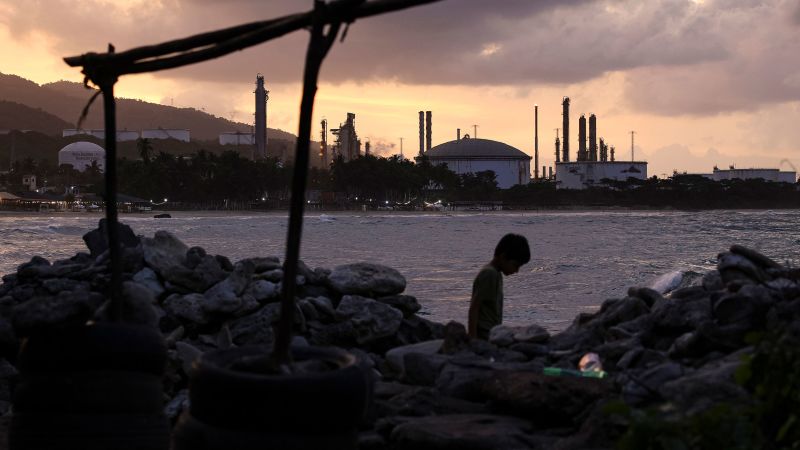
The largest oil reserves of any country on the planet, more than 300 billion barrels, are estimated to lie beneath the ground in Venezuela. President Donald Trump is now laying claim to these vast deposits after his capture of the country’s president Nicolás Maduro.
Venezuelan oil is a tantalizing prospect for Trump, who reveres fossil fuels and has already set out a vision of US oil companies investing billions to unleash this black gold.
However, climate experts are sounding the alarm because this oil is among the dirtiest in the world.
“Venezuela’s oil is considered ‘dirty’ not because of ideology, but because of physics and infrastructure,” said Guy Prince, head of energy supply research at independent think tank Carbon Tracker.
The type of oil that dominates in Venezuela — mostly found in the Orinoco Belt, an expanse of land stretching across the eastern part of the country — is called heavy sour crude and is similar to Canada’s oil sands. It’s thick and viscous like molasses and has a higher concentration of planet-heating carbon than lighter oils.
Its consistency means heavy oil is generally harder and more energy-intensive to extract. “The oil does not flow from the well as a liquid. It has to be heated, usually by pumping steam into the reservoir,” said Lorne Stockman, research co-director at the environmental non-profit Oil Change International. This requires large amounts of energy, primarily produced from planet-heating natural gas.
Impacts continue beyond extraction. The oil’s high sulfur content also makes it harder and more expensive to refine into useful products like gasoline and diesel. It requires specialized equipment and more energy-intensive processes, further increasing climate pollution.
On top of that, “the infrastructure (in Venezuela) is old and poorly maintained, which raises the risk of methane leakage, flaring, and spills,” said Carbon Tracker’s Prince.
Methane is a big climate problem because this planet-warming gas is over 80 times more potent than carbon dioxide over short timeframes. The methane intensity of oil and gas operations in Venezuela is six times the global average, according to the International Energy Agency. In part, this is due to the country’s high levels of flaring, a practice which releases large quantities of methane as excess natural gas is burned off.
Currently, the climate pollution released for every barrel of Venezuelan oil produced is more than double the global average, according to Patrick King, head of emissions research at consulting firm Rystad Energy.
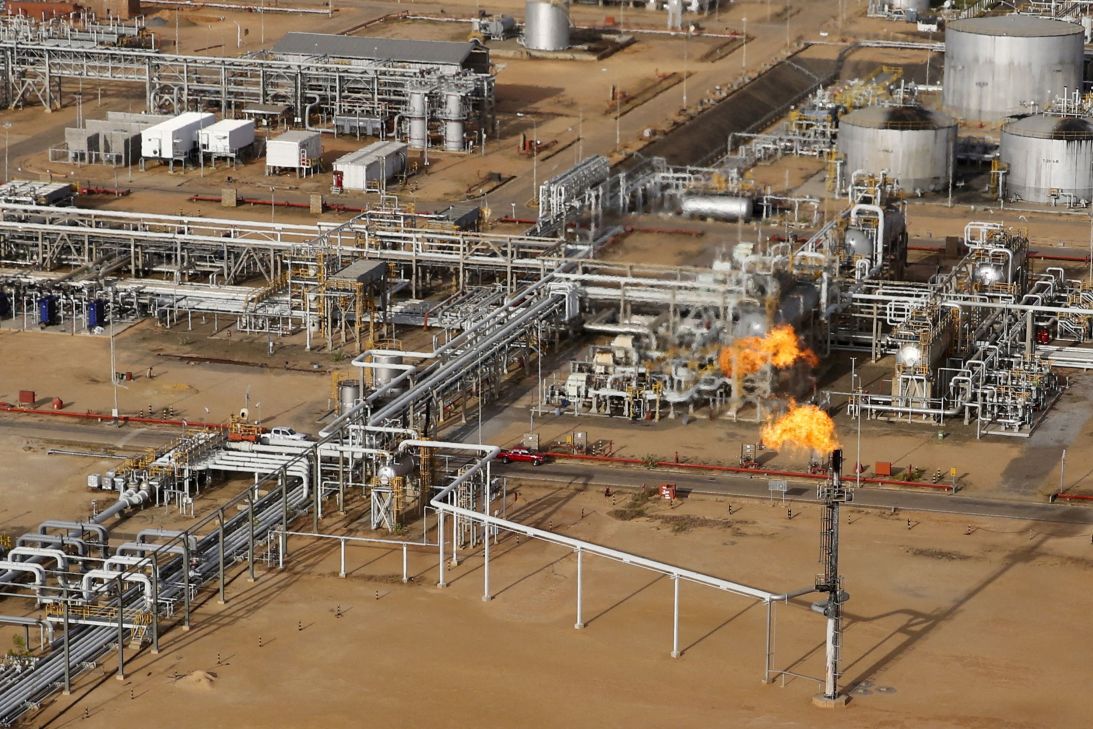
It’s possible that the climate impact could be reduced if US oil majors step in. They have managed to decrease the emissions intensity in some of their global oil operations, said Rystad’s King. However, “there are limits” to how much could be reduced, he added. Venezuelan oil will still require large amounts of energy to extract and significant flare-reduction programs are very costly.
Venezuela’s oil also carries serious environmental concerns. The country is plagued by leaking pipelines and outdated infrastructure, raising the risk of spills.
Accurate data on the number of spills is hard to come by, especially as the national oil company stopped reporting on them publicly in 2016, but other organizations have published estimates. The Venezuelan Observatory of Environmental Human Rights produced a report in 2022 which found 199 spills between 2016 and 2021 — although it noted the true number was likely far higher.
“Whether in Canada or Venezuela, we should not be digging this stuff up,” Oil Change International’s Stockman said.
Not only are the climate and environmental risks high, but the economics of unleashing Venezuelan oil may simply not work.
Venezuela’s oil production has slumped significantly since 2016, when it stood at around 2 million barrels a day. It now produces fewer than 1 million barrels a day, due in part to US sanctions and reduced investment. Before the US military operation, the future outlook was one of further decline.
It would take more than $53 billion of investment over the next 15 years just to sustain the current rate of oil production, according to data from Rystad Energy published Monday. To scale production to Venezuela’s heyday of more than 3 million barrels a day would require an eye-watering $183 billion, Rystad concluded.
It’s a costly prospect in a world awash with oil, where prices are low and where peak global oil demand may be rapidly approaching. “In today’s energy market, that simply doesn’t line up with reality,” Prince said. “It would be a very expensive way to produce high-cost, high-emissions oil just as global demand growth is slowing. It’s just not a credible scenario,” he added.
The global climate consequences of dramatically scaling up Venezuelan oil, if that does prove possible, are hard to predict. It would very much depend on how the oil is extracted “but most likely carbon emissions would very significantly increase,” said Diego Rivera Rivota, senior research associate at Columbia University’s Center on Global Energy Policy.
There are other scenarios, though. Increased Venezuelan production may not necessarily mean more oil globally if production decreases in other regions, Rystad’s King said.
More important may be the impact on global efforts to halt the climate crisis, Prince said: “The most significant climate impact of a Venezuelan intervention wouldn’t be releasing vast new carbon — it would be indirect: distracting from the clean energy transition, reinforcing a 20th century resource-conflict mindset, and creating instability that slows coordinated climate action.”