
by croatiaweek
January 7, 2026
in
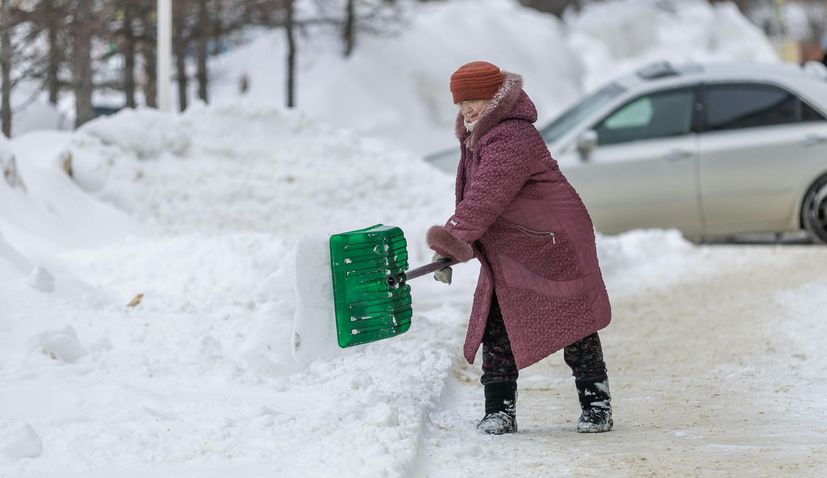
With snow falling across all parts of continental Croatia this week, residents are being reminded of an important legal responsibility during winter weather.
According to Croatian law, co-owners of multi-apartment residential buildings are required to organise and carry out the removal of snow and ice from areas surrounding their properties, Zgradonacelnik.hr said in a statement.
The Croatian Meteorological and Hydrological Service (DHMZ) has been issuing regular updates as cold conditions and snowfall affect cities and towns across the interior of the country.
As pavements become slippery and access to buildings more difficult, local authorities are stressing that the duty of keeping paths safe does not rest solely with municipal services.
Under the Law on Communal Economy (Zakon o komunalnom gospodarstvu), local self-government units – cities and municipalities – must adopt decisions on communal order.
These decisions regulate, among other matters, the maintenance and cleanliness of public-use areas. A key part of those rules is the obligation to clear snow and ice from publicly accessible surfaces, particularly the pavements located directly next to residential buildings.
Every Croatian city or municipality has its own specific communal order decision, but the principle is the same nationwide: the responsibility for winter maintenance of areas immediately around apartment blocks lies with the building’s owners and users.
Buildings now treated as legal entities
In recent years, residential buildings in Croatia have been assigned their own personal identification number (OIB). This means that buildings are now recognised as legal entities rather than simply collections of individual flats.
As a result, communal wardens can more easily issue fines directly to a building if snow and ice are not cleared as required. Importantly, these fines are significantly higher than those imposed on private individuals.
Authorities are also reminding residents that buildings and their co-owners may be held liable for any injury or damage suffered by passers-by due to a failure to remove snow and ice.
Examples from Croatian cities
Zagreb
The communal order decision in Zagreb clearly states that snow and ice must be removed from building roofs and from the pavements next to buildings by the owner or user of a flat or business premises, or by the building manager.
• Fines:
Individuals who fail to clear snow and ice face penalties ranging from 100 to 250 euros.
Legal entities – including residential buildings – can be fined between 600 and 1,300 euros for the same offence.
Nova Gradiška
In Nova Gradiška, citizens and owners or users of flats, restaurants, shops, kiosks and other premises must organise the spreading of grit and the cleaning of pedestrian surfaces in front of their buildings whenever icy or snowy conditions occur. They must also maintain stairways and entrances to apartment blocks and remove dangerous accumulations from roofs.
Dugo Selo
The rules in Dugo Selo follow the same approach. Snow and ice removal from pavements next to buildings is the duty of building owners and users. Owners of street-level shops are responsible for clearing the paths in front of their premises, while kiosk users must maintain the area around their temporary structures.
A nationwide winter message
While municipal services work to keep major roads and squares clear, smaller access routes and pavements depend on local residents taking action. Clearing snow promptly, spreading salt or grit, and ensuring roofs are safe are not only matters of good neighbourly behaviour, they are legal obligations in Croatia.