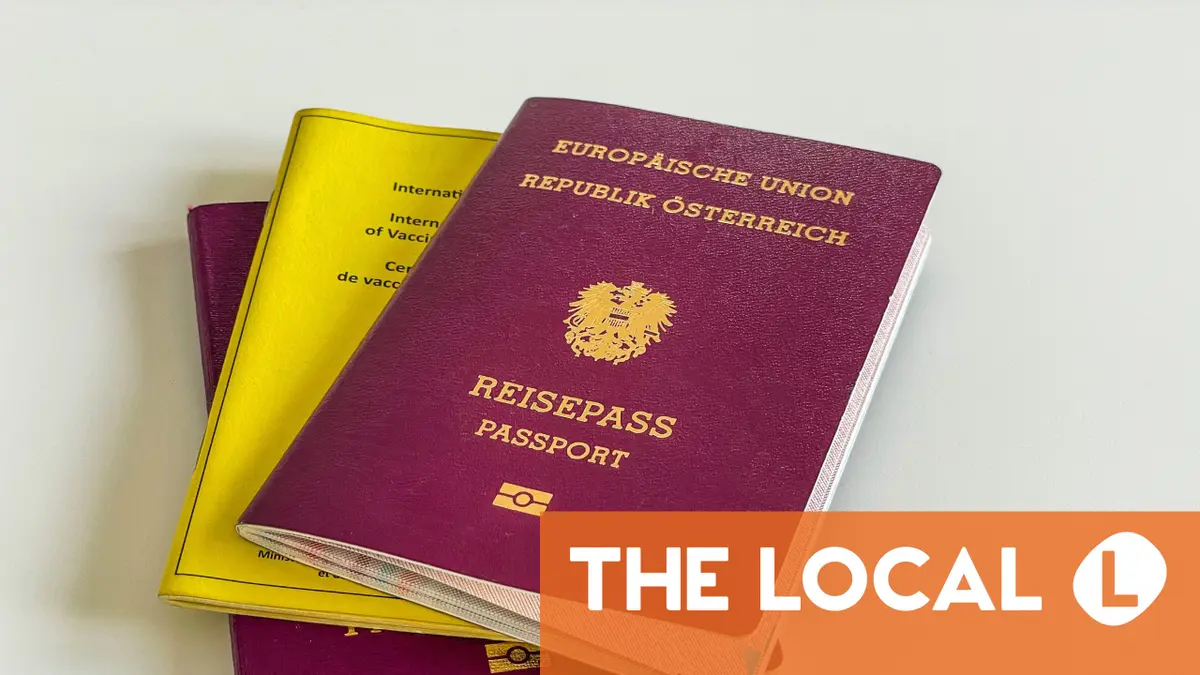
From higher German requirements to new citizenship courses, Austria’s coalition has signalled major changes to naturalisation rules from 2026.
Austria could be heading for its most significant overhaul of citizenship rules in years. The governing coalition of ÖVP, SPÖ and NEOS has committed in its programme to a reform of the Staatsbürgerschaftsgesetz, with work expected to begin in the first half of 2026.
While no draft law has yet been published, political statements and coalition documents already give a fairly clear picture of the direction of travel.
For foreign residents considering Austrian citizenship, the coming year could bring stricter language and integration requirements, alongside efforts to reduce bureaucracy and financial barriers.
READ ALSO: Why some foreigners in Austria choose to get citizenship – despite strict rules
A political push to ‘upgrade’ citizenship
The coalition frames the reform as an “Aufwertung” (something of an upgrade) of Austrian citizenship. In the government programme, citizenship is described as the final step of a successful integration process, not an automatic entitlement after a certain number of years.
NEOS parliamentary leader Yannick Shetty has said the reform should tighten requirements for language skills and commitment to democratic values, while removing what he called unnecessary hurdles, such as overly complex procedures and income thresholds.
According to an ORF report, Shetty said the aim was to focus on whether applicants genuinely want to be part of Austrian society, rather than whether they meet rigid financial benchmarks.
The coalition plans to take up the reform in the first half of 2026, though the exact timing will depend on negotiations between the three parties and with the provinces, which administer much of the citizenship process.
READ ALSO: The immigration changes that await foreigners in Austria in 2026 and beyond
Advertisement
Higher German language requirements likely
One of the clearest changes signalled so far concerns language skills. At present, applicants generally need German at the B1 level under the Common European Framework of Reference for Languages.
Under the government programme, this would be raised to B2. The document states explicitly that without “very good German skills (B2) and successful integration”, there should be no chance of acquiring Austrian citizenship. This would mark a significant tightening and could affect many long-term residents who currently meet the B1 requirement but struggle to reach B2.
The Austrian Chamber of Labour has criticised this approach, arguing that B2 can be unrealistic for some well-integrated people, particularly older migrants or those in physically demanding jobs, even if they function well in everyday German.
READ ALSO: Five surprising Austrian citizenship rules you should know about
Mandatory integration programme and citizenship course
Another major proposed change is the introduction of a compulsory citizenship course run by the Austrian Integration Fund (ÖIF). Under the coalition agreement, this course must be completed successfully before citizenship is granted.
Advertisement
The course is expected to focus on democracy, European values, and gender equality. In addition, the positive completion of a broader integration programme would become mandatory for all applicants.
This is controversial. The Chamber of Labour has warned that extending integration programme requirements, which currently apply mainly to refugees, to all citizenship applicants could, in practice, exclude large groups, including labour migrants and EU citizens.
READ ALSO: When can I start counting my residency in Austria towards citizenship?
Easier procedures and fewer bureaucratic hurdles
Alongside stricter substantive requirements, the government also promises “Entbürokratisierung,” or the reduction of bureaucracy. This includes reducing paperwork for proving length of residence and income, increasing digital processing, and reviewing fees.
Shetty has repeatedly criticised the current income thresholds and fee structure. According to a Kurier report, he argued that access to citizenship should not depend on earning around €2,500 net per month, a figure often cited in public debate, even if the formal thresholds are lower.
Under current rules, applicants must show a secured livelihood, with net monthly income requirements that rise with family size.
Advertisement
The coalition wants to simplify how this is assessed, particularly for people in shortage occupations. In such cases, collective wage agreements could be used as a benchmark for financial self-sufficiency.
However, the exclusion of social assistance remains a red line. The government programme makes clear that rules barring applicants from relying on social welfare will not be fundamentally softened and will continue to apply to the applicant personally.
A small but potentially important change concerns administrative offences. The programme states that minor administrative violations should no longer automatically block access to citizenship. This could benefit applicants who have been rejected in the past over relatively minor issues, such as traffic fines.
READ ALSO: The vocabulary you need to understand the Austrian citizenship process
What is still unclear
Despite these signals, many key questions remain unanswered. It is not yet clear whether there will be exceptions to the B2 requirement, how expensive the new courses will be, or whether application fees will actually fall.
There is also no commitment to reducing the often lengthy wait times for citizenship decisions, which critics say is just as important as formal criteria.
Advertisement
Key vocabulary
die Staatsbürgerschaft – citizenship
die Einbürgerung – naturalisation
das Integrationsprogramm – integration programme
der Staatsbürgerschaftskurs – citizenship course
das Deutschniveau B2 – advanced German language level
die Selbsterhaltungsfähigkeit – financial self-sufficiency
die Aberkennung der Staatsbürgerschaft – revocation of citizenship