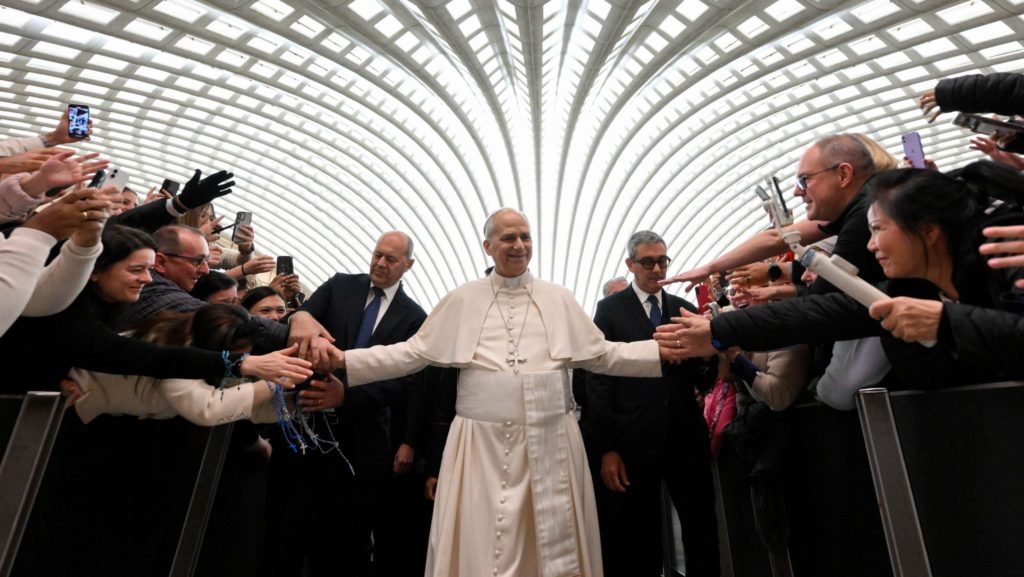
Cardinals from around the world are gathering at the Vatican Jan. 7-8 for an extraordinary consistory called by Pope Leo XIV, an event seen as the first major step in his governance of the universal Church.
Before the consistory began on the afternoon of Jan. 7, the cardinals were tasked with re-reading Pope Francis’ 2013 apostolic exhortation “Evangelii Gaudium.” The apostolic exhortation is considered a programmatic document of the Francis pontificate, focused on the mission of the Church. It reflects on the Church’s missionary transformation, on a crisis of communal commitment, on the proclamation of the Gospel, and on the social dimension of evangelization. The cardinals were expected to have a synodal discussion of the document as the meeting began.
When asked by OSV News why the cardinals were asked to re-read the document, Matteo Bruni, director of the Holy See Press Office, said “we’ll see if the meaning will be made explicit in some way during the afternoon itself.” Bruni offered his remarks during the press conference about the Pope’s Prayer Network in the Vatican’s Press Office.
According to a Dec. 20 press release, the consistory “is part of the life and mission of the Church, and aims to strengthen communion between the Bishop of Rome and the Cardinals, who are called to collaborate in a particular way in their concern for the good of the universal Church.” It added that the meeting will be aimed “at fostering shared discernment and offering support and counsel to the Holy Father in the exercise of his high and weighty responsibility in governing the universal Church.”
While there will not be as many cardinals participating in the consistory as there were the events surrounding the May 2025 conclave, those who are in Rome were not eager to comment to the press, stressing that the meeting aims to help the pope govern the Church, and they were waiting for him to have the first word.
Asked by OSV News what the expectations and plans for the consistory are, Cardinal Anders Arborelius of Stockholm said that “for us cardinals, this will be a unique opportunity to meet Pope Leo during the early period of his pontificate and to hear what he wishes to prioritize and what he expects of us.”
In a rare comment before the start of the consistory, British Dominican Cardinal Timothy Radcliffe said in an interview with London’s The Telegraph Jan. 6 that following the general congregation prior to the conclave “many cardinals think that there should be at least one [consistory] a year.”
Pope Francis “formed a group with whom he met several times a year, part of a move towards a more radical form of consulting.” It is vital that the cardinals are happy, Cardinal Radcliffe added: “A Church which is miserable can’t preach the gospel.”
Cardinal Radcliffe will deliver a meditation to cardinals at the opening of the consistory, OSV News learned.
The cardinals reportedly will discuss synodality as a means of effective collaboration with the pope, with discussion on the liturgy as an important part of the meeting. As for the Church governance, “Praedicate Evangelium,” Pope Francis’ apostolic constitution on the Roman Curia and its service to the Church in the world, released in 2022, will be on the table for discussion.
“The reform of the Roman Curia demands attention to, and appreciation for, yet another aspect of the mystery of the Church,” the constitution said, adding that, “in her, mission and communion” are “closely united.”
Pope Francis stressed in the constitution that “this life of communion makes the Church synodal; a Church marked by reciprocal listening.”
With Pope Leo’s closing of the Holy Door in St. Peter’s Basilica Jan. 6, the Jubilee Year of Hope that had been opened by Pope Francis Dec. 24, 2024, came to an end, symbolically closing the era of Francis for the universal Church, and opening an era of Leo — of which the consistory is seen as the beginning.
The pope kicked off the new year of audiences with a new catechesis series on the Second Vatican Council and its documents, calling the Council’s teaching “the guiding star” of the Church’s journey.
While the Jubilee Year’s focus was on the mysteries of the life of Jesus, now reflecting on the Council brings “a valuable opportunity to rediscover the beauty and the importance of this ecclesial event.”
“I feel more than ever in duty bound to point to the Council as the great grace bestowed on the Church in the 20th century,” the pope said, giving a hint as to the spirit he was taking into the meeting with cardinals that same afternoon.