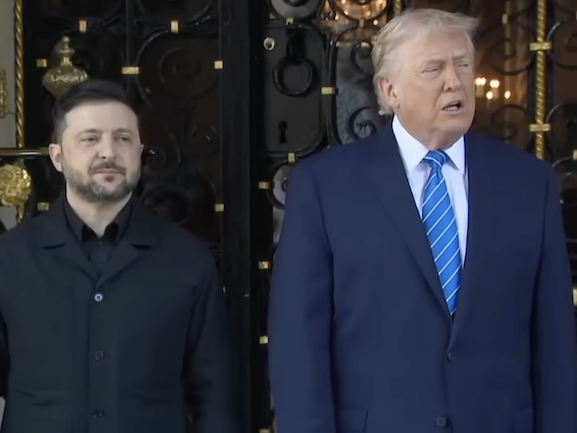
Ukraine peace talks may be “95% done”, but Europe knows the final barrier isn’t borders — it’s Vladimir Putin. Catherine Wilson reports.
EARLIER THIS WEEK U.S. President Donald Trump claimed Ukraine peace negotiations were “close to 95 percent done”. Then, an outraged Russian state accusation of Ukraine launching a drone attack on one of Russian President Vladimir Putin’s residences preceded his rallying of troops for “victory” in Ukraine in his New Year speech. There is the Putin factor to consider in both Russia’s invasion of Ukraine and Europe’s security dynamics.
“He is unique,” Dr Anton Shekhovtsov at the Central European University’s Department of International Relations said of Russian President, Vladimir Putin, during a call from Vienna. As a Ukrainian who was born in Sevastopol in the Crimea Dr Shekhovtsov is well-placed to know.
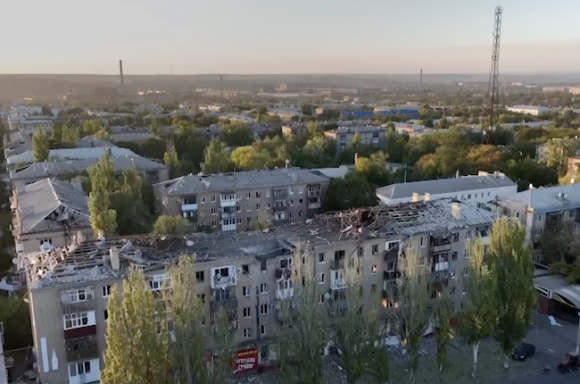
We are discussing the significance of Putin’s individual power dynamics in the invasion of Ukraine and escalating hybrid war being waged by Russia across Europe.
Shekhovtsov said:
“In 2022, there was no demand from the Russian society to implement the full-scale invasion of Ukraine. It was Putin’s decision and I would say that it wasn’t supported initially by the large portion of the population.”
Nearly four years later, the U.S.-led peace talks revived in late November began with optimistic statements by Ukraine’s President, Volodymyr Zelensky, but broader European doubts about Russia’s commitment to peace continue. Last month, Zelensky intimated that he may consider relinquishing ambitions to join NATO, while the United States offered the besieged state security guarantees for a period of 15 years. The primarily European ‘Coalition of the Willing’ has also proposed a multinational force to bolster security on the ground in Ukraine.
But it is unlikely that ground will be given by either side on the two most contentious issues, Russia’s territorial claims to the Ukraine’s Donbas region and the fate of the Zaporizhzhia nuclear power plant, currently under Russian control. A Ukrainian public poll conducted in December reported that 76 percent of respondents considered it unacceptable to recognize Russian possession of Ukrainian territories in exchange for ending the conflict.
Any thoughts of Putin entertaining compromises in the peace talks were jettisoned when, just before New Year, the Russian foreign ministry made a sudden public claim that Ukrainian drones had threatened one of Putin’s state residences inside Russia. Zelensky responded that the accusation was ludicrous and ‘typical Russian lies.’ But it has increased distrust between the two warring states and became the launch pad for more rallying to the war effort by Russia.
Russian Foreign Minister, Sergey Lavrov, was reported to have said on 29 December:
‘Given the final degeneration of the criminal Kyiv regime, which has switched to a policy of state terrorism, Russia’s negotiating position will be revised.’
The developments in recent days have not diminished concerns in Europe of Putin’s potential and more expansive geopolitical goals on the continent. In December, NATO Secretary-General, Mark Rutte, warned of a potential Russian offensive in Europe within five years. Then Putin was reported to have declared at an internal defence meeting on 17 December that Russia’s war goals in Ukraine will be achieved ‘unconditionally.’
Rutte’s announcement aligns, too, with warnings by Baltic and Eastern European leaders. ‘Russia’s complex hybrid operations and acts of sabotage against Europe are increasing…Russia’s strategic goals remain unchanged: to create a buffer zone stretching from the Arctic region through the Baltic and Black Seas to the Mediterranean,’ the leaders of Sweden, Finland, Poland, Estonia, Latvia, Lithuania, Romania and Bulgaria said in a joint statement following the Eastern Flank Summit held in Helsinki on 16 December.
Russia’s relentless ‘grey zone’ provocation with cyber attacks, border violations, disinformation and election interference aims to increase disunity in European democracies. And fly underneath the threshold of actions that could trigger a major NATO military response. In the last four months, drones crossed the borders of Romania, Spain, Belgium, Germany and Poland, where a railway line was also bombed, and Russian fighter jets breached Estonian airspace. In 2023-2024 Russian-backed sabotage incidents in European nations tripled, reports the Centre for Strategic and International Studies (CSIS).
Formerly employed by the KGB from 1975 to 1991, Putin had first-hand experience of hybrid warfare during the Cold War. And, according to Shekhovtsov, there is a connection to his motives today.
Shekhovtsov said:
“[Putin wants to revise] the results of the Cold War when Soviet Russia lost and the West won…the result that he would accept as the revised outcome is the dissolution of NATO.”
The aspiration of former Soviet-sphere states to join the EU and NATO are a threat to Putin’s vision of Russia’s destiny. That of ‘a vast Eurasian and Euro-Pacific power that brings together the Russian people and other peoples belonging to the cultural and civilizational community of the Russian world,’ as described in Russia’s 2023 foreign policy paper.
So far, NATO’s response has been restrained with a focus on strengthening defence systems and territorial protection.
“Governments don’t want to heighten public anxiety and division by elevating the issue, as that is exactly one of the main aims of Russia’s hybrid operations, to undermine public support for helping Ukraine.”
Jon Richardson, a former Australian diplomat with Moscow postings and Visiting Fellow at the Australian National University, claimed. European leaders see the risk of tensions spiralling into a larger conflict. Yet the status quo also plays into Russia’s presumption that NATO will not launch a major response to low-level interference.
During the Cold War the balance of military power and capability deterred outright war between Russia and the West with a perpetual standoff, but this looks more fragile today.
If the U.S. rejected its active role in the defence of NATO countries, Richardson pointed out:
“…the U.S. nuclear umbrella was removed, Europe currently has no quick substitute and would face momentous political choices about relying solely on British and French nuclear forces or creating some form of shared European deterrent.”
He added that long-term rebuilding of European defence requires expenditure to rise back at least to Cold War levels of 3-4 per cent of GDP.
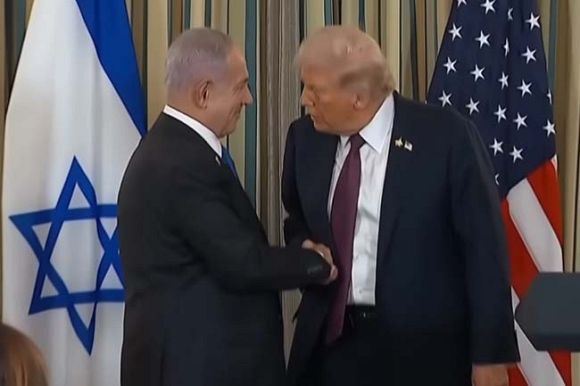
For now, Putin’s wartime leadership is the force to be reckoned with in considering Europe’s future security. Critically, his confidence and willingness to bide time are bolstered by a consolidated internal power base.
Shekhovtsov said:
“He is an arbiter of internal Russian conflicts between different elites or elite groups, and he is very good at that. He built his regime on this consensus between different groups within the Russian elites.”
“If he [Putin] is removed, there are people who would probably continue the war, but I don’t think that those same people would be able to hold on to power in the Russian Federation.”
Catherine Wilson is a freelance journalist and correspondent, reporting on current affairs, global issues, humanitarian crises, politics and international development.
Support independent journalism Subscribe to IA.


Related Articles