Published on
January 8, 2026
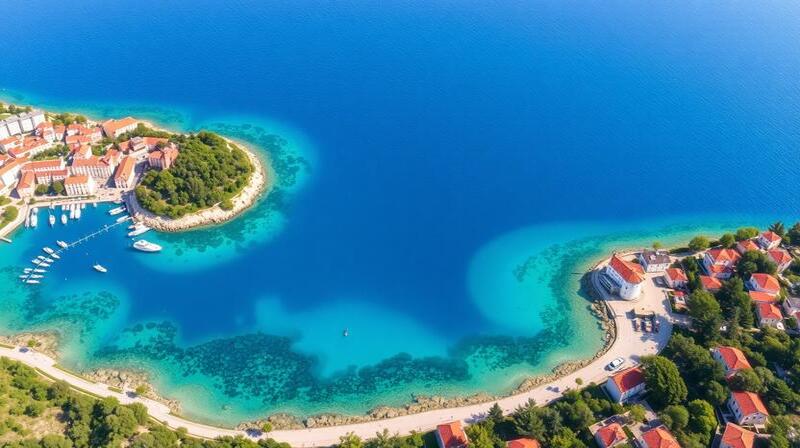
Germany, along with the UK, Slovenia, Austria, Poland, and the Czech Republic, played a pivotal role in driving Croatia’s record-breaking tourism growth in 2025. These countries were among the top source markets, contributing significantly to the country’s impressive 21.8 million arrivals and 110.1 million overnight stays. This surge in tourism was fueled by Croatia’s coastal charm, premium offerings, and resilience amidst global challenges, making it a top destination for travelers from across Europe and beyond.
Croatia has wrapped up 2025 with a record-breaking performance in its tourism sector, marking a historic milestone with 110.1 million overnight stays and over 21.8 million arrivals, according to the latest data from the national eVisitor system. This achievement represents a 2% increase in arrivals and a 1% rise in overnight stays compared to 2024.
The majority of the tourism activity continues to be concentrated in Croatia’s stunning coastal areas. The Adriatic region alone accounted for 104.6 million overnight stays, up by 1% from the previous year. Meanwhile, the continental areas, including the vibrant city of Zagreb, saw a notable 2% increase, with 5.6 million overnight stays recorded.
Key Destinations and Top-Performing Regions
Istria continues to lead the charge in tourism growth, with 30.3 million overnight stays in 2025. Other prominent regions that contributed significantly to Croatia’s tourism success include Split-Dalmatia with 20.9 million stays, Kvarner with 18.5 million, and Zadar with 15.5 million overnight stays. Dubrovnik-Neretva, one of the country’s most iconic regions, recorded 9.3 million stays, while Šibenik-Knin and Lika-Senj posted 6.6 million and 3.5 million stays, respectively.
Cities like Dubrovnik, Rovinj, Split, Poreč, and Umag attracted the highest number of visitors, with Dubrovnik consistently being among the most sought-after destinations in the country.
A Resilient Sector Despite Challenges
Kristjan Staničić, Director of the Croatian National Tourist Board (HTZ), pointed out the resilience of the sector in the face of inflation, climate challenges, and global instability. Looking ahead, he emphasized that Croatia’s tourism strategy for 2026 would focus on premium and sustainable tourism, responding to the shifting preferences of travelers and the need for more responsible travel practices.
Germany Leads as Croatia’s Main Source Market
Germany emerged as the leading source market for Croatian tourism, contributing 22.3 million overnight stays in 2025. Other notable markets included domestic tourism, with 13.8 million stays, as well as Slovenia (11.1 million), Austria (8.2 million), and Poland (7.3 million). The Czech Republic and the United Kingdom also played important roles, with 4.9 million and 4.1 million overnight stays, respectively.
A Strong End to the Year
Croatia’s tourism sector wrapped up the year on a high note, with December seeing 450,000 arrivals and 1.1 million overnight stays, marking an impressive 7% year-on-year growth. Kvarner, Istria, and Split-Dalmatia emerged as key drivers of this growth, while Zagreb, Opatija, Split, Dubrovnik, and Rovinj saw strong city-based performances.
Holiday Season Surge
During the Christmas and New Year period (from December 24 to January 1), Croatia experienced an uptick in tourism, recording 188,000 arrivals and 541,000 overnight stays—both up by 8% compared to the same period in 2024. Zagreb, Dubrovnik, Opatija, Poreč, and Split saw the highest volumes of tourism during this period, with hotels and private accommodations leading the way.
Croatia’s tourism sector has demonstrated impressive growth and resilience throughout 2025, and as the country looks toward 2026, it is set to continue embracing premium, sustainable tourism that aligns with global trends and evolving traveler expectations.
In conclusion, Croatia’s tourism sector has not only weathered global challenges but also achieved remarkable success in 2025, setting new records for both arrivals and overnight stays. With key markets like Germany, the UK, Slovenia, Austria, Poland, and the Czech Republic fueling this growth, the country’s appeal continues to rise. As Croatia prepares for 2026, its focus on sustainable, premium tourism promises to further elevate its standing as a must-visit destination, ensuring that the momentum built in 2025 will carry forward into the future.
