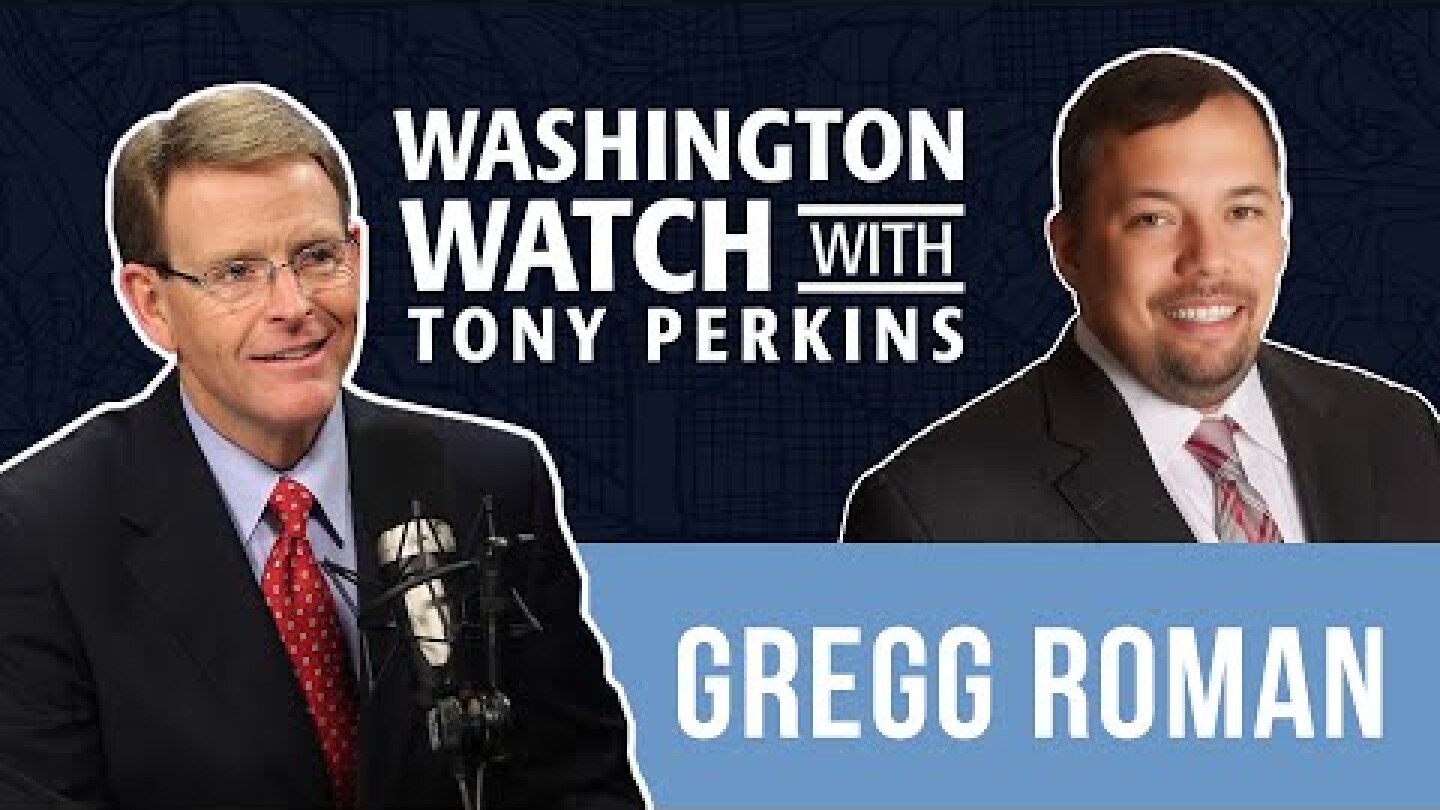
Middle East Forum Executive Director Gregg Roman spoke with Washington Watch about Iran’s expanding protest movement, the economic collapse driving unrest, and whether the Islamic Republic is approaching a genuine tipping point. They discussed how the current demonstrations differ from the 2022 protests, the regime’s weakened capacity to respond after recent military setbacks, the role of U.S. and Israeli pressure, and what a potential post–Islamic Republic Iran could mean for regional stability and the future balance of power in the Middle East.
PERKINS: Protests in Iran that were sparked by the country’s widening economic crisis have grown to become the largest since the protests back in 2022. Over the past ten days, they’ve continued to spread across the Islamic Republic despite efforts by the Iranian regime to quell the unrest. Could the crippled regime be at a tipping point? And are outside forces helping fuel this discontent? Here to discuss this is Gregg Roman, executive director of the Middle East Forum. He previously served as political adviser to Israel’s deputy foreign minister and worked for the Israeli Ministry of Defense. Gregg, welcome back to Washington Watch. Thanks for joining us.
ROMAN: Tony, thanks for having me.
PERKINS: Let’s bring everyone up to speed. With a lot of distractions over the holidays, what triggered this latest round of protests in Iran, and how significant is it?
ROMAN: I’d call it the perfect storm for Iranian seekers of freedom and democracy, and the most imperfect situation for those they’re protesting against. Iran’s currency hit an all-time low on December 26, the day after Christmas. A day later, the Iranian bazaar went on strike. In 1979, that strike was considered the death knell of the Shah’s government, and now—49 years later—it’s happening again.
You’re seeing shopkeepers, merchants, truck drivers, even government workers surviving on about $100 a month. They can’t afford basic goods like milk, eggs, or bread, even with government subsidies for fuel and electricity. Everything that could go wrong in the country is not working.
This all came to a head with the currency collapse and inflation reaching roughly 50 percent. Combined with the regime’s weakened ability to clamp down after the June Israeli-Iran war, protests spread rapidly. Shops couldn’t sell goods or afford imports, so they went on strike. Now 30 out of 31 provinces are experiencing unrest. We’re on day ten, and it’s nationwide.
PERKINS: The difference from 2022 seems important. That protest wave was driven more by social issues than economics. The government doesn’t appear to have the capacity to squash this. They’ve been exposed.
ROMAN: Not at all. It’s not even the same regime it was six months ago, before the Israeli-Iran war. The 2022 Woman, Life, Freedom movement centered on mandatory hijab enforcement. After the June war, we saw widespread defiance of hijab laws without the morality police cracking down, because the regime knew another mass uprising could overwhelm it.
Now we have economic collapse layered on top of unresolved anger from 2022, 2019, and even the 2009 Green Movement, which might have succeeded had President Obama not dismissed it as an internal Iranian matter. Add to that President Trump publicly warning the regime not to violently repress protesters—suggesting airstrikes, cyber operations, or economic measures rather than boots on the ground—and you’ve given protesters new momentum.
Iranians are saying: we’ll take care of this ourselves, just have our back.
PERKINS: Israel has already degraded Iran’s air defenses. What would be the tipping point that finally pushes this over the edge?
ROMAN: A catalytic event—much like 1979. It could be senior regime figures fleeing Tehran, a march on parliament, or fissures within the Islamic Revolutionary Guard Corps. In fact, we’ve already seen soldiers abandon sniper positions and join protesters outside Tehran.
When your enforcers switch sides, you’re near the tipping point. What protesters want most is international support—clear condemnation of the regime from leaders like President Trump, Prime Minister Netanyahu, or European heads of government. That moral backing matters.
There’s also a broader vision here. Before 1979, Iran was a pluralistic society with deep Persian pride and engagement with the West. The U.S. can support this transition without firing a shot—through cyber measures, information operations, disabling air defenses, and creating strike funds to support workers independently of the regime.
PERKINS: Iran’s history is different from other Middle Eastern regime changes that went from bad to worse. How do we ensure a transition that benefits the entire region?
ROMAN: Think of it as a controlled implosion, not demolition. Remove political leadership, but preserve state institutions. Allow mid-level bureaucrats to keep the country running. Establish a constitutional assembly decided by Iranians, not imposed by the West.
Lift sanctions once the Islamic Republic is gone, and Iran can become a model of how the West and a Middle Eastern nation can cooperate. Give Iranians the keys—they know how to drive.
PERKINS: What would that mean for the Middle East as a whole?
ROMAN: There’s good, bad, and ugly. Iran’s proxies—Hamas, Hezbollah, Assad—have been defeated or weakened since October 2023 and the 2025 war. Remove Iran, and the Houthis and Iraqi militias are isolated.
But a vacuum emerges. Sunni Islamist forces backed by Turkey, Qatar, or Pakistan could attempt to replace Shia extremism. That’s the danger. Middle East Christians, minorities, and Israel would be on the front lines.
Removing Iran doesn’t make the region safe. It means the U.S. and West must clearly oppose both Sunni and Shia extremism, rely on allies like Israel, the UAE, Saudi Arabia to some extent, and avoid empowering actors like Qatar. If that doesn’t happen, even more pernicious forces will fill the gap.
PERKINS: This feels historic—geopolitical change triggered by Hamas’s October 7 attack and Israel’s response.
ROMAN: Absolutely. History often turns on a single catalytic event. What matters now is that the U.S. can gradually withdraw while empowering Israel to take responsibility—not hegemony, but stewardship—for regional stability, minority protection, and the Abrahamic alliance. That role must be clearly articulated, not assumed.
PERKINS: We’ll have to leave it there. Gregg Roman, always great to see you. Thanks for joining us.