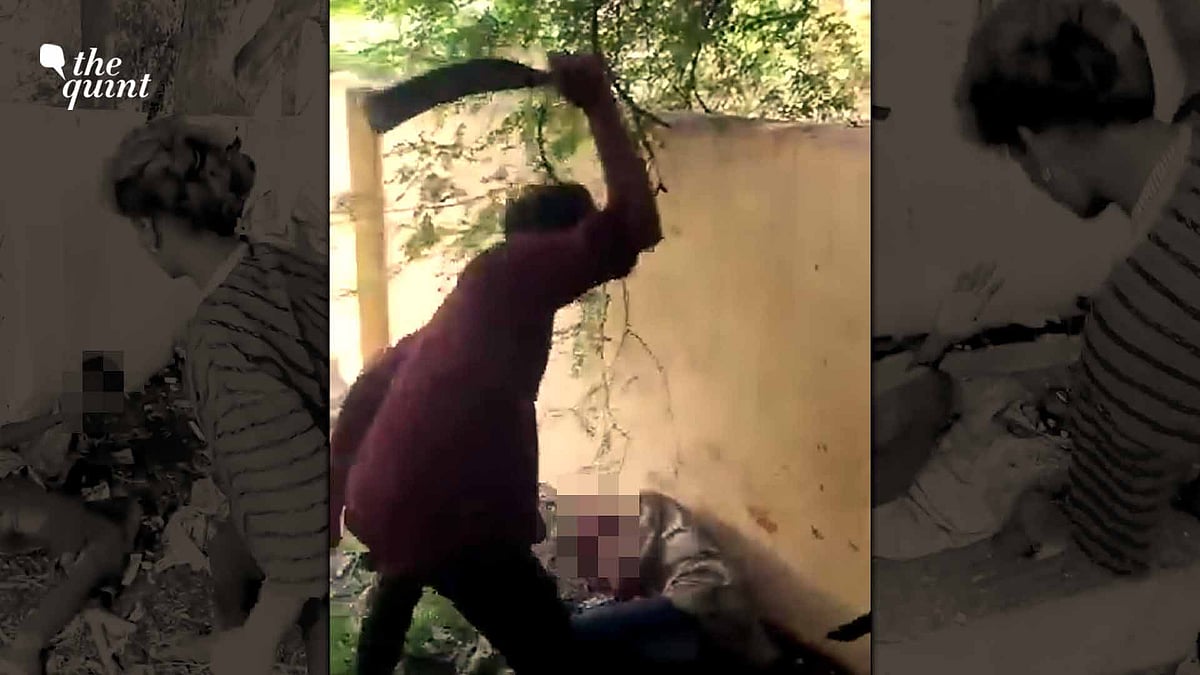
While the official narrative seeks to separate the assault from larger concerns around migrant safety, several gaps remain.
Speaking to The Quint, journalist Sandhya Ravishankar said,
Ravishankar also noted that the police have sidestepped repeated claims raised by political parties, activists, and local residents that the juveniles were under the influence of narcotic substances at the time of the assault, and the trend of filming an attack by minors which is symptomatic of a wider pattern of digital violence.
All the four accused are school dropouts.
“By insisting on viewing the assault purely as a spontaneous clash between individuals,” she said, “the state risks ignoring deeper structural issues like the easy access to drugs among minors, weak policing in transit zones, the normalisation of violence through social media and the heightened vulnerability of migrant workers who lack local protection networks.”
A Nagaraj, who runs a rehabilitation centre for youth battling addiction, said the case has highlighted the growing availability of narcotic substances among minors in Tamil Nadu—something which police case records, juvenile justice data, rehabilitation admissions and NGO field studies reveal. Even studies conducted by his organisation and data from admissions at his rehabilitation centre show an increase in minors seeking treatment for substance abuse, he claimed.
Although Tamil Nadu Health Minister Ma Subramanian has publicly stated there is no drug menace in the state, Nagaraj alleged, “Beyond politics, the mushrooming of rehabilitation centres itself is a mirror of rampant drug use.”
At the same time, local residents and social media users point out that the accused juveniles had previously posted videos of themselves intimidating people and engaging in violent acts, as also verified by The Quint. In several instances, members of the public tagged police handles seeking intervention, but no visible preventive action followed. These pages have been since withheld.
“Social media platforms continue to host and algorithmically amplify content that normalises violence, substance use and other extreme behaviours, effectively rewarding vulnerable youth with visibility and validation. For those from economically and socially fragile backgrounds, this digital exposure directly undermines recovery and increases the risk of relapse,” psychologist R Prabhu told The Quint.
Karthikraj also warned that without stricter platform accountability and digital supervision, social media will continue to function as a catalyst rather than a deterrent for juvenile violence.