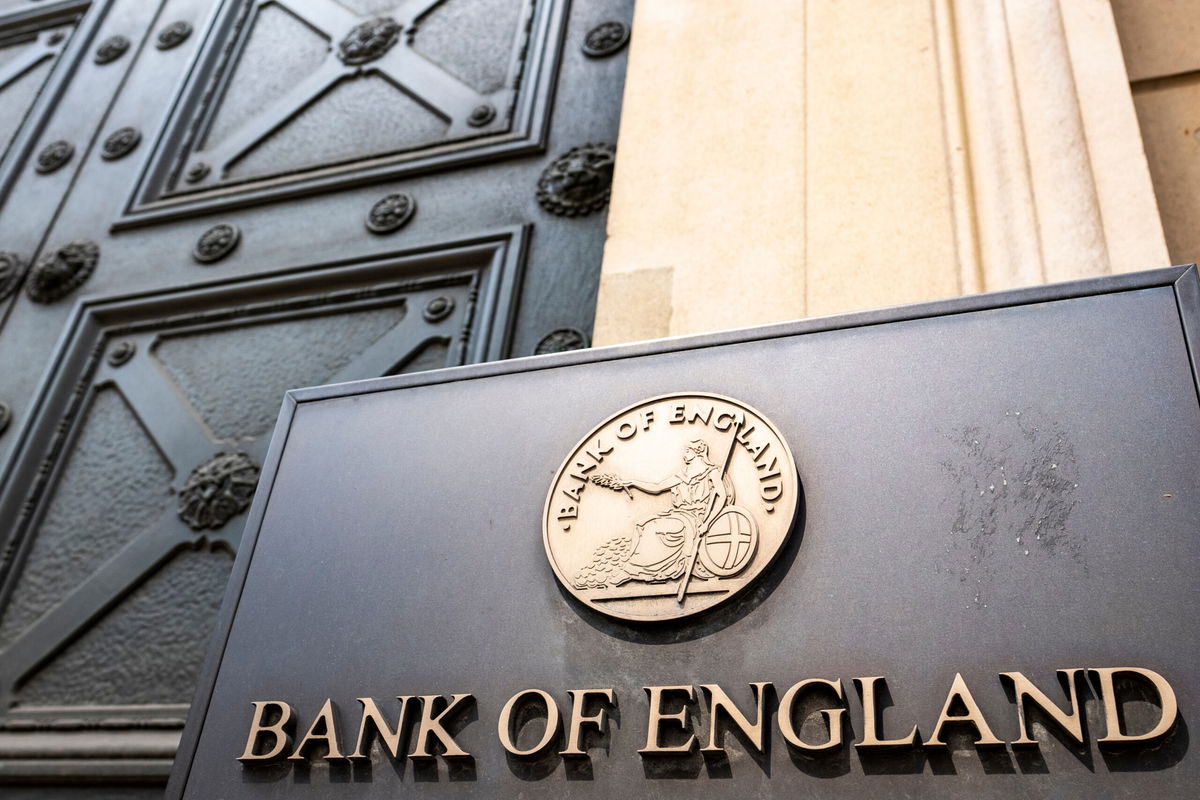
Gold prices rallied in early January as geopolitical risk increased. Photo credit: William Barton/Shutterstock
The Bank of England continues to hold roughly 31 tonnes of Venezuelan gold valued at approximately £1.4 billion, making it one of the most important foreign‑held reserves in its vaults. The dispute over ownership and control of the gold has resurfaced at a time of heightened geopolitical tension after the capture of Venezuela’s President Nicolás Maduro by United States forces in early January 2026, raising fresh questions about the status of the bullion and its future.
The gold, stored in London since the 1980s as part of Venezuela’s foreign reserves, has been effectively frozen since 2018. After contested elections in Venezuela and competing claims to the presidency, the UK government recognised opposition leader Juan Guaidó as the legitimate head of state for the purpose of controlling overseas assets, including the gold held at the Bank of England. This has shaped the legal and diplomatic impasse that has persisted for years.
Legal standoff and political recognition
Court rulings and government positions
Under UK law, the Supreme Court and domestic regulators determine who may access the gold based on legitimacy and recognition. Successive rulings have upheld that only parties recognised by the UK government, in this case supporters of Guaidó’s claim, may direct the release or use of the bullion. The Bank itself has remained neutral but bound by these legal principles, declining to comment publicly on the dispute.
Most Read on Euro Weekly News
The UK Foreign Secretary has reaffirmed Britain’s position that it does not recognise Venezuela’s current administration under Maduro or his successors, which continues to complicate efforts by Caracas to reclaim control of the bullion. Critics of this stance argue it undermines Venezuela’s sovereignty and prolongs economic hardship by denying access to state assets.
Impact of recent geopolitical events
Maduro’s capture reshapes dynamics
The standoff over the gold has been further complicated by the dramatic capture of Maduro by United States forces, an event that has had ripple effects across global markets and intensified debate about Venezuela’s political transition. After his removal from power, markets responded with volatility, including swings in gold prices as investors sought safe‑haven assets amid uncertainty.
Gold prices rallied in early January as geopolitical risk increased, with investors moving into precious metals over concerns about further instability in Venezuela and potential disruptions to oil exports. The situation has kept the spotlight on Venezuela’s remaining foreign reserves, including the disputed gold in London.
Though the immediate legal framework governing the Bank of England’s holdings hasn’t changed, the evolving political landscape could exert indirect pressure on decisions about sovereign assets and international recognition. Some analysts suggest that changes in government or diplomatic alignment could alter how foreign reserves are treated, even if legal entitlements remain bound by judicial rulings.
Stakes for Venezuela’s economy and international relations
Sovereign assets and economic recovery
For Venezuela, access to its gold reserves represents more than a legal question; it is deeply tied to the broader challenge of economic recovery. Years of sanctions, declining production and inflation have left the nation’s finances in a precarious state, and recovering sovereign assets could provide much‑needed liquidity for public spending, debt service or investment in infrastructure.
Market observers note that Venezuela’s historic transfers of gold, including decades of shipments to Switzerland for processing, have reshaped the country’s reserve composition. While significant transfers ceased after 2017 due to sanctions and broader geopolitical constraints, the legacy of those movements underpins the current dispute over the remaining bullion.
Internationally, the high‑profile nature of the gold dispute, and the way it intersects with sanctions, recognition policies and legal rulings, highlights broader questions about how sovereign wealth is protected when political legitimacy is contested. Central banks, investors and sovereign wealth funds watch the case closely, aware that similar disputes could arise elsewhere amid shifting global power dynamics.
Key points
The Bank of England is holding roughly 31 tonnes of Venezuelan gold valued at about £1.4 billion.
Control of the gold has been tied up in legal disputes since 2018 after contested elections in Venezuela.
UK policy recognises opposition claims over Maduro’s government for purposes of accessing foreign assets.
The capture of Maduro by US forces has heightened geopolitical uncertainty and influenced global gold markets.
Business and international relations implications continue as Venezuela’s economic struggles persist.
British and international implications
A case with far‑reaching effects
The dispute over Venezuela’s gold held in London highlights the intersection of law, finance and geopolitics in an era of contested governance. For the Bank of England, the case illustrates the challenges that arise when sovereign assets intersect with international legal systems and recognition protocols.
While the bullion remains in secure storage, its ultimate fate is likely to be shaped by a combination of court rulings, diplomatic positions and evolving political realities in Venezuela and abroad. The outcome will be closely watched by policymakers and financial institutions globally, as it may inform how disputed sovereign assets are handled in future cases where political legitimacy and legal entitlement diverge.