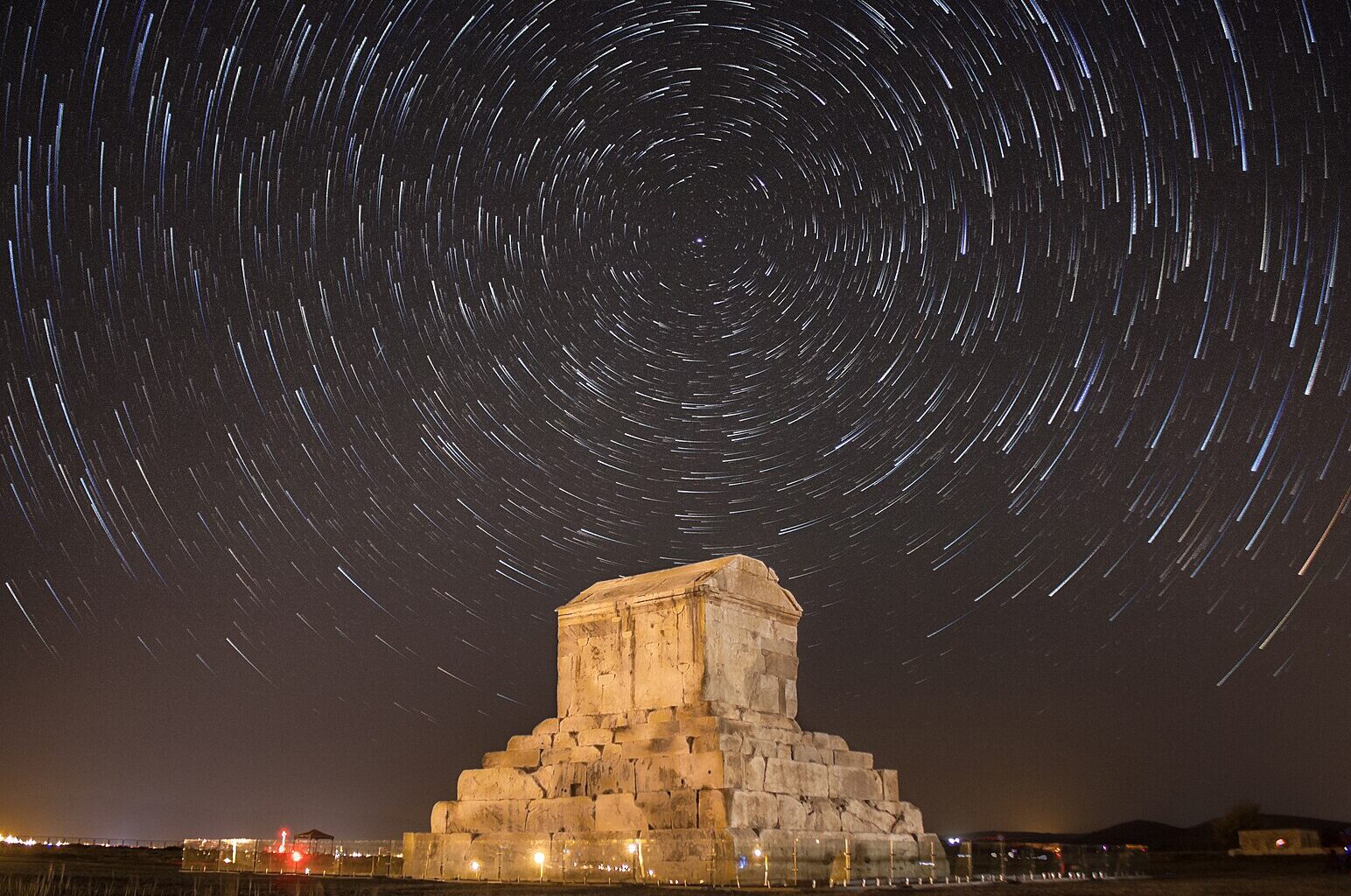
When we hear about Iran today, our minds often turn immediately to Islam, politics, or global tensions. Yet few Christians realize how profoundly significant Iran has been to the biblical story and the history of the early Church. Long before modern headlines, this land was shaped by Cyrus the Great—the Persian king who liberated the Jewish exiles—and whose legacy still echoes across Scripture. I had the privilege of visiting his tomb regularly during my time in Iran, a reminder that this nation has been woven into God’s story for millennia.
Christianity in Iran is as old as Christianity. From the first-century missions associated with the apostles to today’s underground house churches, the history of the Iranian church is one of deep antiquity, repeated persecution, and extraordinary resilience. Historians have emphasized that Christian communities were present within the borders of ancient Iran by late antiquity, even as Zoroastrianism and later Islam remained the official state religions. Harvard historian Roy Mottahedeh has demonstrated how Christians and other religious minorities continually negotiated their place within a landscape shaped by powerful state ideologies and shifting political pressures.¹
Traditions preserved in Armenian and Syriac sources attribute the earliest Christian mission in the Iranian cultural world to apostles Thaddeus (Jude) and Bartholomew. They were believed to have preached and suffered martyrdom in regions of northwestern Iran and eastern Anatolia. While the exact chronology remains debated, scholars broadly agree that Christian communities were established in Parthian and early Sasanian territories by the third and fourth centuries, often Syriac-speaking but including ethnic Persians as well.
In The Lost History of Christianity, Philip Jenkins highlights the vast and sophisticated Christian civilization that once flourished across the Middle East and Persia. He emphasizes that cities such as Nisibis (Nusaybin)—situated on the frontier between Rome and Persia—served as major centers of theological scholarship, monastic learning, and biblical studies, rivaling the intellectual output of Antioch and Alexandria.² When the Roman Empire ceded Nisibis to the Persians in 363, its renowned theological school moved to Edessa, yet its intellectual legacy continued to shape the Church of the East for centuries. By late antiquity, Persian Christianity had developed dozens of bishoprics stretching from Mesopotamia through Media and Fars and into Central Asia, demonstrating that Christianity in Iran was not foreign or peripheral but deeply rooted and institutionally robust.
During the Sasanian Empire (224–651), the Church of the East became the officially recognized Christian body within imperial borders. Scholars such as Wilhelm Baum and Dietmar Winkler note that this church was “ecclesiastically Persian,” deeply integrated into Sasanian administrative structures.³ Beginning with the synod of 410, Sasanian kings regulated church affairs, and Persian Christians developed a vigorous missionary movement that carried the gospel along the Silk Road to Central Asia, India, and China.
Iran today preserves some of the world’s oldest Christian monuments. The Monastery of St. Thaddeus (Qara Kelisa) in West Azerbaijan—traditionally associated with the burial place of the apostle Thaddeus—is regarded as one of the oldest Christian sites in Iran. Though rebuilt after major earthquakes and later renovations, its foundations reflect centuries of Christian worship. In 2008, UNESCO recognized the Monastery of St. Thaddeus, together with the Monastery of St. Stepanos and the Chapel of Dzordzor, as the “Armenian Monastic Ensembles of Iran,” underscoring their cultural and historical significance.
The Sasanian church’s flourishing was interrupted by shifting geopolitics. After the Roman Empire adopted Christianity, Persian rulers increasingly feared the loyalties of Christians within their borders. Under Shapur II (309–379), this anxiety erupted into the “Great Persecution,” during which bishops, priests, and laypeople faced imprisonment and execution. Although exact numbers remain uncertain, historians concur that this was a period of severe, state-directed repression that left a permanent mark on Persian Christian identity. After the Arab conquest in the seventh century, Christians became part of the dhimmi system—tolerated but subordinate religious minorities. Over the centuries, Christians served as physicians, translators, artisans, and administrators across various Islamic courts, but continued to experience structural vulnerability and legal restrictions.
After the 1979 Islamic Revolution, Shi‘a Islam became the ideological foundation of the new state. Although Christians, Jews, and Zoroastrians were recognized as official minorities, these protections applied primarily to ethnic Christian groups (Armenian and Assyrian). Persian-speaking Christians—many of whom were converts from Islam—received no such recognition and became increasingly vulnerable. The Islamic Republic has repeatedly banned Persian-language worship, shuttered churches, criminalized evangelism, and prosecuted converts under national security laws.
Modern persecution of Christians in Iran has produced more martyrs. Several were from the Assemblies of God. Hossein Soodmand, a pastor in that tradition and a convert from Islam, was executed in 1990 for refusing to renounce his faith. Likewise, Bishop Haik Hovsepian Mehr, who advocated publicly for religious freedom and defended imprisoned converts, was abducted and murdered in 1994. In that same year Mehdi Dibaj, who spent nine years in prison on apostasy charges, was found dead after his release.
Another significant modern martyr is Bahram Dehqani-Tafti, the son of Anglican Bishop Hassan Dehqani-Tafti and elder brother of Bishop Guli Francis-Dehqani. Shortly after the Revolution, Bahram was kidnapped and murdered by extremist elements targeting Iran’s Anglican community; his father narrowly survived multiple assassination attempts before fleeing the country.⁴ These figures remain central symbols of Iranian Christian witness.
Although formal executions have become less common, persecution has intensified through other means: lengthy prison sentences, raids on house churches, confiscation of property, travel bans, and the use of Revolutionary Courts where due process is routinely denied. In 2024, at least 96 Christians received a combined 263 years in prison, a sixfold increase over the previous year. Arrests continued across multiple cities into 2025, with Persian-speaking converts consistently targeted as alleged threats to national security.
Yet, paradoxically, Iran is now home to one of the fastest-growing evangelical movements in the world. Scholars, mission organizations, and independent sociological surveys report extraordinary growth in Christian conversion—driven by house-church networks, Persian-language Scripture and digital media, and widespread disillusionment with state-enforced religion. Some researchers argue that more Iranians have come to Christian faith in the past few decades than in the previous 13 centuries combined. This revival has unfolded amid intense persecution. One cannot help but think of Tertullian’s ancient maxim, “the blood of the martyrs is the seed of the church.”
Among Iran’s most beloved historic witnesses is Saint James Intercisus (James the Persian), commemorated in Eastern Christian traditions on December 2. A nobleman at the Sasanian court under Yazdegerd I, he initially capitulated under pressure but later repented and openly confessed Christ. His refusal to return to Zoroastrianism led to his execution by dismemberment—hence the title Intercisus, “cut to pieces.” Remembered for his courage, repentance, and unwavering fidelity, St. James stands as a patron of steadfast witness in the long and often painful history of Persian Christianity.
In every era, from the apostolic age to today, the story of Christians in Iran has been marked by suffering and extraordinary faith. Today, as Iranian believers face imprisonment, harassment, and isolation, their testimony continues to inspire global solidarity. The growth of the Iranian church, unfolding in the shadow of repression, is a reminder that the gospel takes root even in hard and hidden places. For Christians around the world, the witness of Iranian believers is both a call to remembrance and an invitation to prayer: that justice may prevail, that courage may endure, and that the ancient faith of Persia may continue to shine brightly.
Roy Mottahedeh, The Mantle of the Prophet: Religion and Politics in Iran (Cambridge, MA: Harvard University Press, 1985).
Philip Jenkins, The Lost History of Christianity: The Thousand-Year Golden Age of the Church in the Middle East, Africa, and Asia—and How It Died (New York: HarperOne, 2008).
Wilhelm Baum and Dietmar Winkler, The Church of the East: A Concise History (London: Routledge, 2003).
Hassan Dehqani-Tafti, The Unfolding Design of My World (Norwich: Canterbury Press, 2000).
The Rev. Samira Izadi Page, DMin is Founder and Executive Director of Gateway of Grace, a ministry serving refugees. She serves as Vicar of Grace Community Episcopal Church, a Farsi-speaking church plant in Dallas and Canon for Multicultural Ministries for the Diocese of Dallas. Raised in Iran as a Muslim, she fled persecution and received political asylum in the U.S., where she became a Christian.