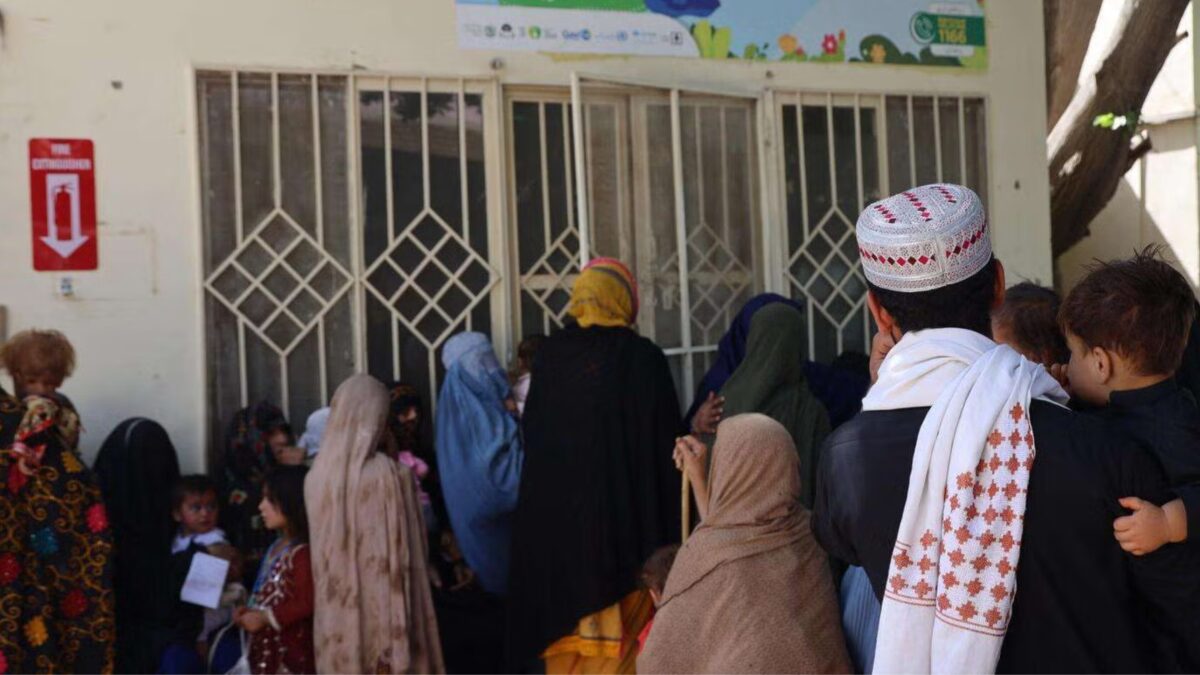
Afghan refugees in Pakistan are increasingly avoiding hospitals and clinics out of fear of arrest and deportation, leading to preventable deaths and severe medical complications, Doctors Without Borders said.
In one case documented by the organisation, an Afghan woman in labour was forced to give birth inside a rickshaw after her family delayed seeking care, fearing police detention amid Pakistan’s deportation drive against Afghan nationals.
A Pakistani rickshaw driver said the couple knocked on his door late one November night, pleading for help because they were afraid to leave their home.
“She was screaming all the way to the hospital,” the driver told MSF staff in Balochistan province. “She delivered her baby in my rickshaw. It was full of blood. I cannot describe it in words.”
The woman and her newborn were later treated at an MSF-run facility and survived, the organisation said. MSF added that similar cases are becoming more frequent as refugees delay or avoid medical treatment.
Pakistan has hosted millions of Afghans since the late 1970s, but in November 2023 the government began implementing the “Illegal Foreigners Repatriation Plan”, initially targeting undocumented Afghans before expanding it to include holders of Afghan citizen cards and, more recently, some people with proof of registration cards issued in coordination with the United Nations.
According to the UN refugee agency, more than 2.18 million Afghans were living in Pakistan as of October 2025, many of whom were born in the country or have spent most of their lives there.
MSF said deportations have surged since September 2025, coinciding with the onset of winter, worsening conditions for refugees living in holding centres or hiding within local communities.
The organization described overcrowded holding centres lacking adequate shelter, sanitation, clean water and health services, with nighttime temperatures falling below 4 degrees Celsius (40 degrees Fahrenheit). Fear of arrest, MSF said, has prevented many refugees from seeking urgent medical care, leading to miscarriages, untreated illnesses and deaths.
In another case, a five-month-old Afghan baby died after being brought to an MSF facility in Balochistan from a holding centre near the Afghan border.
“The baby was gasping,” an MSF staff member said. “We tried oxygen, but there was no pulse.”
MSF said the child had spent the night exposed to cold weather without access to medical care, as referrals were only possible once aid organisations began operating the following morning.
Health workers also reported cases of women suffering miscarriages and severe complications linked to stress and detention.
“My wife was three months pregnant when the police detained me,” said one Afghan refugee treated by MSF. “When I was released, she was bleeding heavily. We rushed to the doctor, but it was too late.”
In October 2025, MSF said a woman who delivered a stillborn baby at a holding camp later died after being transferred to hospital in Quetta. Her family, unable to afford further treatment, was deported to Afghanistan with her body shortly after her death.
MSF warned that winter conditions pose particular risks for malnourished children, whose weakened immunity makes respiratory infections more likely to turn fatal.
“Afghan families are being forced to choose between fear of deportation and danger to their health,” said Xu Weibing, MSF’s head of mission in Pakistan.
MSF urged Pakistan to ensure refugees can safely access medical care and called on the international community to increase humanitarian and protection support for Afghans facing deportation.
Pakistan’s government did not immediately respond to a request for comment on MSF’s findings. Reuters could not independently verify the cases described by the organisation.