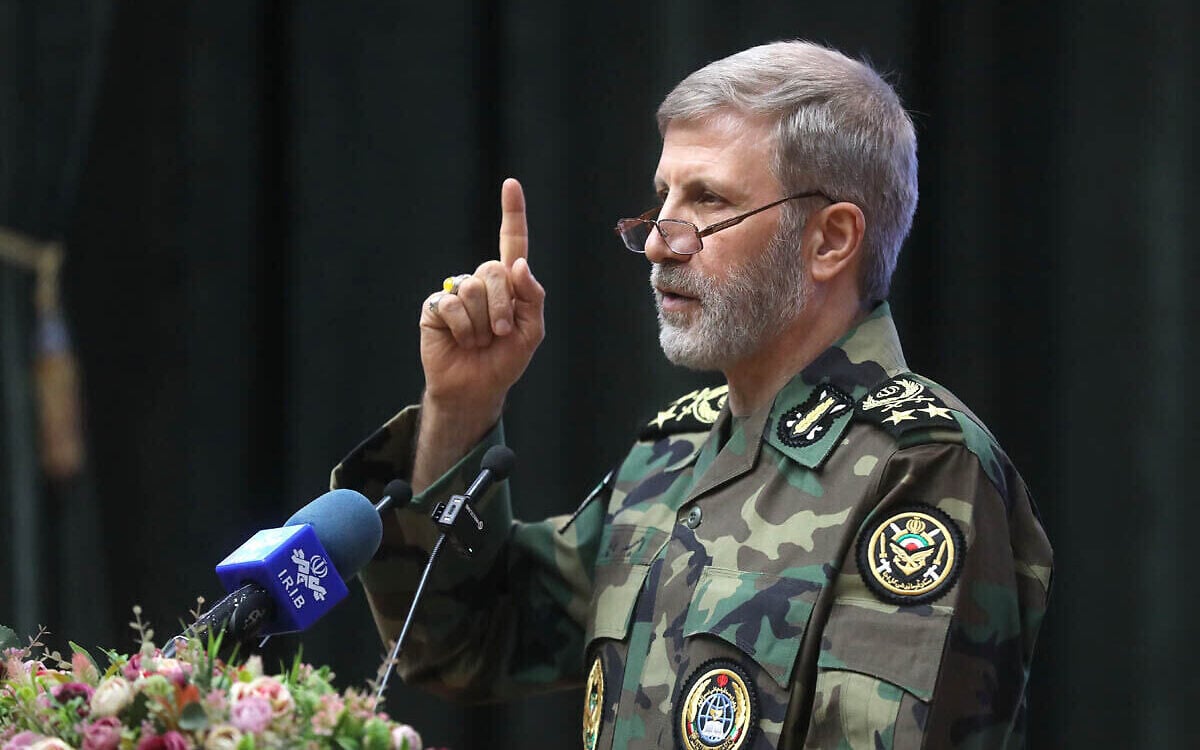
TEHRAN, Iran — Iran’s military chief warned Wednesday that Iran will not stand by and allow itself to be threatened by outside powers, after the United States and Israel backed anti-government protests.
“The Islamic Republic of Iran considers the escalation of hostile rhetoric against the Iranian nation a threat and will not tolerate its continuation without responding,” General Amir Hatami said, according to the Fars news agency.
Hatami, commander of the Iranian army but not Iran’s most senior officer, warned that “if the enemy makes a mistake,” Iran’s response would be more robust than during last June’s 12-day war with Israel.
In recent days, US President Donald Trump has threatened to intervene in Iran if demonstrators were killed, while Prime Minister Benjamin Netanyahu has expressed support for the protests.
Iran’s top judge also warned protesters on Wednesday there would be “no leniency for those who help the enemy against the Islamic Republic,” while accusing Israel and the US of pursuing hybrid methods to disrupt the country.
“Following announcements by Israel and the US president, there is no excuse for those coming to the streets for riots and unrest,” Chief Justice Gholamhossein Mohseni Ejei, the head of Iran’s judiciary, was quoted as saying by state media.
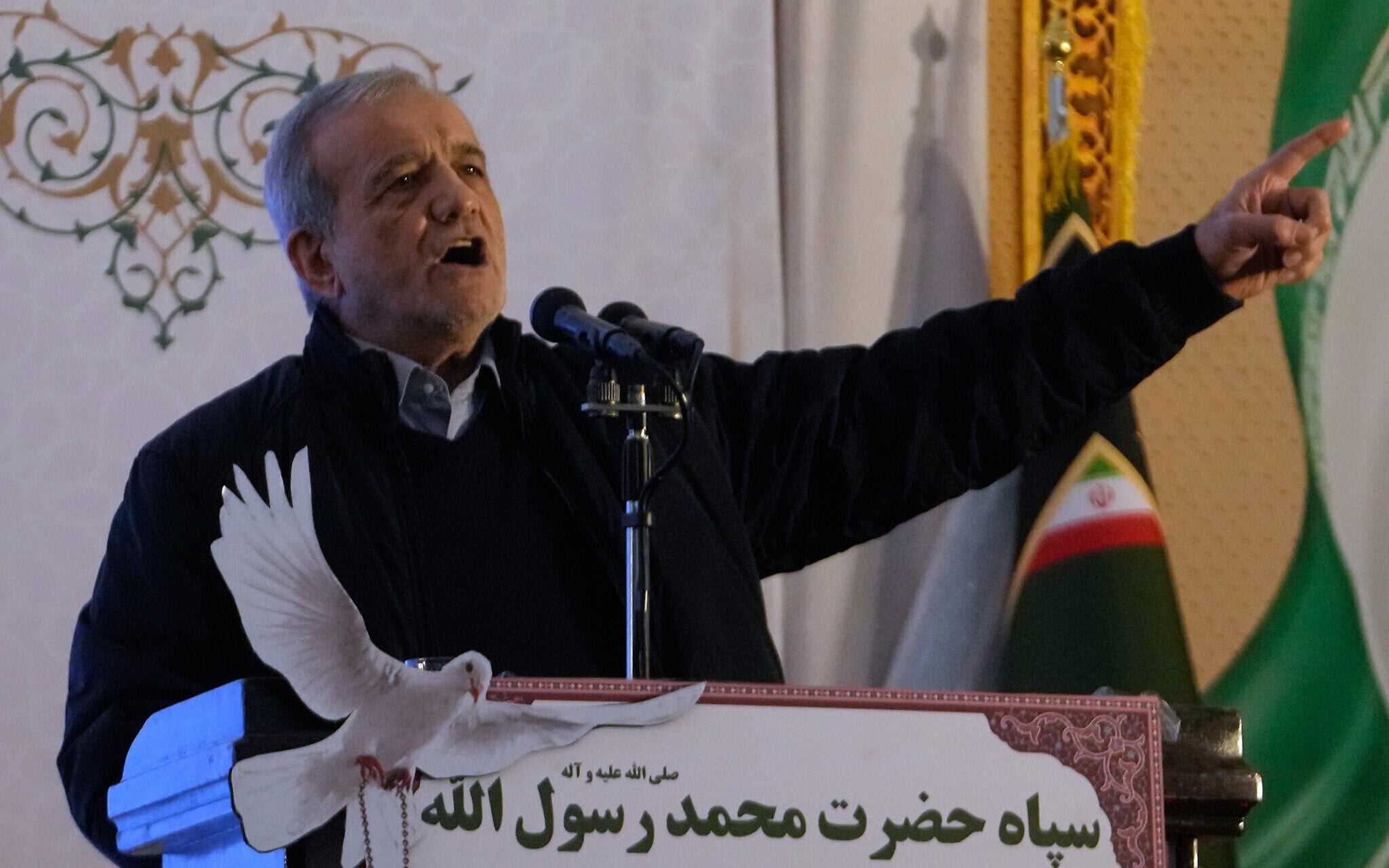
Iranian President Masoud Pezeshkian speaks during a ceremony commemorating the death anniversary of the late commander of the Islamic Revolutionary Guard Corps’ expeditionary Quds Force, Gen. Qassem Soleimani, in Tehran, Iran, January 1, 2026. (AP/Vahid Salemi)
“From now on, there will be no leniency for whoever helps the enemy against the Islamic Republic and the calm of the people,” Ejei said.
Tempering the harsh rhetoric from those officials, Iran’s President Masoud Pezeshkian ordered security forces not to crack down on protests.
In a video released by the news agency Mehr after a cabinet meeting, Vice President Mohammad Jafar Ghaempanah said Pezeshkian had “ordered that no security measures be taken against the demonstrators.”
“Those who carry firearms, knives, and machetes and who attack police stations and military sites are rioters, and we must distinguish protesters from rioters,” Ghaempanah added.
The current protests, the biggest wave of dissent in three years, began last month in Tehran’s Grand Bazaar when shopkeepers condemned the Iranian currency’s free fall. Unrest has since spread nationwide amid deepening distress over economic hardships, including rocketing inflation driven by mismanagement and Western sanctions, and curbs on political and social freedoms.
Protesters have chanted against the Islamic Republic regime and its Supreme Leader Ayatollah Ali Khamenei, in several cities.
Protesters in the port city of Bandar Abbas chanted, “This year is the year of bloodshed, Seyed Ali will be overthrown” during a street protest on Wednesday, according to videos received by Iran International. pic.twitter.com/L7T9g2W3t4
— Iran International English (@IranIntl_En) January 7, 2026
The demonstrations have yet to reach the scale of a 2022-2023 movement, let alone that of the mass 2009 street protests that followed disputed elections.
At least 27 people have been killed and more than 1,500 arrested in Iran in the first 10 days of protests, with the west of the country seeing the highest number of casualties according to the Kurdish-Iranian rights group Hengaw.
HRANA, a network of human rights activists, has reported a higher death toll of at least 36 people, as well as the arrest of at least 2,076 people.
International media have not been able to independently verify the numbers of casualties or details of disturbances reported by Iranian media and rights groups.
Iranian authorities have not given a death toll for protesters, but have said at least two members of the security services have died and more than a dozen have been injured.
Iran’s western provinces — which are economically marginalized and are heavily policed due to past outbreaks of unrest and their strategic location for national defense — have witnessed the most violent protests and repression lately.
Shopkeepers at the iron market in the Shoush area of Tehran closed their shops on Wednesday and took part in a protest, according to videos received by Iran International.pic.twitter.com/EIEGzS9gx5
— Iran International English (@IranIntl_En) January 7, 2026
Local media’s accounting of the protests is not exhaustive, and state-run outlets have downplayed their coverage of the demonstrations, while videos flooding social media are often impossible to verify.
Tear gas drifts into Tehran hospital
Tear gas fired during demonstrations in Tehran drifted towards a hospital but did not target it deliberately, Iranian media reported late Tuesday.
Security forces in Iran have frequently deployed tear gas to clear protesters during the demonstrations.
To disperse a crowd, “tear gas was used in the alley adjacent to the Sina Hospital” in the center of Tehran, the ISNA news agency reported, citing a statement from the Tehran University of Medical Sciences.
Heartbreaking ????
Today unarmed people ran to Sina hospital in Tehran, fleeing security forces in the streets. But even hospitals are no longer safe.
Security forces stormed Hospital, fired tear gas inside, and arrested injured protesters. Be our voice.
— Masih Alinejad ????️ (@AlinejadMasih) January 6, 2026
The Sina Hospital is affiliated with the university and is about two kilometers (about one mile) from Tehran’s Grand Bazaar, the country’s economic hub and the scene of incidents on Tuesday between protesters and police, who used tear gas to disperse the crowd.
“The natural reaction of the protesters is to move [the gas] away from the gathering place. As a result, some of this substance unintentionally drifted towards the hospital,” it said.
It added that the claim that tear gas was deliberately fired into the hospital “does not correspond to the facts.”
Majority of killings in six western provinces
Additionally, demonstrators took to the streets again overnight in the western province of Ilam, and disturbances erupted, Hengaw said.
It has counted at least 20 demonstrators killed since late December in the provinces of Ilam, Lorestan, Kermanshah, Fars, Chaharmahal and Bakhtiari, and Hamadan.
“During the funeral of two people in Malekshahi on Tuesday, a number of attendees began chanting harsh, anti-system slogans,” said Fars, a news agency affiliated with Iran’s Revolutionary Guards.
“I will kill the one who killed my brother,” people were heard chanting in the funerals of two protesters in the city of Malekshahi in western Iran.pic.twitter.com/OzrMQConzY
— Iran International English (@IranIntl_En) January 6, 2026
After the funeral, Fars said, “about 100 mourners went into the city and trashed three banks… Some started shooting at the police trying to disperse them.”
In Abdanan, a city in southwestern Ilam province, a large crowd gathered late on Tuesday and chanted slogans against Khamenei that could be heard in a video shared on a Telegram channel called Nistemanijoan with over 180,000 followers.
The semi-official news agency Tasnim said a crowd of 300 gathered peacefully in Abdanan to make economic demands, and some started shouting “anti-establishment” slogans, after which many demonstrators fled while security forces tackled “rioters.”
Abdanan, Iran
The Iranians are now uprising in massive numbers pic.twitter.com/4n8z9kj5SY
— Open Source Intel (@Osint613) January 6, 2026
Another Iranian outlet, Mehr News, said protesters had stormed a food store and emptied bags of rice, which has been affected by galloping inflation that has made ordinary staples increasingly unaffordable for many Iranians.
Social media footage shared by Iranian media outlets showed young men flinging grains of rice into the air, with the crowd cheering them on. Reuters was not able to verify the videos.
The economic protests have attracted international attention, including from the leaders of the Islamic Republic’s international foes.
“We’re watching it very closely. If they start killing people like they have in the past, I think they’re going to get hit very hard by the United States,” Trump told reporters on Sunday.
Netanyahu, meanwhile, told the cabinet: “We stand in solidarity with the struggle of the Iranian people and with their aspirations for freedom, liberty and justice.”
On Monday, the Iranian Foreign Ministry accused Trump and Netanyahu of inciting violence and trying to undermine Iran’s national unity.
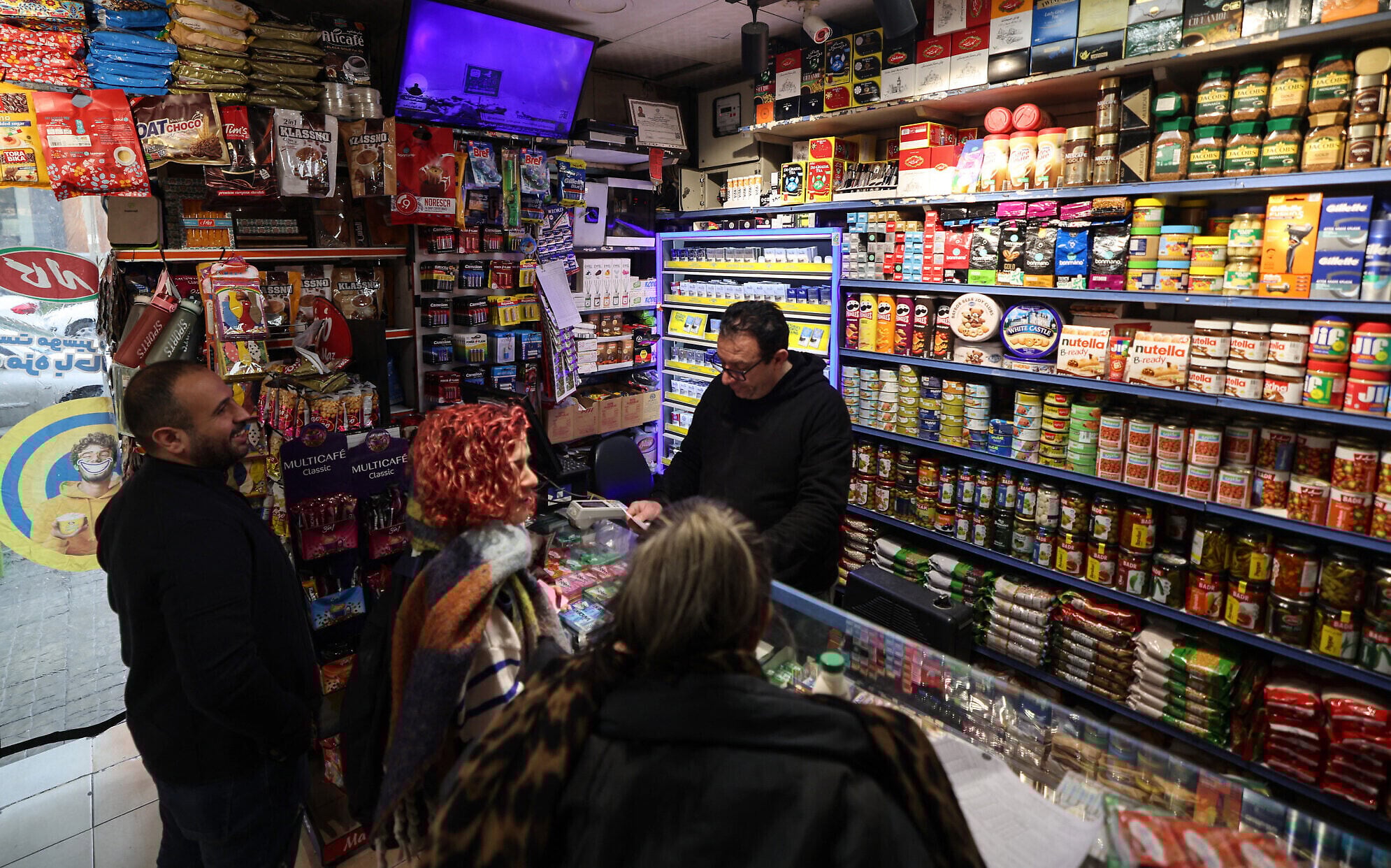
A shop owner serves customers at a store in the Iranian capital, Tehran, on January 7, 2026. (ATTA KENARE / AFP)
Seeking to halt the anger, Iran’s government began Wednesday paying the equivalent of $7 a month to subsidize rising costs for dinner-table essentials like rice, meat, and pasta. Shopkeepers warn prices for items as basic as cooking oil likely will triple under pressure from the collapse of Iran’s rial currency and the end of a preferential subsidized dollar-rial exchange rate for importers and manufacturers — likely fueling further popular anger.
The subsidy is more than double what the 4.5 million rial people previously received. But already, Iranian media report sharp rises in the cost of basic goods, including cooking oil, poultry, and cheese, placing additional strain on households already burdened by international sanctions targeting the country and inflation.
Iran’s vice president in charge of executive affairs, Mohammad Jafar Ghaempanah, told reporters Wednesday that the country was in a “full-fledged economic war.” He called for “economic surgery” to eliminate rentier policies and corruption within the country.