
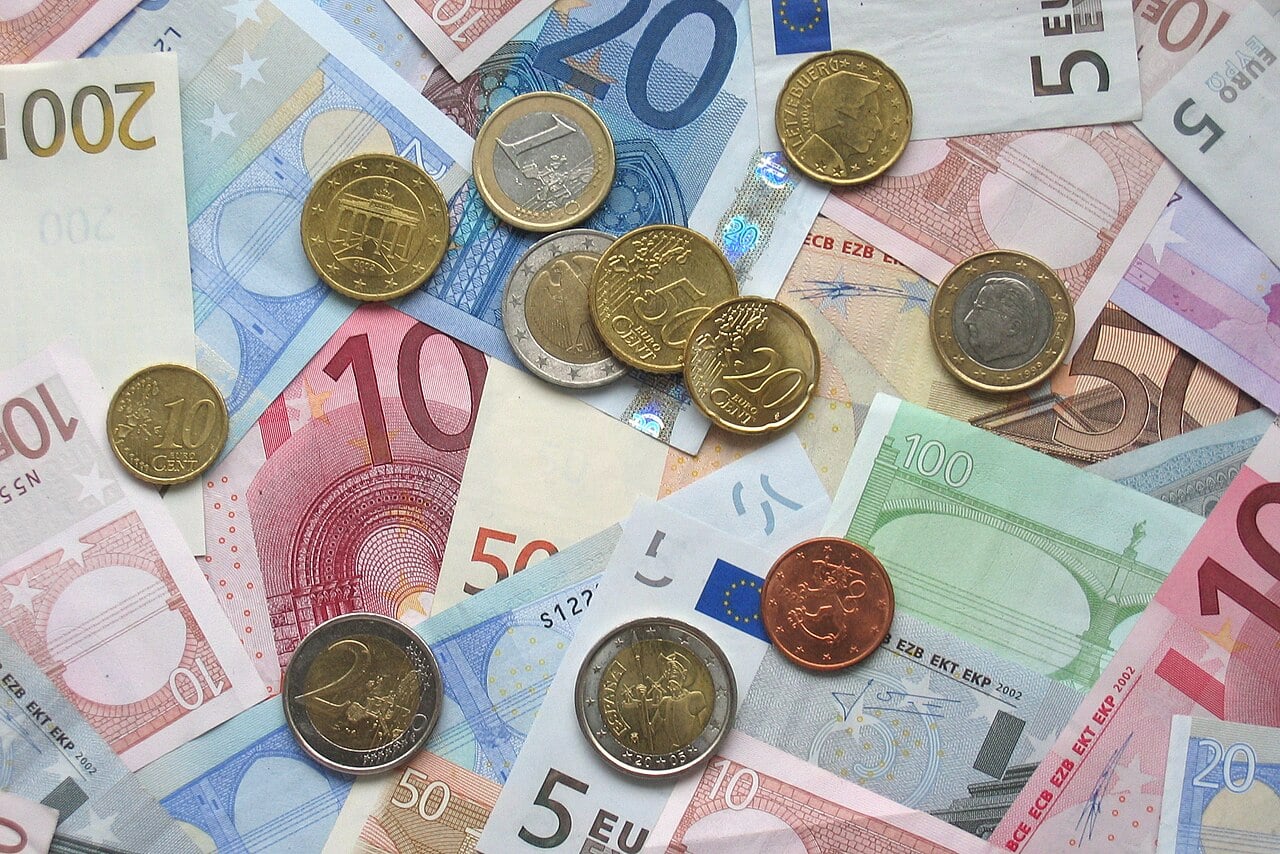
Greece’s inflation rose to 2.9% in December, outpacing the Eurozone average, which remained close to the European Central Bank’s 2% target. Credit: Wikimedia Commons / Avij / Public Domain
Greece’s inflation rate continued to rise in December, with annual consumer price growth reaching 2.9%, according to the latest data from Eurostat. This follows an increase to 2.8% in November, extending the upward trend after two months of easing inflation.
On a month-over-month basis, consumer prices rose by 0.2%, indicating continued price pressures toward the end of the year.
Greece’s Inflation Rate Accelerates in December
Core inflation in Greece remained elevated at 3.2% in December, pointing to strong underlying price pressures. Services prices rose sharply by 4.5%, underscoring sustained domestic demand.
Energy prices declined by -1%, while non-energy industrial goods edged down to -0.1%. Food prices, including alcohol and tobacco, increased by 3.5%, continuing to weigh on household budgets.
Eurozone Inflation Stabilizes Near the ECB Target
Across the Eurozone, preliminary estimates from Eurostat show that the harmonized consumer price index stood at 2.0% in December. This represents a modest decline from 2.1% previously and keeps inflation close to the medium-term target of the European Central Bank.
Overall, the data suggest that inflation at the aggregate level remains broadly contained, despite notable sectoral differences.
Sector Breakdown: Services Remain the Main Driver
Within the Eurozone, services continued to make the largest contribution to overall inflation, rising 3.4% year on year in December, slightly below the 3.5% recorded in November.
Prices for food, alcohol, and tobacco increased by 2.6%, accelerating from 2.4% a month earlier. Non-energy industrial goods showed limited price pressure, rising 0.4%, compared with 0.5% in the previous month.
Energy prices returned to negative territory, registering an annual decline of -1.9% in December, a sharp reversal from the 0.5% increase seen in November.
ECB Policy Outlook Remains Steady as Greece’s Inflation Rate Stays Elevated
At its December meeting, the ECB (European Central Bank) left interest rates unchanged for a fourth consecutive time and revised its growth projections upward. ECB President Christine Lagarde adopted a more optimistic tone, citing improved economic resilience despite ongoing global trade disruptions.
She also highlighted stronger private-sector investment, attributing part of this momentum to advances in artificial intelligence, which she identified as a positive factor for the Eurozone’s medium-term economic outlook.