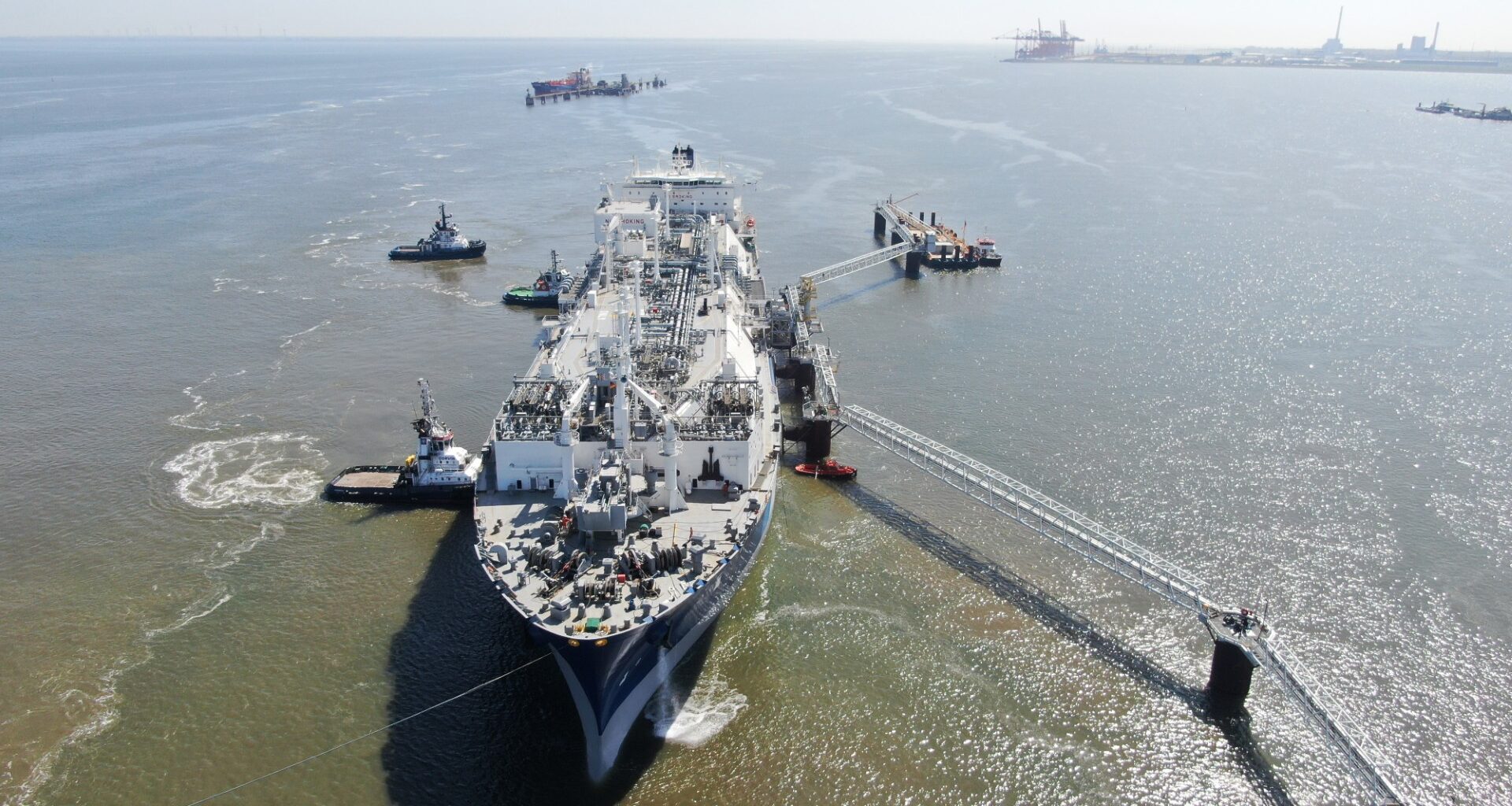
Overall, the state-owned company fed around a third more energy in the form of natural gas into the German gas grid last year, according to a statement on Thursday.
DET said its three chartered FSRUs delivered 79 terawatt-hours (TWh) to industry, commerce, and households, as well as to gas storage facilities.
In 2024 and 2023, the annual figure amounted to 59 TWh.
In addition to optimizations in the operating procedures of the existing Wilhelmshaven 01 and Brunsbüttel terminals, the commissioning of the third DET terminal, served by FSRU Excelsior, at the Wilhelmshaven site was a key reason for the increase in energy supplied after regasification of the landed LNG, DET said.
From a statistical perspective, 79 TWh of energy corresponds to the annual gas consumption for heating more than 5.6 million four-person households in apartment buildings (100 square meters of living space with 14,000 kilowatt hours of annual consumption), according to DET.
DET noted that the total annual value includes the quantities from the Excelsior’s commissioning phase between May 26 and August 28.
At around 65 percent, the utilization rate of the three terminals Wilhelmshaven 1 and 2 as well as Brunsbüttel was again more than 10 percentage points above the European average in 2025 and on par with previous years at DET, the company said.
Besides these three facilities, private firm Deutsche ReGas operates the FSRU-based facility in Mukran.
The Mukran FSRU was the busiest LNG import facility in Germany in the fourth quarter of last year.
Stade FSRU
In 2026, DET said it will focus not only on maintaining its LNG regasification capacity but also on completing its FSRU-based terminal in Stade.
Det did not provide further details regarding the Stade facility.
In November 2025, DET announced that the Stade FSRU-based terminal would not go into operation before the second quarter of 2026, after it assumed responsibility for the superstructure from Hanseatic Energy Hub.
In March 2024, the 2021-built 174,000-cbm FSRU, Energos Force, owned by Apollo’s Energos Infrastructure and chartered by Germany’s federal government, arrived at the AVG jetty in Stade.
However, DET terminated the contract related to the Stade FSRU-based facility with compatriot Hanseatic Energy Hub, the developer of the onshore LNG terminal in Stade, in March last year.
DET also sub-chartered Energos Force for deployment in Jordan.