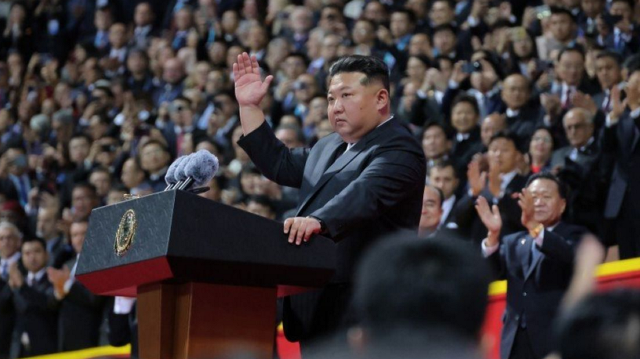
A magazine published for senior officials of North Korea’s ruling Workers’ Party has raised the sensitive issue of leadership succession, South Korea’s Yonhap News Agency reported. The discussion appeared in a March issue last year, which Yonhap said it obtained, marking a rare internal reference to how power might eventually be transferred in the tightly controlled state.
Succession framed as a party priority
According to the report, the magazine Geunroja (“Workers”) outlined the need to designate a successor who would inherit both the political status and authority of the country’s leader. It described succession planning as a “central issue” for maintaining continuity of leadership, emphasizing the role of party consensus and public trust while the current leader remains alive.
Speculation grows around Kim’s family
The report comes amid growing attention to Kim Jong Un’s daughter, widely believed by South Korean media to be named Ju Ae and born around 2012. She has accompanied Kim to several high-profile public events, prompting speculation about her potential future role, although the magazine article made no direct reference to her or any individual successor.
A system defined by dynasty North Korea has never publicly named or debated a successor while an incumbent leader is in power. Kim Jong Un assumed leadership in 2011 following the death of his father, Kim Jong Il, continuing a dynastic line that began with his grandfather, Kim Il Sung, the state’s founder who ruled until 1994. The latest report underscores subtle signals within the ruling elite, even as Pyongyang maintains official silence on the matter.