LOS ALTOS, Calif.–(BUSINESS WIRE)–Jan 8, 2026–
Bidgely solidified its position as the premier provider of machine learning (ML) and artificial intelligence (AI) solutions for the utility industry in 2025, driven by the evolution of its journey from foundational ML to generative AI (GenAI) to future-forward agentic AI. By expanding its intellectual property and launching a first-of-its-kind vertical AI platform that integrates directly into existing utility data environments, Bidgely has transformed how more than 35 energy providers across the U.S., India, Middle East and Europe manage the energy transition.
This press release features multimedia. View the full release here: https://www.businesswire.com/news/home/20260108284426/en/
“The utility sector is moving past the experimentation phase of AI,” said Abhay Gupta, CEO of Bidgely. “In 2025, we focused on delivering technology that allows utilities to build, buy or partner on a single AI platform. Whether it’s optimizing the grid or powering customer-facing GenAI agents, our goal is to help utilities achieve the outcomes they value most: resilience, affordability and decarbonization.”
Defining the Next-Gen Grid with Advanced AI
Bidgely’s technological evolution has journeyed from data observation to autonomous grid management. While foundational ML first decoded raw energy data into consumer insights, predictive AI advanced the company’s platform by forecasting insights like grid stress and infrastructure faults. The journey then moved into generative AI, utilizing large language models to transform complex data into conversational “Energy Assistant” tools. Looking beyond 2025, this path culminates in agentic AI, where autonomous agents transition from delivering insights to executing real-time actions without manual intervention.
Following the strategic acquisition of Grid4C, Bidgely now holds over 16 utility-focused AI data science patents. This “AI moat” includes advanced appliance fault detection, diagnostics and high-resolution load forecasting to ensure every layer of Bidgely AI is protected by world-class innovation.
UtilityAI Pro: The Industry’s “Any Cloud, Any Hyperscaler” AI Solution
Bidgely also redefined the AI landscape in 2025 by launching UtilityAI Pro —the industry’s first vertical AI platform that seamlessly integrates with a utility’s preferred data environment (i.e. AWS, Snowflake, Databricks). UtilityAI Pro enhances a utility’s existing investments in AI-powered agents and copilots and serves as a unified foundation where utilities can build their own custom models, buy off-the-shelf Bidgely solutions or integrate third-party partner applications all within the same platform.
One major Southwest U.S. investor-owned utility (IOU) is partnering with Bidgely for “UtilityAI Pro” to maximize its return on recent investments in advanced metering infrastructure (AMI) and cloud technology. By deploying Bidgely’s patented machine learning models directly within the utility’s secure cloud environment, the solution ensures data privacy while providing deep intelligence on appliance usage, electric vehicle charging, and distributed energy resources. This foundational data layer enabled the utility to develop custom AI agents and integrate insights into grid planning and customer engagement tools, targeting a five to ten times ROI through optimized demand-side management, deferred infrastructure upgrades and enhanced revenue protection.
Celebrating AI Excellence
In 2025, Bidgely’s AI-first philosophy earned numerous accolades, including 2025 Top Product of the Year from Environment+Energy Leader for its use of GenAI to simulate impact of electric vehicles on the grid with 98 percent accuracy. The company also retained its long-standing position atop Guidehouse Research’s Home Energy Management (HEMS) Leaderboard, recognized specifically for its strategy in making AI “interactive and automated.”
Additionally, Bidgely’s ML and AI-based solutions collectively helped save 1.5 TWh of energy from gas, electric, dual fuel and water customers around the world.
To learn more about how utilities can deploy Bidgely’s AI to strategically support their technology investments, listen to the “Scaling AI in the Energy Industry” Electric Perspectives podcast episode featuring Arizona Public Service’s (APS) Michelle Ferrara and Bidgely’s Karthik Moorthy.
About Bidgely
Bidgely is an AI-powered SaaS Company accelerating a clean energy future by enabling energy companies and consumers to make data-driven energy-related decisions. Powered by our unique patented technology, Bidgely’s UtilityAI™ Platform transforms multiple dimensions of customer data – such as energy consumption, demographics, and interactions – into deeply accurate and actionable consumer energy insights. We leverage these insights to empower each customer with personalized recommendations, tailored to their individual personality and lifestyle, usage attributes, behavioral patterns, purchase propensity, and beyond. From a distributed energy resources (DER) and grid edge perspective, Bidgely is advancing smart meter innovation with data-driven solutions for solar PVs, electric vehicle (EV) detection, EV behavioral load shifting and managed charging, energy theft, short-term load forecasting, grid analytics, and time of use (TOU) rate designs. Bidgely’s UtilityAI™ energy analytics provides deep visibility into generation and consumption for better peak load shaping and grid planning, and delivers targeted recommendations for new value-added products and services. With roots in Silicon Valley, Bidgely has over 16 energy patents, $75M+ in funding, retains 30+ data scientists, and brings a passion for AI to utilities serving residential and commercial customers around the world. For more information, please visit www.bidgely.com or the Bidgely blog at bidgely.com/blog.
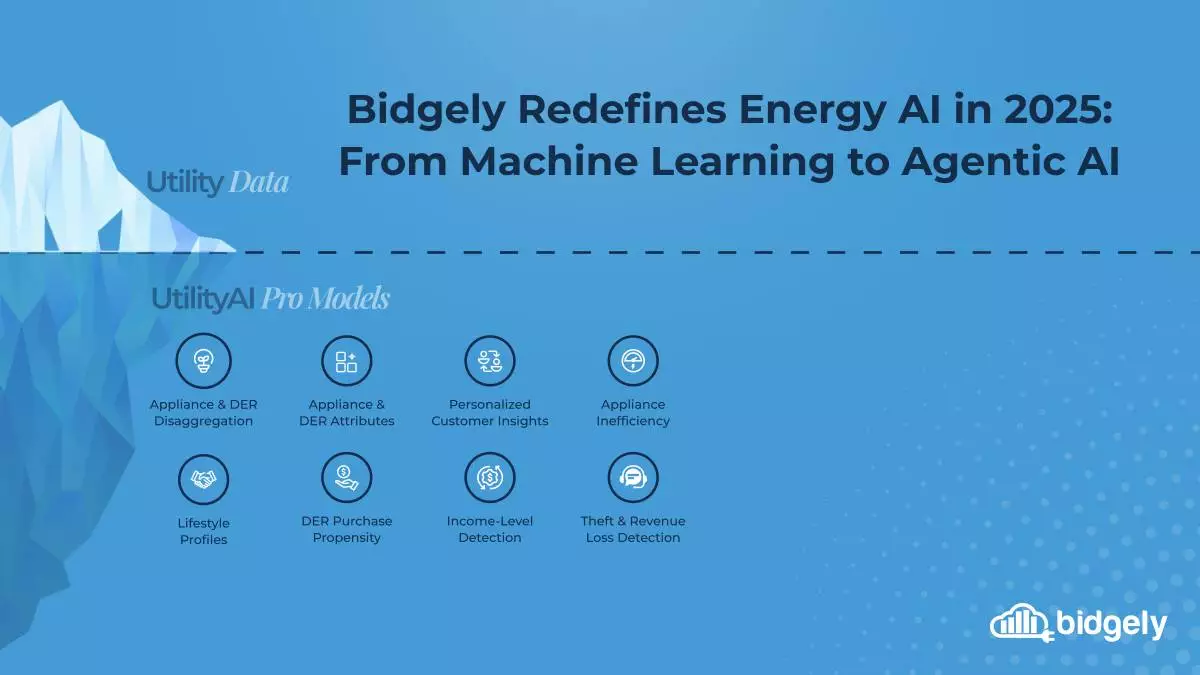
Bidgely expands its intellectual property and launches first-of-its-kind vertical AI platform in its journey foundational ML to GenAI to agentic AI.
ALEPPO, Syria (AP) — Syrian authorities warned civilians to leave a contested area in the northern city of Aleppo on Thursday and opened a corridor for them to evacuate for a second day as clashes continued between government and Kurdish forces.
The government of Aleppo province gave residents until 1 p.m. local time to evacuate in coordination with the army. State news agency SANA, citing the army, said the military would begin “targeted operations” against the Kurdish-led Syrian Democratic Forces in the neighborhoods of Sheikh Maqsoud, Achrafieh and Bani Zaid half an hour after that deadline.
The military later issued a series of maps with the areas under evacuation order.
An Associated Press journalist at the scene heard sporadic sounds of shelling as civilians streamed out of the area Thursday morning. As of Wednesday, more than 46,000 people had been displaced across the province, according to Aleppo’s Directorate of Social Affairs and Labor.
Mohammad Ali, operations director with the Syrian Civil Defense in Aleppo, said some 11,000 more fled Thursday.
“There’s a large percentage of them with difficult medical issues, elderly people, women, and children,” he said.
The SDF has said that at least eight civilians were killed in the Kurdish-majority neighborhoods, while government officials reported at least five civilians and one soldier have been killed in the surrounding government-controlled areas in the fighting that broke out Tuesday. Dozens more on both sides have been wounded.
Each side has accused the other of deliberately targeting civilian neighborhoods and infrastructure.
St. Ephrem Syrian Orthodox Church in Aleppo city was hosting about 100 people who had fled the fighting. Parishioners had donated mattresses, blankets and food, priest Adai Maher said.
“As soon as the problems started and we heard the sounds (of clashes), we opened our church as a shelter for people who are fleeing their homes,” he said.
Among them was Georgette Lulu, who said her family is planning to travel to the city of Hasakeh in SDF-controlled northeast Syria when the security situation allows.
“There was a lot of bombing and loud noises and a shell landed next to our house,” she said. “I’ve been through these circumstances a lot so I don’t get frightened, but my niece was really afraid so we had to come to the church.”
Hassan Nader, a representative of the Ministry of Social Affairs in Aleppo said about 4,000 were staying in shelters in the city while tens of thousands had gone to other areas of the province, and the ministry was working with NGOs to supply them with food, medicine and other necessities.
The clashes come amid an impasse in political negotiations between the central state and the SDF.
The leadership in Damascus under interim President Ahmad al-Sharaa signed a deal in March with the SDF, which controls much of the northeast, for it to merge with the Syrian army by the end of 2025. There have been disagreements on how it would happen. In April, scores of SDF fighters left Sheikh Maqsoud and Achrafieh as part of the deal.
Officials from the central government and SDF met again on Sunday in Damascus, but government officials said that no tangible progress had been made.
Some of the factions that make up the new Syrian army, formed after the fall of former President Bashar Assad in a rebel offensive in December 2024, were previously Turkey-backed insurgent groups that have a long history of clashing with Kurdish forces.
In the city of Qamishli in the Kurdish-controlled northeast, thousands of protesters gathered Thursday, chanting in support of the SDF and against the government offensive.
The SDF has for years been the main U.S. partner in Syria in fighting against the Islamic State group, but Turkey considers the SDF a terrorist organization because of its association with the Kurdistan Workers’ Party, or PKK, which has waged a long-running insurgency in Turkey. A peace process is now underway.
Despite the long-running U.S. support for the SDF, the Trump administration in the U.S. has also developed close ties with al-Sharaa’s government and has pushed the Kurds to implement the March deal.
A U.S. State Department official said in a statement Thursday that the U.S. “is closely monitoring the situation” and urged “restraint on all sides.” It said U.S. envoy Tom Barrack is trying to facilitate dialogue between the two sides.
“All parties should focus on how to build a peaceful, stable Syria that protects and serves the interests of all Syrians, rather than pushing the country back into a cycle of violence,” the statement said.
Turkey’s Ministry of National Defense said Thursday that the “operation is being carried out entirely by the Syrian Army” while Turkey is “closely monitoring.”
“Syria’s security is our security,” the statement said, adding that “Turkey will provide the necessary support should Syria request it.”
The United Nations has expressed concern at the violence.
UN spokesperson Stéphane Dujarric told reporters Wednesday that Secretary General Antonio Guterres “is alarmed by reports of civilian deaths and injuries following hostilities in Aleppo.”
“We call on all actors to immediately de-escalate, exercise maximum restraint, and take all measures to prevent further harm to civilians” and to “promptly resume negotiations in order to fully implement the 10 March agreement,” he said.
Associated Press writer Suzan Fraser in Ankara contributed to this report. Sewell reported from Beirut.
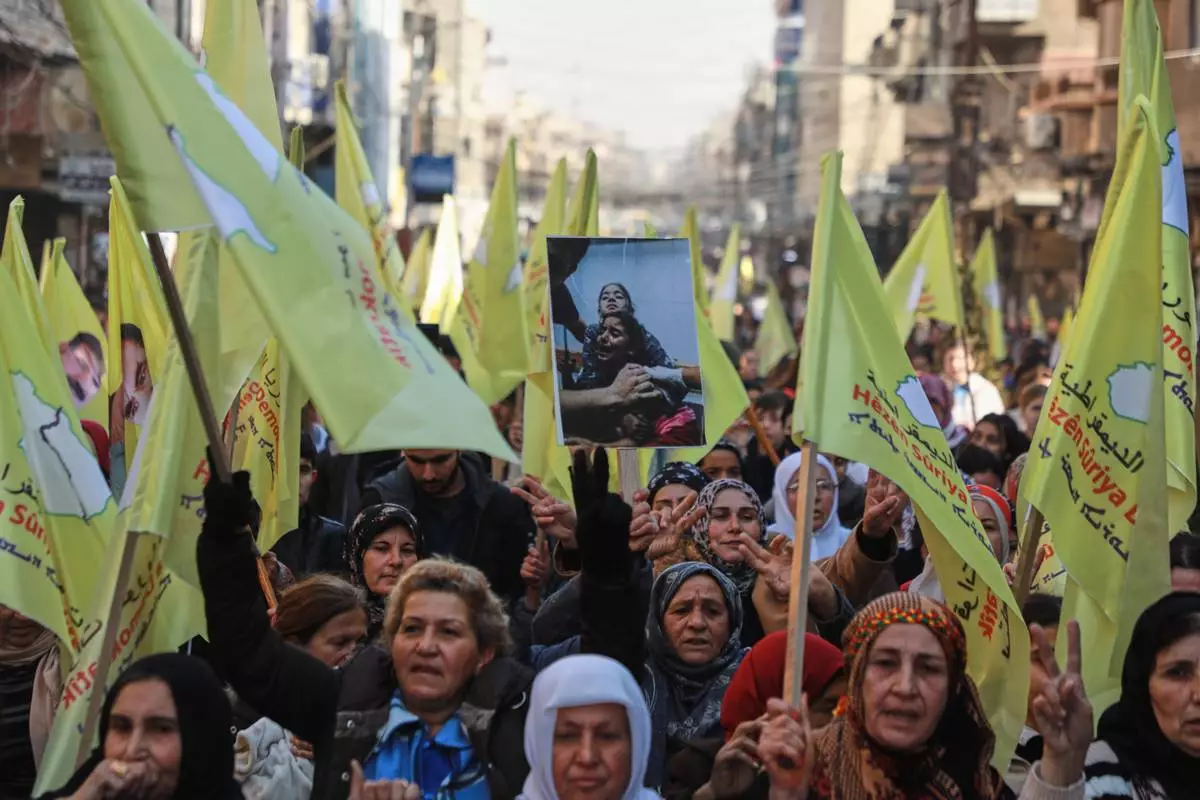
Demonstrators chant slogans in support of the Kurdish-led Syrian Democratic Forces (SDF) during a protest in Qamishli, northeastern Syria, Thursday, Jan. 8, 2026. (AP Photo/Hogir Al Abdo)
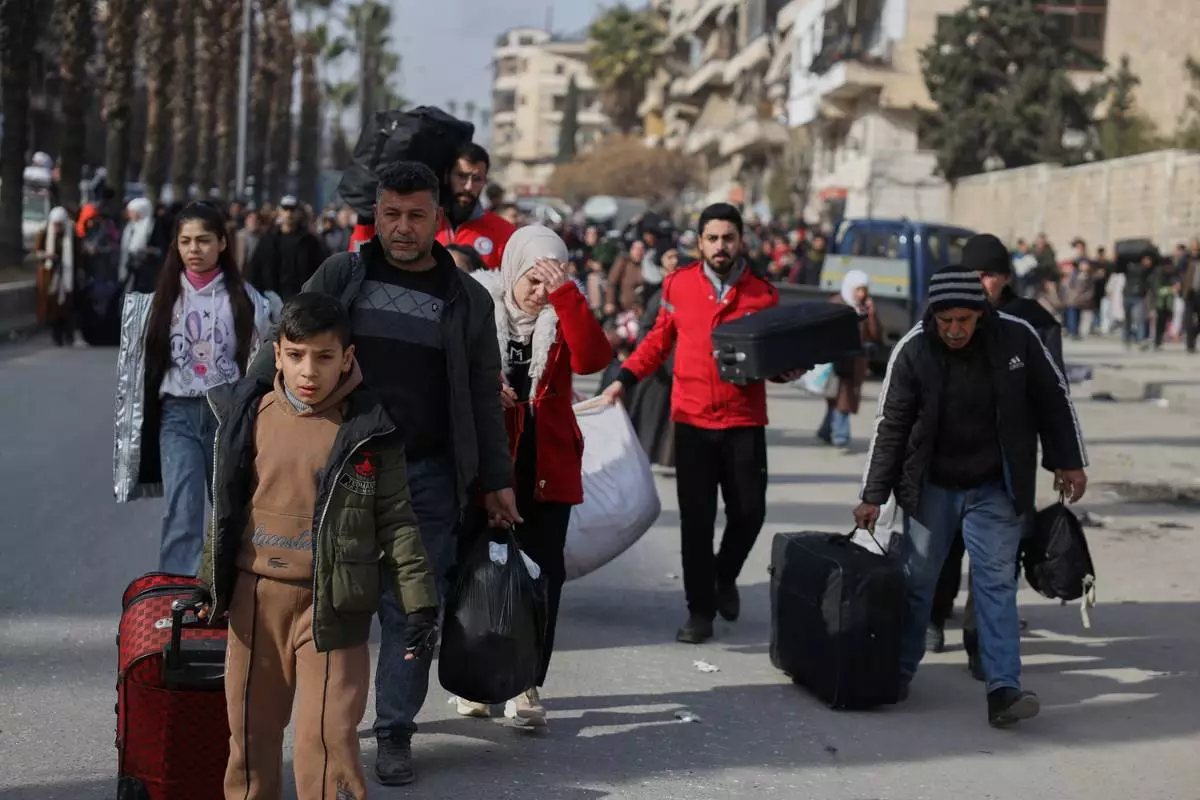
Residents flee the Sheikh Maqsoud and Achrafieh neighborhoods after clashes broke out on Tuesday between Syrian government forces and Kurdish fighters in a contested area of the northern city of Aleppo, Syria, Wednesday, Jan. 7, 2026. (AP Photo/Omar Albam)

Syrian government soldiers sit on their armoured personnel carrier (APC) following clashes with Kurdish fighters in a contested area of the northern city of Aleppo, Syria, Wednesday, Jan. 7, 2026. (AP Photo/Ghaith Alsayed)

A car burns during clashes between Kurdish fighters and Syrian government forces in a contested area of the northern city of Aleppo, Syria, Wednesday, Jan. 7, 2026. (AP Photo/Omar Albam)
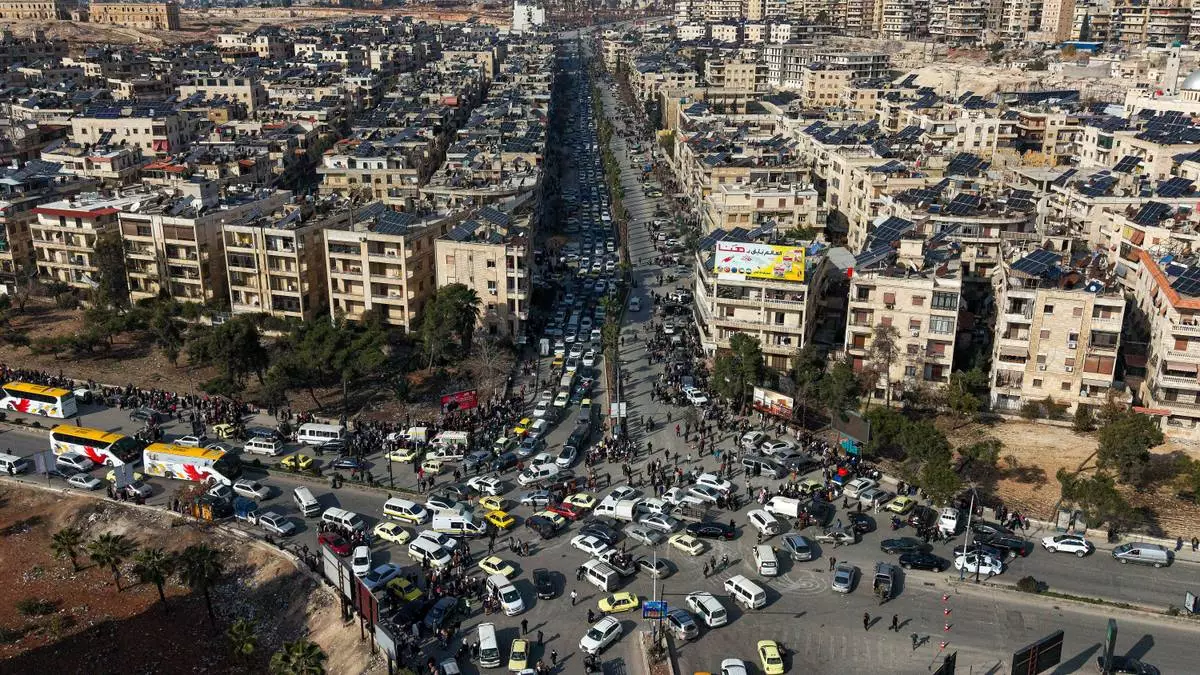
An aerial view shows Syrian residents in vehicles, queueing to flee from Sheikh Maqsoud and Achrafieh neighborhoods after clashes broke out on Tuesday between Syrian government forces and Kurdish fighters in a contested area of the northern city of Aleppo, Syria, Wednesday, Jan. 7, 2026. (AP Photo/Omar Albam)