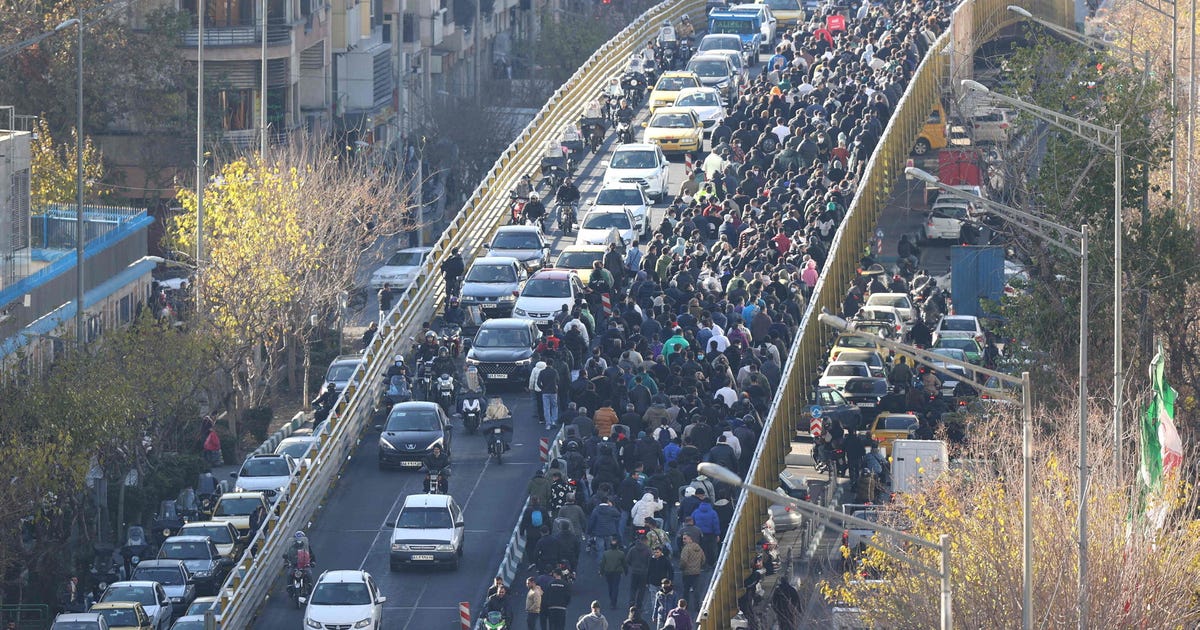
Once again, Iranians have taken to the streets. Starting in late December, the plummeting value of the national currency, along with the soaring cost of living, were the catalyst for a fresh wave of protest – and one that soon turned political.
Although the government has been quick to crack down on the demonstrations, the regime has been dealt some heavy blows in the past year, and analysts are pondering whether this could be the movement that ends the ayatollahs’ reign for good.
Haaretz reporter Linda Dayan was joined by Arash Azizi, lecturer at Yale University and author of “What Iranians Want: Women, Life, Freedom” and “The Shadow Commander: Soleimani, the U.S., and Iran’s Global Ambitions” to talk about these protests, and what they mean for Iran, for Israel, for the region and for the world.
“In some of the previous protests, there was always a mix of hope and anger,” explains Azizi. “This time, there’s a lot more anger, because people know that they want an end to this regime, but they can’t find an easy path… there’s a lot more despondency and desperation.”
Azizi explains that one of the key obstacles in realizing this aspiration is Iran’s fractured would-be opposition, including the ousted Shah’s son Reza Pahlavi, who’s found support from some Israeli lawmakers.
The protesters “don’t have a disciplined political leadership that you need to bring about that kind of change,” Azizi says. Iran’s developments will likely “have the color of a coup, perhaps even more than a revolution” – and be led by figures currently inside the regime.
U.S. President Donald Trump has also warned the Iranian regime against violently repressing the protests. The ouster of Nicolas Maduro in Venezuela – a key Iranian ally – by U.S. forces “was a reminder to the Iranians that Trump is not bluffing, and that he could take action against them,” notes Azizi.
“The idea that Trump would assassinate [Supreme Leader Ali] Khamenei, let’s say, with the help of Israel, would have been unthinkable a few years ago… now, it’s really a possibility.”