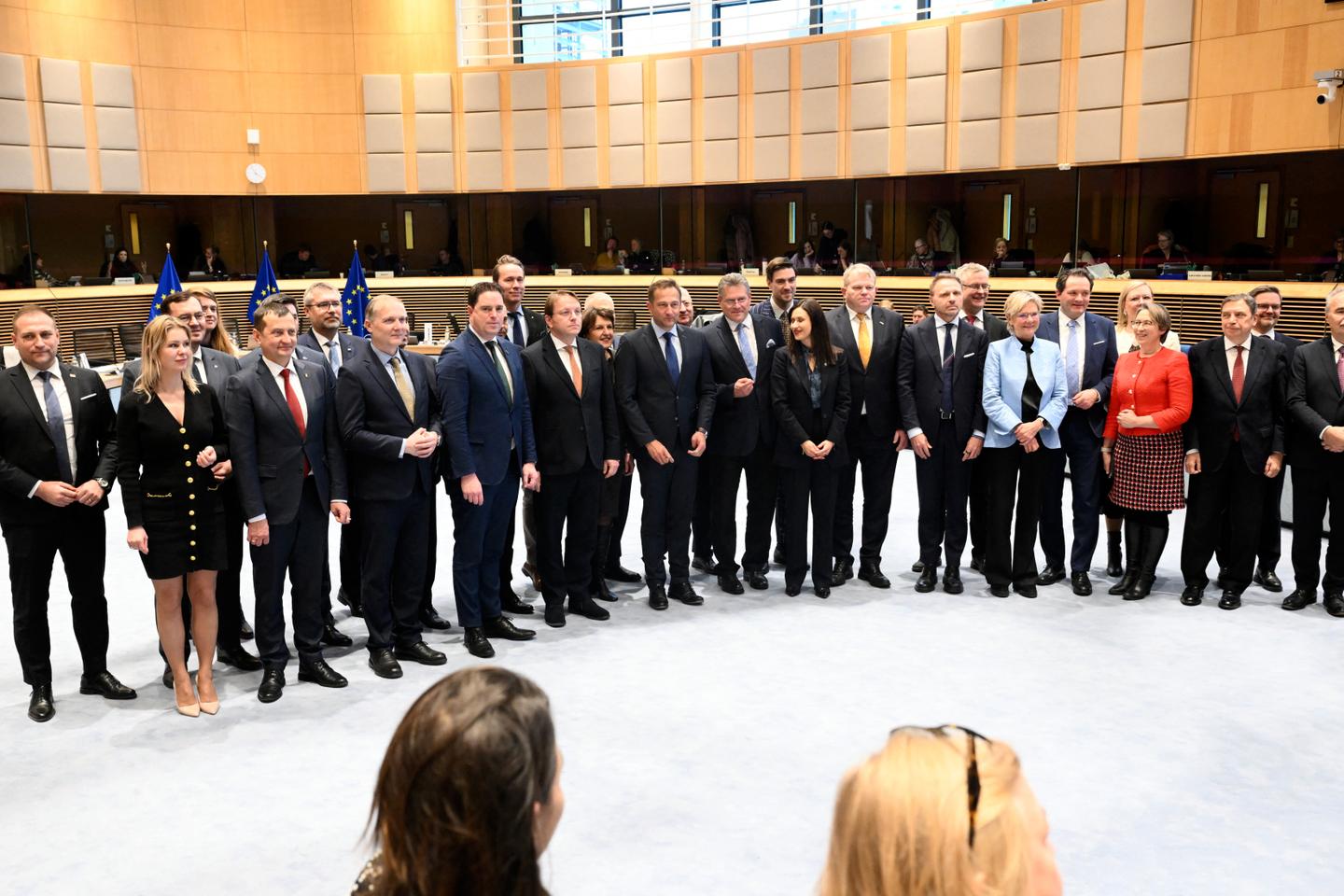
 The agriculture ministers of the European Union, in Brussels, on January 7, 2026. NICOLAS TUCAT/AFP
 If all goes according to plan, Ursula von der Leyen, the president of the European Commission, should fly to Paraguay to sign, on Monday, January 12, the trade agreement between the European Union and four Mercosur countries (Argentina, Brazil, Paraguay and Uruguay).
Even France, who fought hard against the free trade agreement, does not see anything that could derail the process. On Friday, the member states are expected to authorize von der Leyen to sign the deal that the Commission, which negotiates on behalf of the 27 member states in trade matters, and Mercosur reached in December 2024, after 25 years of negotiations.
At the Elysée presidential palace, Emmanuel Macron had not yet decided on his position. Whatever he chose, however, the matter seemed already settled. Italy seemed ready to join the pro-Mercosur camp, alongside Germany, the Netherlands, Spain and the Scandinavian countries, effectively ending Paris’s last hopes of forming, together with Poland, Hungary and Austria, a blocking minority.
Rome long maintained ambiguity about its position on the agreement, reflecting the sometimes divergent interests of its robust industrial sector, a vast network of small and medium-sized enterprises and a highly developed agricultural industry. Like Germany, Italy, now the world’s fourth-largest exporter, seeks opportunities beyond European borders to export cars, machine tools, wine and even cheese. In the face of rising protectionism in China and the United States, the country could not remain indifferent to the prospects offered by the free trade agreement.
You have 83.92% of this article left to read. The rest is for subscribers only.