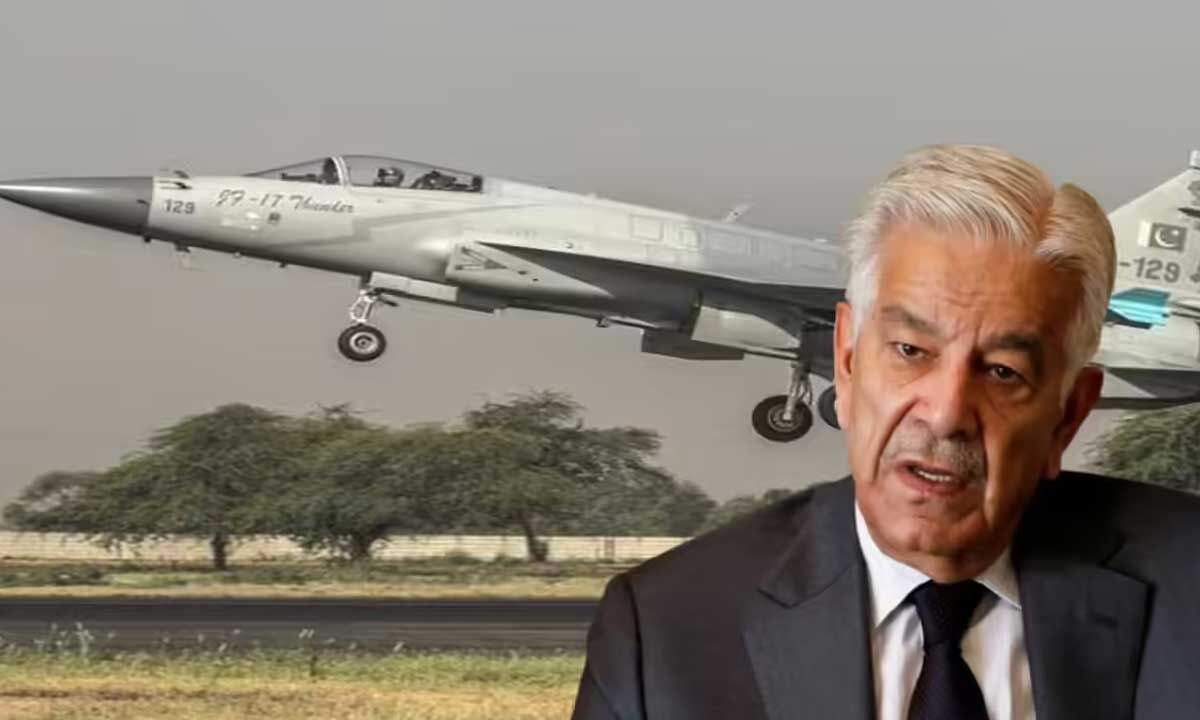
Pakistan Defence Minister Khawaja Asif has claimed that the country may no longer need financial assistance from the International Monetary Fund within six months, citing a surge in international demand for Pakistani fighter jets following the May 2025 military clash with India. However, analysts and available economic data suggest the statement is far removed from Pakistan’s fiscal reality.
In an interview with a local television channel, Asif said Pakistan’s military aircraft had been “tested” during the brief conflict with India and that global interest in its defence products had increased significantly. According to him, the growing number of orders could help Pakistan overcome its dependence on IMF bailouts.
Pakistan is currently under its 23rd IMF programme, a $7-billion package approved in 2023 that came with strict economic reforms, including the privatisation of state-owned enterprises such as Pakistan International Airlines. While IMF disbursements helped Islamabad avoid default, the country remains under severe financial stress, with further relief tied to tough fiscal conditions.
Recent reports indicate Pakistan is in talks with several countries, including Saudi Arabia, to export defence equipment. One proposal reportedly involves converting around $2 billion of Saudi loans into a deal for JF-17 fighter jets. While such negotiations highlight Islamabad’s efforts to monetise defence exports, experts caution that the financial gains are limited.
Analysts point out that Pakistan is not the primary manufacturer of the JF-17. The aircraft is jointly developed with China, and Pakistan produces only a portion of the airframe, with revenues shared between the two countries. Key components, including engines and avionics, are imported from multiple nations, significantly reducing Pakistan’s net earnings from each sale.
Economists and defence experts argue that even optimistic projections of fighter jet exports would barely make a dent in Pakistan’s massive debt burden, estimated at nearly $300 billion. Debt servicing alone consumes more than half of the federal government’s revenues, leaving little room for fiscal manoeuvre.
Adding to the scepticism are assessments of Pakistan’s economic health by its own economists, some of whom have described the economy as surviving on continuous borrowing and rollovers. Against this backdrop, critics say the suggestion that arms exports could replace IMF support in the near future is unrealistic.
With Pakistan recently forced to sell its national airline under IMF pressure and still negotiating for relaxed loan conditions, Khawaja Asif’s remarks on fighter jets rescuing the economy are being viewed by many as political rhetoric rather than a reflection of financial reality.