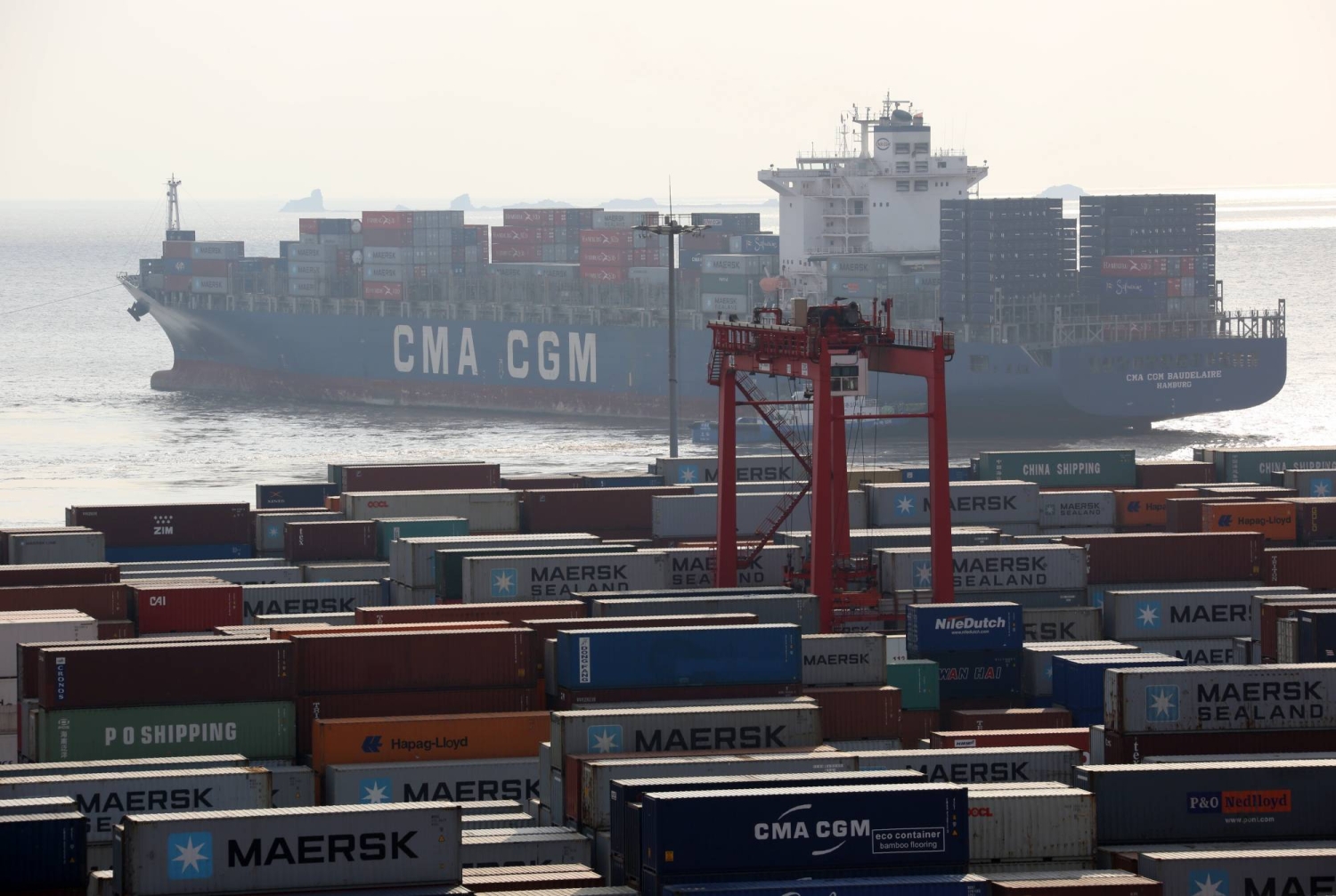
Tariff wars are often justified as necessary to protect or reshore manufacturing jobs and to improve national security. But, according to new research, these conflicts produce another outcome that is largely overlooked: pollution. When global supply chains are forced into inefficient detours, carbon dioxide emissions rise.
In a recent study of the U.S.-China trade conflict’s environmental effects, my co-authors and I found that tariffs have directly increased global CO2 emissions. Based on our calculations, if both sides were to impose a 60% tariff on imports from the other — a level consistent with the recent escalations in April — this would lead to a one-time increase in global emissions of nearly 410 million tons, roughly the same amount produced by 165 million gas-powered cars (with 1.6L engines) each traveling 10,000 kilometers (6,213 miles).
This may seem counterintuitive. Given that China is the world’s largest emitter and has a high carbon intensity (CO2 emissions per unit of gross domestic product), some assume that shifting production out of the country would reduce global emissions. But in many manufacturing sectors, China’s carbon intensity is significantly lower than that of numerous developing economies, and in certain industries it is even lower than that of some advanced economies. The Chinese economy’s high overall carbon intensity simply reflects its heavy reliance on manufacturing — a classic example of Simpson’s paradox.