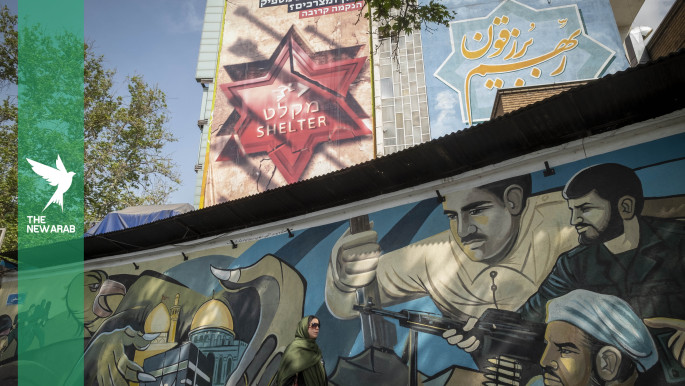
The prospect of a new Israeli attack on Iran could be moving from a looming threat towards an increasing likelihood.
Despite declaring the 12-day June war against Iran’s nuclear programme a “success,” Israeli Prime Minister Benjamin Netanyahu and US President Donald Trump now warn that further strikes may be needed amid claims Tehran is rebuilding its nuclear and missile capabilities.
During Netanyahu’s visit to Mar-a-Lago on 29 December, Trump warned that the US would act, including militarily, if Iran revived or advanced its nuclear programme.
“I hope they’re not trying to build up again because, if they are, we’re going to have no choice but very quickly to eradicate that buildup,” Trump told the press.
Senior Iranian adviser Ali Shamkhani responded to the threats by saying that Iran’s missile and defence capabilities are non-negotiable, warning that any aggression would face a devastating response. President Masoud Pezeshkian echoed the same sentiment, saying Iran’s retaliation would be harsh and regrettable.
Netanyahu has publicly stated that Iran is trying to rebuild its ballistic missile production and nuclear capabilities, repeating a series of unconfirmed reports that claim Iran is rebuilding its missile programme, including efforts to develop biological and chemical warheads for long-range missiles.
While not inevitable, a renewed Israeli attack on Iran is increasingly seen by experts as probable, and likely to be more intense than the June war.
This could raise the risk of deeper regional destabilisation at a time when the Middle East is already volatile, with a fragile ceasefire in Gaza, Israeli strikes against Hezbollah in Lebanon, the war in Yemen and related Saudi-UAE tensions, and the fallout of Israel’s recognition of Somaliland.
Beyond the region, any potential conflict would add to global instability, unfolding alongside the ongoing Ukraine-Russia war, rising tensions between the US and China over Taiwan, and last but not least, the crisis in Venezuela, with the US capturing its president, Nicolás Maduro, a key ally of Iran on the global stage.
“Very little is inevitable outside the laws of physics,” Alan Eyre, distinguished diplomatic fellow at the Middle East Institute, told The New Arab. “But Israel appears to have US approval to strike Iran if it rebuilds its nuclear or missile programmes, and such a strike could come soon, possibly within the next three months, depending on tactical timing and Iran’s internal unrest.”
Israeli threats coincide with growing protests inside Iran since the end of December, fuelled by a collapsing currency, soaring inflation, and worsening economic conditions. What began as rallies by shopkeepers has widened into broader demonstrations, met by arrests and security crackdowns.
Last week, Trump wrote on Truth Social that the US would respond if Iran “shoots and violently kills peaceful protesters”. Since protests began, at least 36 people have been killed. Iran’s Foreign Ministry has condemned Trump’s remarks as interference in Iran’s internal affairs.
Israeli attacks on Iran in June killed more than 1,000 people. [Getty]
Israel and Iran are currently observing a US- and Qatar-brokered ceasefire following the 12-day war in June, during which Israeli attacks on Iran’s nuclear programme sparked Iranian missile retaliation, US involvement, and concerns over a broader regional conflict.
This time, however, experts warn that a second round of Israeli strikes on Iran could be even more intense.
“It would likely be a primarily air-based war, similar to June but more intense, aimed at setting Iran’s programs back further; however, geographic and military limits would keep it relatively short rather than a prolonged conflict,” Raphael Cohen, director of the Strategy and Doctrine Program at the Rand Corporation’s Project Air Force, told TNA.
For Iran, any new war with Israel would likely escalate much faster than the June conflict, with larger missile barrages and potentially wider targets, Sina Toossi, a senior fellow at the Center for International Policy, told TNA.
“If Iran is perceived as weak or fails to raise the costs immediately, it will be prone to constant attacks every six months, so it needs to make the cost for Israel so high that it creates deterrence,” he said, referring to the estimated $6 billion cost to Israel of the June war against Iran.
Amid the threat of a potential escalation, Israel and Iran are locked in an arms race. Israel’s missile defences may be less prepared than during the June war, according to Israeli reports.
Meanwhile, renewed Iranian missile production and depleted Israeli interceptors, including US-supplied THAAD systems, could leave gaps in Israel’s ability to counter future ballistic threats.
Since the June war, Iran has also adjusted its military and nuclear strategy to prepare for a potential new attack from Israel.
Iran is reportedly reconstituting its missile forces by rebuilding and expanding underground production sites at facilities like Khojir and Parchin, acquiring key materials such as ammonium perchlorate from China for hundreds of ballistic missiles.
In August 2025, the Supreme National Security Council approved a new National Defence Council to centralise military planning and enhancements of the armed forces and their capabilities. The war exposed Iran’s outdated air force, spurring its pursuit of China’s J-10C fighters despite Beijing’s reluctance to approve high-end sales over sanctions concerns.
Israeli security forces check the remains of an Iranian ballistic missile fired in retaliation for Israeli attacks in June 2025. [Getty]
After the June war, Iran refused the International Atomic Energy Agency (IAEA) access to bombed nuclear sites, insisting that post-war conditions be defined first. Meanwhile, snapback sanctions under the JCPOA were reimposed in October due to Iran’s alleged breaches, including its growing stockpile of highly enriched uranium.
These moves allow Tehran to maintain nuclear ambiguity: retaining the ability to quickly build a nuclear weapon, while officially claiming a civilian programme, leaving other countries unsure of its true intentions.
It is also unclear whether Iran’s regional allies in the “Axis of Resistance” could effectively support Tehran in a new conflict, as they were unable, or unwilling, to do so during the June war.
Hezbollah in Lebanon and Hamas in Gaza are weakened by recent Israeli wars, and both face pressure to disarm. The fall of Assad’s regime in Syria removed another key Iranian ally and supply corridor.
In Yemen, meanwhile, the Houthis remain active, but ongoing clashes between the UAE‑backed Southern Transitional Council and Saudi-backed Yemeni forces may further limit coordinated support for Iran.
It is also unclear what role the US would play in a potential renewed Israeli war on Iran. Cohen said he doesn’t see “much appetite in the Trump administration for another major Middle Eastern war”. While a limited strike like Operation Midnight Hammer, which targeted nuclear sites in Iran, is possible, he believes that “the Middle East ranks low compared with domestic issues, Venezuela, and China”.
Diplomatically, Washington continues to pursue a maximum-pressure approach toward Tehran. The US administration wants an agreement that halts Iran’s nuclear programme, a position fundamentally at odds with Iran’s own. As a result, there is little room for diplomacy, with both sides starting from sharply opposing positions.
Eyre, who also served in senior roles related to US policy on Iran and was involved in the US team during the 2010–2015 nuclear negotiations that led to the JCPOA, said that Washington feels it has already dealt with the Iranian nuclear threat, with Trump claiming he “obliterated” it. He added that the Trump administration’s strategic attention span is short, making renewed negotiations with Iran unlikely.
“I think it’s perfectly willing to let Israel take the lead in terms of monitoring Iran and deciding if and when it’s time for another strike,” he said. “Now, if Israel does strike, obviously the US will have to cooperate in defending against the possible Iranian missile counter-strike with its air defence systems.”
Despite Trump’s claims contradicting US intelligence assessments that found limited damage to Iran’s nuclear sites, Israel now appears to be shifting its focus to Iran’s missile programme to justify potential military action against Tehran.
Israel’s broader goal appears to be destabilising the Iranian government or even promoting regime change to advance its ambition of regional hegemony.
But attempting to exploit the current protests in Iran may be a miscalculation on Israel’s part. Israeli attacks on Iran in June produced a brief boost for national unity, with even critics expressing nationalist anger at Tel Aviv’s actions. Experts argue that external threats often strengthen domestic support, potentially dampening protests.
Netanyahu on Sunday expressed solidarity with the Iranian protests, saying that Israel can “identify with the struggle of the Iranian people”. Israel’s Foreign Ministry also appeared to express support for the protests, while Israeli opposition leader Yair Lapid tweeted: “The regime in Iran should pay close attention to what is happening in Venezuela,” drawing parallels to the capture of Maduro.
“I think that’s their old dream scenario: to combine unrest in Iran with a military attack to bring down the regime, and that didn’t happen in June, despite their efforts,” Toossi told TNA.
“The economic situation in Iran is very bad, but these protests are not like those in 2022, at least not yet. Whether they grow into nationwide unrest remains an open question, as similar protests in the past have typically been met with repression.”
Dario Sabaghi is a freelance journalist interested in human rights
Follow him on X: @DarioSabaghi
Edited by Charlie Hoyle