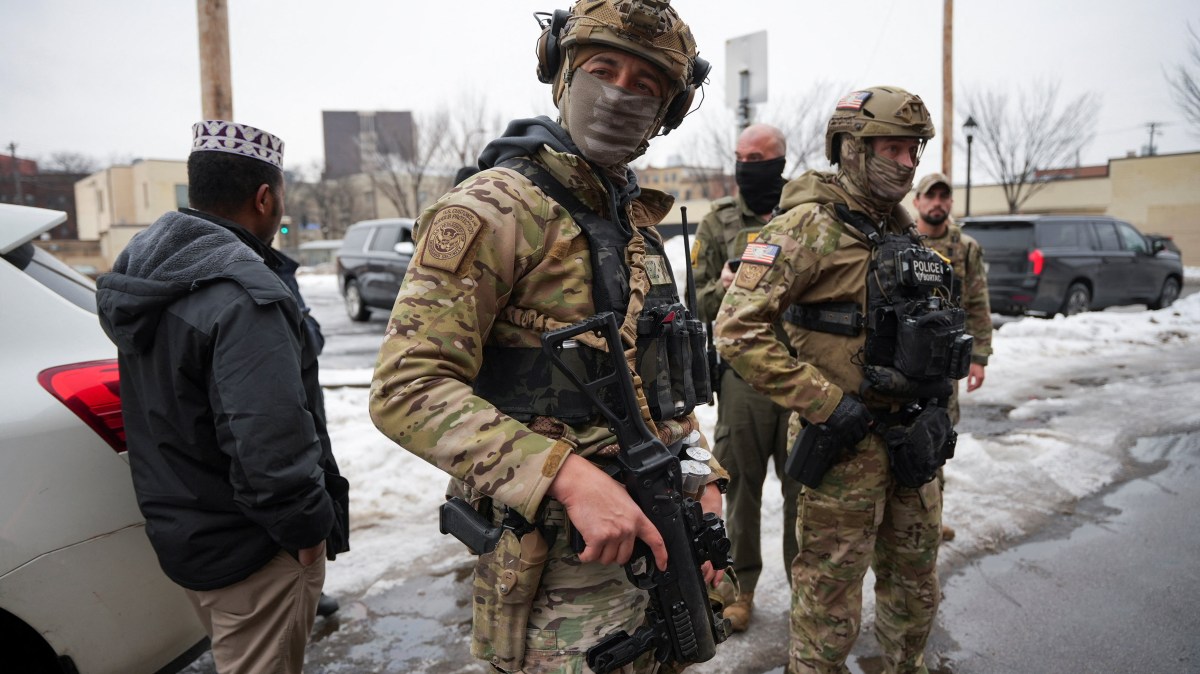
Adverts for jobs at ICE, the US Immigration and Enforcement Agency, emphasise its roots in the 9/11 attacks, targeting terrorists living in America’s midst.
“Nearly 3,000 Americans lost because terrorists were here illegally. From that day, ICE was born. America’s first united immigration, counterterrorism and homeland security effort,” the narrator of the latest recruitment video says.
“Today, ICE is refocused on its mission and making America safer … the worst of the worst are being sent back. America needs you.” But many Americans already had concerns about ICE’s methods before one of its agents shot dead a woman in her car in Minneapolis this week. YouGov in November found 53 per cent disapprove of how it conducts its mission to arrest and remove illegal migrants, with 39 per cent approving.
• Sign up for The Times’s weekly US newsletter
Every week brings new examples of ICE agents, often masked, in plain clothes and in unmarked vehicles, sometimes with guns drawn, roughly arresting people in the street on suspicion of being in the US illegally.

Anti-ICE protests, like this one in Illinois, have been cropping up across the country
MATTHEW GILSON FOR THE TIMES
Accusations of indiscriminate arrests came after ProPublica, an independent research group, found more than 170 cases of American citizens detained by ICE between January and October last year.
The Trace, a gun violence monitoring project, recorded 14 shootings by ICE agents during Trump’s second term.
ICE was created from two predecessor agencies in the Homeland Security Act of 2002. Trump praises the bravery of its agents and set it tough targets of one million deportations a year. By December 10, the Department of Homeland Security claimed it had achieved 605,000 deportations and 1.9 million voluntary departures.
• What happened in Minneapolis? How ICE shooting unfolded
In large cities ICE patrols have targeted workplaces known for hiring migrants and the car parks of home improvement retailers where some gather to pick up a day’s labour. They have begun raiding court buildings where illegal immigrants go to regularise their papers. The most tense confrontations have come in Democrat-controlled areas which have declared themselves sanctuary cities. This informal definition adopted by authorities in more than 150 major cities including Los Angeles, Chicago, New York and Boston means they refuse to cooperate with federal agents seeking to find and arrest immigrants.

ICE officers drag away a man at an immigration court in New York in July
SPENCER PLATT/GETTY IMAGES
“They’re sanctuary for criminals,” Trump told a cabinet meeting in August. The cities point to research, including by the Center for American Progress, a liberal thinktank, that these areas have lower rates of crime.
The close identification of ICE with Trump’s immigration policy has contributed to its politicisation, reflected in YouGov polling: 85 per cent of Democrats disapprove compared with 13 per cent of Republicans.