[Abir Sultan/Pool Photo via AP]
The new global order that is taking shape and the unpredictable environment we’re living in give rise to dangers that demand heightened vigilance from all sides – both government and opposition. Any criticism of or blow to the government should stem from rising prices, farmers’ protests, or even the arrogance of power, rather than from the management of the latest shifting sands in which we all – and Europeans in particular – are discovering that we are being trapped.
Clearly, there is room for criticism, but not for exaggeration. Fringe protest parties may descend to patriotic grandstanding and glibly saying no to everything, but this is not an option for those who govern, or those who have governed in the past and credibly aspire to govern in the future.
The government is having to tread carefully in a diplomatic minefield, where the clout of international law is waning and being replaced by the laws of the mightiest. Like it or not, this is the reality right now and we don’t have the luxury to avoid it by burying our heads in the sand.
In his first comment on the arrest of the Venezuelan president by the United States, the Greek prime minister, echoing a similar approach to other European leaders, noted that “Nicolas Maduro presided over a brutal and repressive dictatorship that brought about unimaginable suffering on the Venezuelan people.”
The positive response to the end of Maduro’s reign, whose reelection in 2024 was not recognized as legal by the European Union, was the easy step taken by our European partners. The hard one comes next.
Sure, there’s a debate about the legality of the American operation, not just among its friends and rivals on the international stage, but also among all the Democratic and even a few Republican officials within the US, who question the constitutional legitimacy of a military operation in a foreign country.
But seeking to strike a balance along the fine line between respect for international law and national sovereignty on the one hand, and realpolitik on the other, Athens initially avoided taking a more emphatic stance, with the prime minister noting that this was “not the time to comment on the legality of the recent actions.” He went on to note that “Greece will coordinate with its European Union and UN Security Council partners on the matter,” as it did.
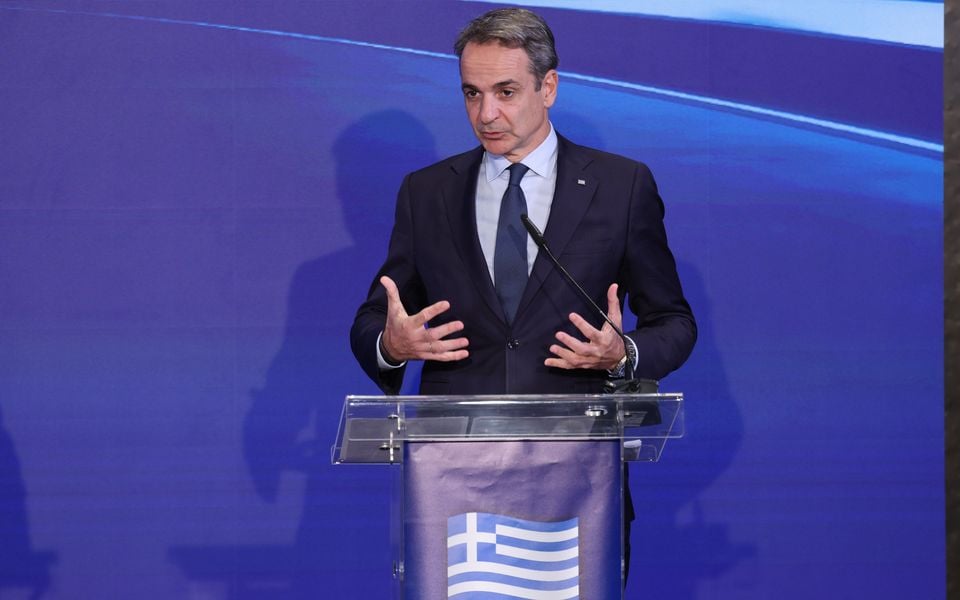
With Greece being in the crosshairs of Turkish revisionism, the opposition accused Prime Minister Kyriakos Mitsotakis of being “scared” to criticize Donald Trump for international law violations.
Things are not so simple, though. We are dealing with an explosive mix created, on the one hand, by the dominance of the law of the mighty and the revisionism of the American president, and on the other by his alignment with his friend Recep Tayyip Erdogan, whom he praises as a “tough” and “effective leader.”
Managing this dangerous mix – which has taken on existential dimensions and goes beyond any single government or prime minister – requires restraint and political maturity from all those who hold positions of responsibility.