Two decades ago, Africa’s presence in outer space was limited, rooted in a few national programmes and a scattered archipelago of legacy observatories. Today, the picture is decisively different. Costs for small satellites have collapsed, Earth-observation datasets are abundant, and world-class, networked astronomy exerts a powerful pull. Budgets remain modest by global standards – African governments collectively devoted in the order of a few hundred million dollars to space activities in 2025, versus tens of billions in the United States and several billions in China – but the direction of travel is unmistakable. Some estimates put the African space economy above USD 22 billion by 2026. What was once a specialist pursuit is now an emergent policy field spanning big science, agriculture, climate services, urban planning, disaster response, security, and industrial strategy. The centre of gravity is shifting from prestige missions to the mundane work of turning data into services, made more salient by geopolitical turmoil that elevates the value of dual-use technologies and information systems. This inflection point is clearest where flagship science doubles as systems-building – nowhere more than around the Square Kilometre Array (SKA).
Building the world’s largest telescope, powering a continental science ecosystem
Twenty years ago, few would have expected that most of the world’s largest radio telescope would be realised across twin sites in southern Africa and Western Australia, with Africa hosting the majority of the build. Governed by an intergovernmental organisation that includes members across Europe, North America, and Asia, with Italy participating as a founding member through the National Institute of Astrophysics INAF, the SKA is both an emblem and engine of Africa’s turn to space. With its core site rising in South Africa’s Karoo region, the SKA is not just a uniquely sensitive instrument; it is a big-data machine that can help the continent overcome historical marginalisation and accelerate into a high-tech future. Built on pipelines prototyped by South African precursor telescopes, SKA design, procurement, and operations have trained engineers and data specialists, road-tested hardware and software stacks, and established standards already diffusing into other sectors.
SKA did not emerge in a vacuum. Southern Africa’s scientific infrastructure took shape in the colonial era—anchored by institutions such as the Royal Observatory at the Cape—and expanded in the 1960s when apartheid-era South Africa hosted US-funded tracking and space science facilities that supported missions from early planetary probes through Apollo. Hartebeesthoek, built as a tracking site and later converted into the Hartebeesthoek Radio Astronomy Observatory, exemplifies how politically fraught, foreign-funded infrastructure left behind assets and human capital that could be repurposed for science.
In the democratic era, under the impulse of post-apartheid “African Renaissance” thinking, that inheritance was redirected into a platform for big-science collaboration and industrial upgrading. The creation of the South African National Space Agency (SANSA) in 2010 did not start from scratch but consolidated the country’s existing space infrastructure, bringing under a single umbrella the CSIR’s Satellite Applications Centre at Hartebeesthoek and the long-standing Hermanus Magnetic Observatory (in operation since 1841), thereby providing national leadership in the space sector. The Southern African Large Telescope (SALT) (completed in 2005) remains the largest optical facility in the Southern Hemisphere; and MeerKAT, operational since 2018, delivers world-class radio astronomy while functioning as a technology, procurement, and skills engine that prototypes SKA systems. Across the border, Namibia’s High Energy Stereoscopic System (since 2002) anchors high-energy astrophysics and informs planning for the first African millimetre-wave capability. Crucially, this ecosystem is outward-facing. The African Very Long Baseline Interferometry Network (AVN) repurposes legacy telecommunications dishes into radio telescopes in partnership with other African countries. More than an astronomy programme, AVN diffuses interoperable practices in data handling, observatory operations, and life-cycle maintenance; it seeds talent pipelines and de-risks local manufacturing and services. In effect, AVN is the hinge connecting Southern Africa’s big-science core to a wider continental diffusion of capability.
From national initiatives to a continental architecture: towards the African Space Agency
Beyond the Southern powerhouse, space science activities, anchored historically in Nigeria and North Africa, have grown quickly and broadened their reach. In West Africa, Nigeria stands out as the longest-standing actor in both astronomy and space science. With NASRDA’s creation in 1998, Nigeria established one of Africa’s earliest comprehensive space programmes, combining Earth observation, communications, and basic space science. Successive missions (NigeriaSat flights since 2003 and NigComSat-1R in 2011) have supplied data for land-use planning, infrastructure mapping, agriculture, and disaster response, including flood monitoring. Around these programmes, a research and training ecosystem of university labs and operations teams has produced a durable talent pipeline that plugs into continental data practices and shared ground segments. Ghana complements this foundation: beyond its 2017 CubeSat for coastline monitoring, the conversion of a 32-metre telecoms dish into a functioning radio telescope – with South African support – brought Ghana into the AVN and embedded interoperable operations, data handling, and maintenance routines.
East Africa and the Horn show similar momentum. Kenya established a space agency in 2017 and launched its first CubeSat with Japan in 2018, building downstream geospatial services that connect to continental platforms. Ethiopia advanced via the Entoto Observatory (2013) and the ETRSS-1 satellite in 2019 while adopting training and operations practices compatible with AVN-style standards. Sudan’s Institute of Space Research and Aerospace (2013) has focused on aerial and satellite surveillance systems and on strengthening the ground segment. North Africa, meanwhile, is moving from stand-alone assets to networked science and applications. Egypt operates one of the continent’s largest optical telescopes at the Kottamia Astronomical Observatory and has launched multiple remote-sensing and communications satellites since the late 1990s; Algeria remains a hub through the AlSat series; and Morocco’s Oukaïmeden Observatory (est. 2007) has become a platform for international collaboration, hosting projects such as TRAPPIST-North for exoplanet detection. Across these regions, a shared network logic – common ground segments, interoperable data practices, and mobile talent – lowers barriers to entry and turns early movers’ capabilities into continental public goods.
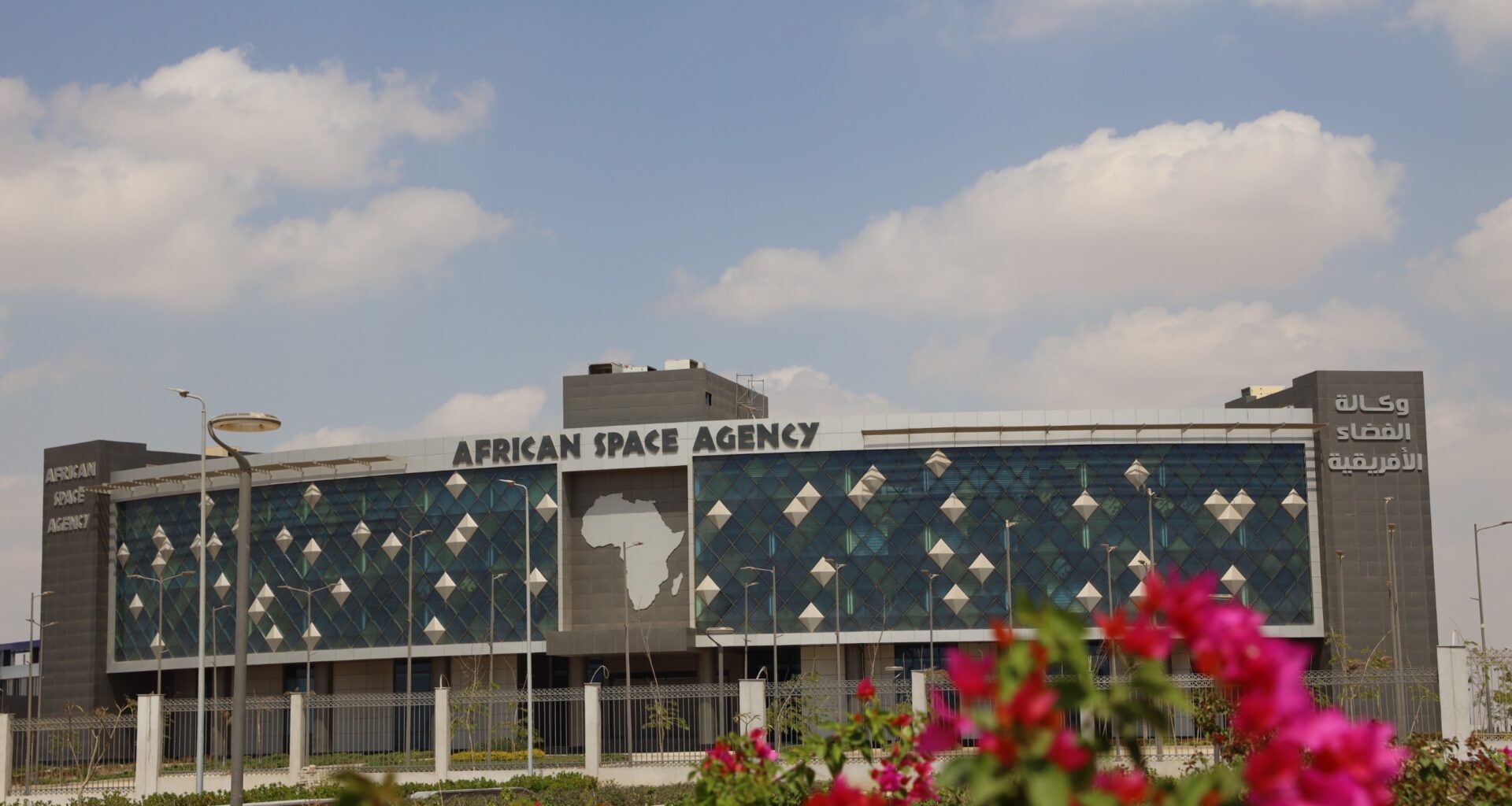
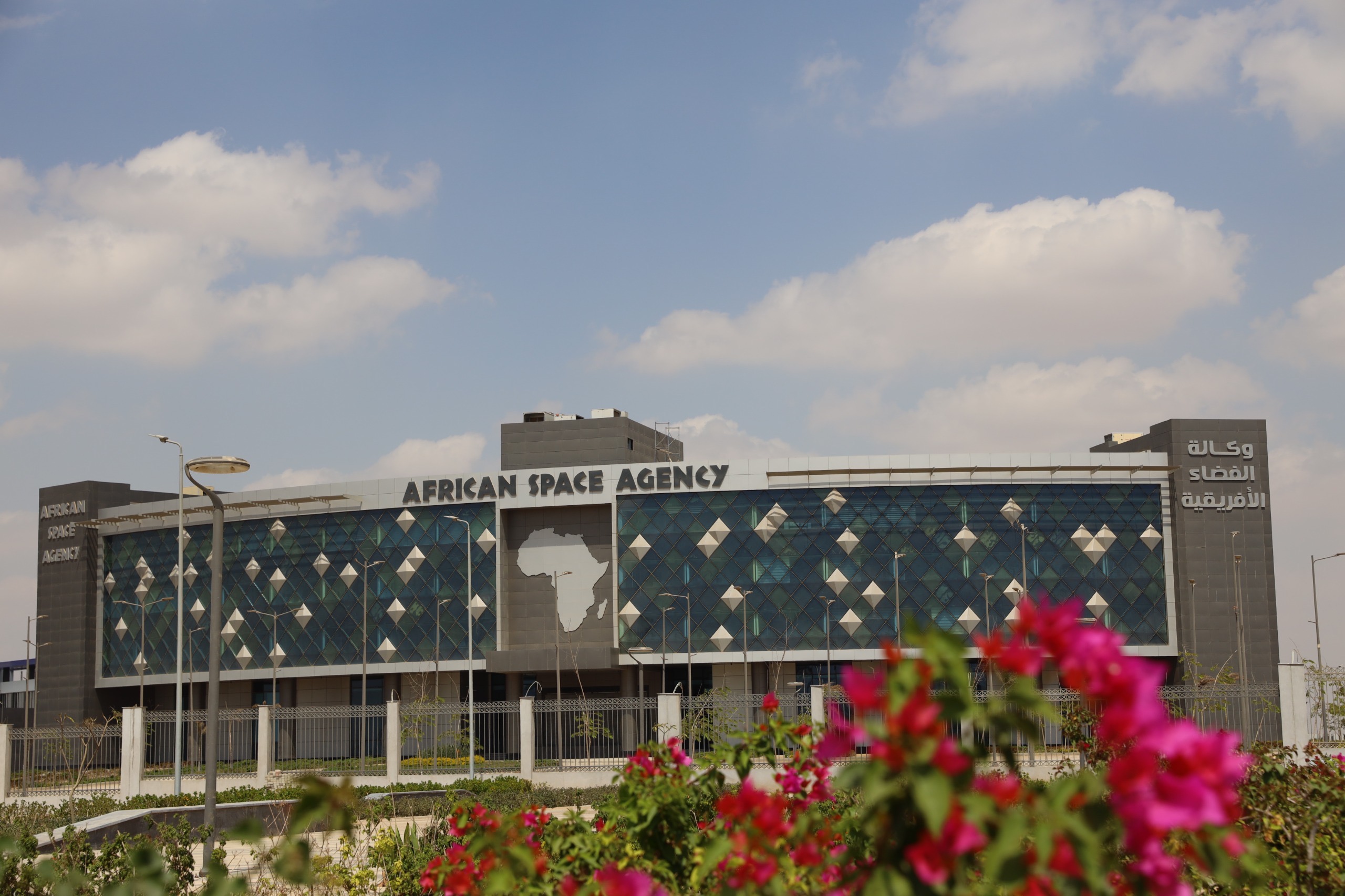
Policy has tracked these technical shifts. In 2016, the African Union adopted the African Space Policy and Strategy, signalling a turn from ad hoc national initiatives to a continental approach. The formal inauguration of the African Space Agency (AfSA) in 2023, with Egyptian support, marked a milestone along that path. AfSA’s comparative advantage is orchestration rather than duplication. By facilitating access to data and infrastructure, promoting interoperable standards, convening ground-segment and data-platform sharing, and supporting skills and certification pathways, the agency can convert today’s mosaic of programmes into a coherent market and research ecosystem. The immediate opportunity is to align SKA/MeerKAT- and AVN-derived standards with downstream public-service delivery – agriculture, climate services, disaster preparedness, urban planning – so that the continent’s big-science backbone translates directly into everyday resilience and growth.
What powers Africa’s space surge, and what comes next?
Few things are more emblematic of postcolonial aspirations to modernity than outer space. In Africa, where many states remain institutionally thin and confront overlapping crises, from the unfinished business of decolonisation through structural adjustment and democratisation to climate stress, space signals modern state capacity (legibility, coordination, legitimacy) while delivering concrete returns that justify the investment. In the near term, most value lies downstream: Earth-observation services that help ministries and municipalities do their jobs, from crop monitoring and yield estimation to basin hydrology and flood mapping, land-cover change for urban planning, grid routing and site selection for energy, climate monitoring, and risk scoring for disaster preparedness. Governments remain anchor customers, but the growth frontier is private – insurers, agritech firms, telcos, logistics, and extractives – demanding timelier, tailored analytics. In this context, the product is no longer “pixels” but outcomes: alerts, indices, dashboards, and continuity that agencies and firms can budget for. For most countries, the binding constraint is not owning a satellite but reliable access to high-quality data, processing capacity, and bandwidth. Shared ground stations, regional data cubes, cloud credits, and open interfaces often unlock more value than duplicative hardware. In short, space activities promise modernity by making core services legible and manageable, precisely as the global space economy scales and lowers entry costs for service-centric models. Yet where reliable electricity access remains limited for large swathes of the population, outer-space initiatives in Africa are not only a promise but also a high-stakes wager by political elites seeking to navigate uncertain times.
Africa’s rise is also being pulled by globally networked programmes that create ladders of participation. SKA/MeerKAT and AfSA show how big science and continental organisations can double as systems integrators, setting policy and technical standards, establishing procurement pathways, testing hardware-software stacks, hardening data-handling protocols, and building training pipelines that spill over into non-astronomy sectors. African data-intensive initiatives such as IDIA’s ilifu research cloud, built to support MeerKAT and other SKA pathfinders, underscore that the real battleground is the data economy (data science, storage, compute) and offer a domestic model for building that capacity. More broadly, outer space initiatives aspire to de-link Africa from historical marginalisation and enable technological leapfrogging. While signs that this is happening are clear, at the same time outer space initiatives reinscribe old and new contestations over land, spectrum, and resources, as my research in South Africa has documented. Radio-quiet zones, ground segments, and large facilities refract colonial and apartheid histories of appropriation into contemporary struggles over who benefits, who bears externalities, and how communities are consulted and compensated. Turning pull into shared progress requires attention to the last mile: training end-users in line ministries and municipalities, funding maintenance and updates, building redundancy into power and connectivity, and standardising procurement so that African SMEs and universities can compete as principals rather than perpetual subcontractors. Human capacity is the hinge; the International Astronomical Union (IAU) Office of Astronomy for Development (OAD) in Cape Town, alongside hands-on AVN dish conversions, channels skills into telecoms, analytics, and advanced manufacturing – outcomes no single satellite can deliver on its own.
The next phase will unfold in a world where space collaboration is rapidly consolidating into competing blocs. Expect non-Western actors to scale “full-stack” packages – launch slots, smallsat constellations, turnkey ground segments, concessional finance, and training tied to their tech stacks. China is already deepening this model via the China-Africa Cooperation Centre on Satellite Remote Sensing (CACSA) and related data-sharing efforts; Egypt’s MisrSat-2 and a run of cooperation seminars point the way. These offers compress timelines and shift bargaining power, but they can also hard-wire path dependence and reshape data governance and security choices. Europe’s edge is different: rules, standards, and continuity. The new Africa-EU Space Partnership Programme (worth 100m euros), Team Europe support for climate-data initiatives, and the EU’s Global Gateway positioning give Europe a platform to back AfSA, co-fund a continental “data fabric”, and normalise transparent tenders that let African firms compete as principals. Done this way, dual-use risk is governed by design rather than after the fact.
In this context, Europe’s most credible role is not speed or spectacle but architecture: open standards, interoperable data ecosystems, regulatory reliability, and long-horizon partnerships. A European offer built around service-level guarantees, life-cycle support for operations and maintenance, shared “data fabric” infrastructure, and transparent procurement, delivered with AfSA as a continental broker, would give African governments leverage while keeping dual-use risks in check. Done well, this turns geopolitics from constraint into asset: alliances widen access and investment when anchored in rules and shared capacity rather than hardware deals alone. The proof of success will be visible off the launchpad – in utilities, municipalities, and ministries where space-enabled services work reliably, week after week.