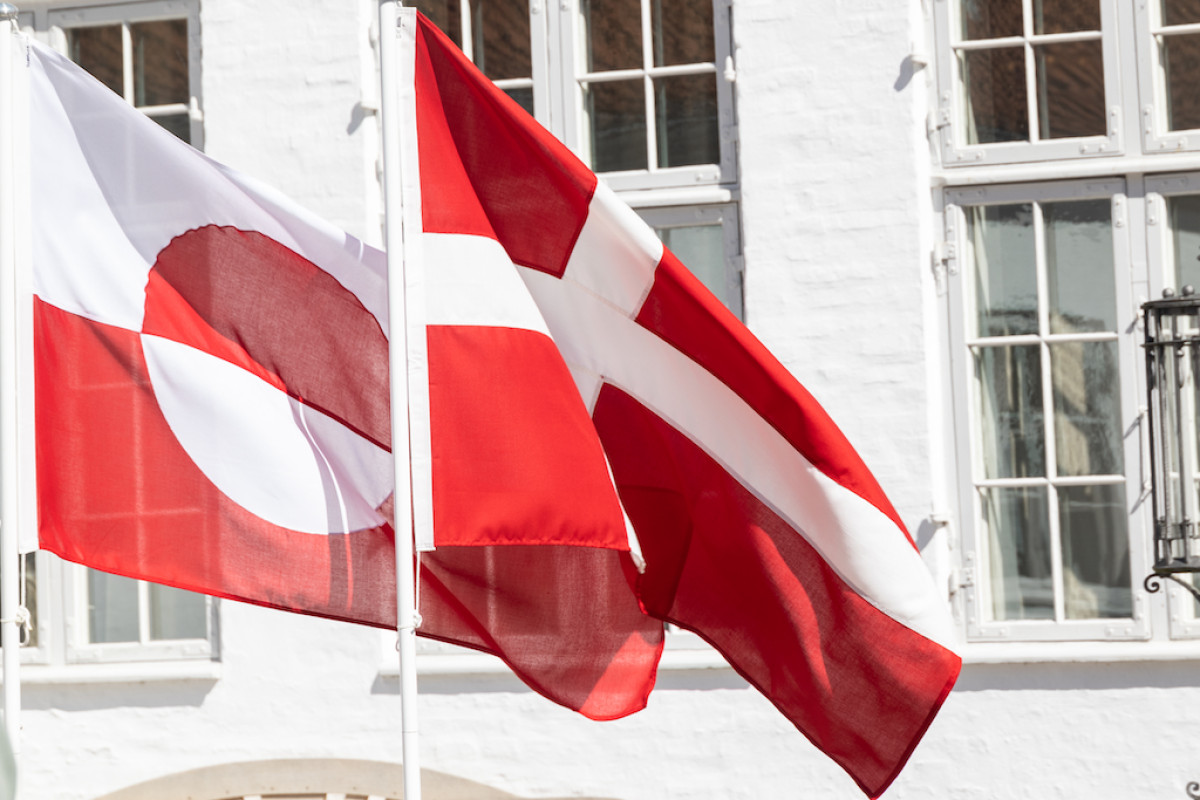
For too long, Europe has regarded Greenland as a remote and peripheral territory: exotic, frozen, and politically irrelevant. The latest First Glance analysis by the Bruegel think-tank, signed by senior adviser Guntram B. Wolf, dismantles this complacent conception with a clear thesis: Greenland is today a strategic test for Europe, and the response (or lack of response) to recent events will define the degree to which the Union is able to defend its sovereignty, including against its own allies.
“Is the European Union willing to accept an American intervention on European soil?”The question is no longer whether Greenland matters. Trump and his top adviser Stephen Miller have made themselves clear. (Trump: “Do you know what Denmark did recently to increase security in Greenland? They added one more dog sled.” Miller: “No one is going to confront the United States militarily over the future of Greenland.”) Nonetheless, we Europeans claim to find them difficult to read, always seeking to downplay such statements. The question today is whether the European Union is prepared to behave as a strategic actor – or else accept an American intervention on European soil.
The threat is structural
Guntram B. Wolf’s central argument is that the real risk to Greenland derives not from some isolated American fantasy or rhetorical episode but from a major transformation in the international order. The Arctic has become a space for strategic competition among great powers, where three key factors converge:
Military geography: Greenland is essential to control of the North Atlantic and the GIUK Gap, critical in deterrence against Russia.
Strategic infrastructure: radars, satellites, undersea cables, and early warning systems pass through or depend on this region.
Critical resources: rare earths and strategic minerals, indispensable for both the energy transition and the defense industry.
“If an external actor can condition, pressure, or force changes to Greenland’s status without a clear European response, then no European territory is truly safe”The analysis from Bruegel underscores a fundamental point: if an external actor can condition, pressure, or force changes to Greenland’s status without a clear European response, then no European territory is truly safe. This isn’t just about Denmark; it strikes at the core principle of European sovereignty.
Moreover, this threat isn’t emanating from Russia or China but from within the Atlantic space, and here lies the most delicate – and most European – aspect of the analysis. When an ally openly raises the possibility of controlling a European territory for its own strategic reasons, it has already crossed the line from the strictly military to the political. Bruegel puts it bluntly: if Europe accepts that its security depends exclusively on the will of the United States, that represents a de facto renunciation of its strategic autonomy. If Europe proves unable to protect one of its Member States in a case as clear as this, it will hardly be able to do so in more ambiguous future scenarios.
Spain, the EU, and troop deployments to Greenland
At his session next Monday with the various parliamentary groups, where the matter of sending forces to a post-war Ukraine is expected to be raised, President Sánchez should propose the deployment of Spanish troops to Greenland. After all, the crisis in Greenland isn’t a proxy war – it’s not the Middle East or even Ukraine. It’s European territory under direct strategic threat. If Spain aspires to be more than a declarative actor in Europe’s defense, this is precisely the sort of scenario in which it must involve itself.
“The security of the North Atlantic directly conditions the stability of our trade routes, our energy supply, and the geopolitical balance on which Europe’s southern flank – including the Strait of Gibraltar and the Canary Islands – depends”The Arctic is not so remote for Spain, nor is it alien to Spain’s strategic interests. The security of the North Atlantic directly conditions the stability of our trade routes, our energy supply, and the geopolitical balance on which Europe’s southern flank – including the Strait of Gibraltar and the Canary Islands – depends. In this context, clear positions from the PP and PSOE in favor of a European presence in Greenland would strengthen the Union’s strategic autonomy while permitting Spain to project itself as a responsible actor in matters of security. Consensus between the parties on this issue would also send a signal of political maturity and strategic continuity, to both our European partners and our Atlantic allies: defense must remain outside the political arena and exist as public policy, capable of sustaining itself beyond electoral cycles and credibly contributing to the construction of a Europe endowed with the genuine capacity to protect its interests.
Addressing the present need for EU nations (Spain among them) to fortify Greenland may seem provocative; in fact, it’s simply coherent. This isn’t a question of militarizing the Arctic or defying any actor, but of meeting four very specific requirements:
Supporting Denmark as a fellow Member State whose sovereignty is being called into question.
The Europeanization of Arctic security, to prevent this from becoming a NATO issue or a bilateral struggle between Washington and Copenhagen.
Making the EU’s strategic autonomy a reality, not just a concept backed by documents.
And, paradoxically, consolidating the future of the Atlantic alliance: if the EU doesn’t take its own defense seriously, the U.S. won’t do it on our behalf.
A presence by Spain – within the framework of a reinforced European mission, and outside of NATO – would be more valuable in political terms than in military terms: it would demonstrate that Europe is capable of acting in concert when a problem becomes discomforting, even if the matter involves tensions within the Atlantic alliance.
The Bruegel report concludes that Greenland is a test of credibility not for reasons of size or population, but because it seems to contain all of Europe’s contradictions: strategic dependence, political ambiguity, and the fear of assuming costs.
Spain cannot limit itself to observing this crucial test from the sidelines. As the editor and director of Agenda Pública has indicated in his ‘Brújula Europea’ column, the defense of Europe today implies that calculated risks be taken to avoid greater vulnerabilities tomorrow. If Europe fails to defend itself in Greenland, it will hardly be able to defend itself in the Mediterranean, or in the Baltic, or on its southern flank.
Greenland is not marginal. However, if Spain and the EU continue to act as though it were a footnote, it is they who might find themselves consigned to marginality.