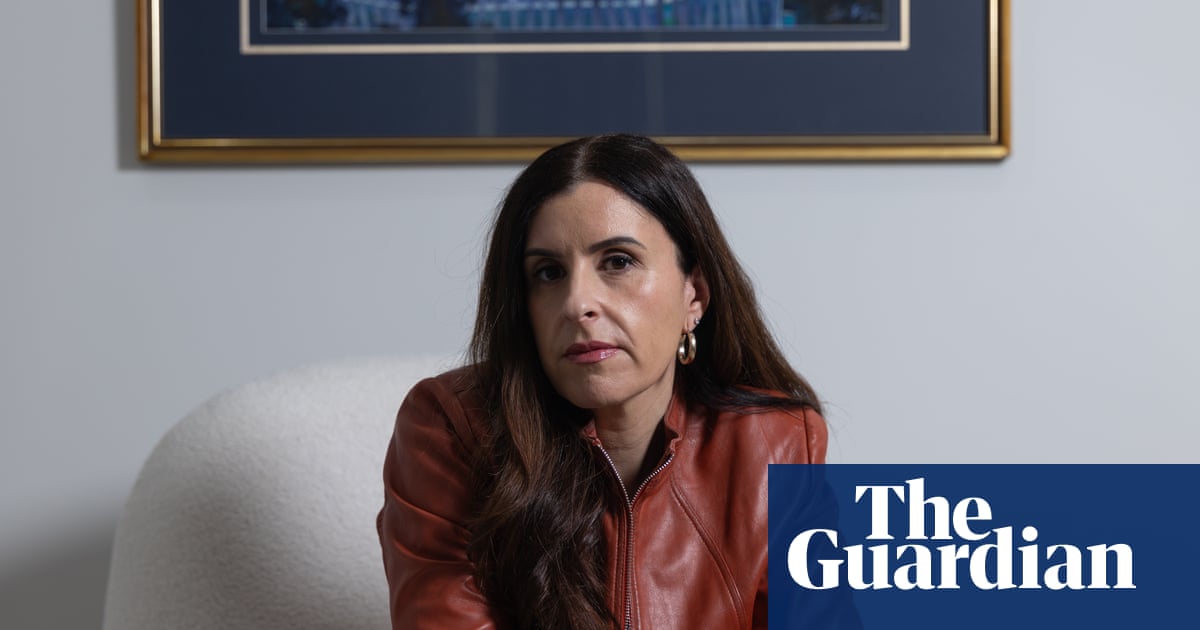
Dozens of authors, journalists, media personalities and a sponsor are boycotting the Adelaide festival after it dumped Palestinian Australian author Randa Abdel-Fattah from its annual writers’ week lineup, citing concerns over “cultural sensitivity” in the wake of the Bondi terror attack.
More speakers were expected to withdraw from the festival, with speculation that other high-profile figures were coordinating their exit announcements.
Writers Helen Garner, Chloe Hooper and Sarah Krasnostein, Miles Franklin winner Michelle de Kretser, authors and commentators Jane Caro and Peter FitzSimons, the co-founder of Cheek Media, Hannah Ferguson, the journalist and academic Peter Greste, ABC radio presenter Jonathan Green, First Nations academic and writer Prof Chelsea Watego and reporter Amy Remeikis were among those confirmed by Friday morning to be boycotting the annual writers festival.
Australian authors Bri Lee and Madeleine Gray said they would not participate unless the festival reversed its decision and reinstated Abdel-Fattah.
Abdel-Fattah, a Macquarie University academic, was due to appear at the festival for the second time next month after hosting a number of panels and sessions in 2023.
But in a statement released on Thursday, the festival board said it had formed the view that it “would not be culturally sensitive to continue to program her at this unprecedented time so soon after Bondi”.
The board said that while it did not suggest “in any way” that Abdel-Fattah or her writings had any connection with the tragedy at Bondi, the decision was made “given her past statements”.
Abdel-Fattah previously faced sustained criticism from the Coalition, some Jewish bodies and media outlets for controversial comments on Israel, including alleging Zionists had “no claim or right to cultural safety”.
The former NSW premier and federal foreign affairs minister Bob Carr told Guardian Australia he would remain a speaker and supported the board’s decision.
Despite being a vocal critic of Israel’s invasion of Gaza, Carr said he believed some of Abdel-Fattah’s previous statements had been counterproductive to the Palestinian cause. He said the board had made the right call.
“The Adelaide writers’ festival has supported hearing Palestinian voices, its record on this is unimpeachable,” Carr said, adding that given the circumstances at Bondi, the board’s decision was not unreasonable.
“The board should be supported, and people sympathetic to the Palestinian cause should continue to participate in [the festival].”
Burial Rites author Hannah Kent described the decision to axe Abdel-Fattah as a “gross act of discrimination and censorship” as she announced her withdrawal in a social media post.
Remeikis condemned the board’s “deliberate choice to silence a prominent Palestinian-Australian academic without offering any clear or convincing rationale”.
Wright, who was co-curator of the 2025 Bendigo writers’ festival, which experienced a similar mass walkout, said she was “appalled” at what she described as the “wrong-headedness and short-sightedness of the Adelaide festival board’s decision”.
Public policy thinktank the Australia Institute on Thursday withdrew its sponsorship for the 2026 event, which it said in the past had “promoted bravery, freedom of expression and the exchange of ideas”.
Speaking to ABC radio on Friday, Abdel-Fattah said the decision showed the “egregious and unabashed anti-Palestinian” views that she said had become normalised.
It was an “obscene attempt to associate me with an atrocity … that it goes without saying that I had nothing to do with,” she said.
“I cannot believe in 2026, that I, a Palestinian who has witnessed my people’s livestream genocide for two years, am now having to say publicly ‘I have nothing to do with the Bondi atrocities’.”
Abdel-Fattah asked the festival to apologise, retract its statement and reinstate her invitation.
Asked about the boycott, Abdel-Fattah said it was “heartening to see the wave and momentum that is built in solidarity”.
“What makes this particularly egregious is the board would have known that this was going to happen,” she said.
On Thursday, the academic said she was confident that the writing community and public would respond with “principle and integrity”.
Last year, Abdel-Fattah was among more than 50 writers and hosts who pulled out of the Bendigo writers’ festival after it issued a last-minute code of conduct, including directions to “avoid language or topics that could be considered inflammatory, divisive, or disrespectful”.
“In the end, the Adelaide writers’ festival will be left with panellists who demonise a Palestinian out of one side of their mouths while waxing lyrical about freedom of speech from the other,” she said.
In 2023, the Adelaide writers’ week director, Louise Adler, resisted pressure to withdraw invitations to two Palestinian writers over their views on Ukraine and Israel.
The Stella Prize-winning poet Evelyn Araluen was one of the first writers on Thursday to publicly withdraw from the lineup in support of Abdel-Fattah.
The author of Dropbear and The Rot described the decision as a “betrayal” of the democratic ethos that has defined the festival.
Sign up: AU Breaking News email
“Erasing Palestinians from public life in Australia won’t prevent antisemitism. Removing Palestinians from writers’ festivals won’t prevent antisemitism. I refuse to participate in this spectacle of censorship.”
The festival board was contacted for comment.