Standing in a bustling co-working and incubation space in Kigali this November, I watched as young founders of start-ups pitched their solutions. Three months ago, many of these same entrepreneurs were struggling to access capital. Today, they’re closing deals and expanding their teams.
This transformation is at the heart of Rwanda’s Digital Acceleration Program (RDAP), a Rwandan government initiative with $200 million in support from the World Bank and the Asian Infrastructure Investment Bank (AIIB). The five-year program goes beyond nurturing startups—it’s expanding broadband access, strengthening digital public services, and building the foundations for a thriving digital economy.
After spending a week meeting with startups and support organizations across Kigali, I’m seeing firsthand how one critical component—support for digital innovation and entrepreneurship—is unlocking potential, with lessons that apply far beyond Rwanda.
The program takes a deliberate approach: strengthen the entreneurship support organizations (ESOs) while directly funding promising startups. By late 2025, the results were beginning to show. On the startup funding side, the numbers tell a story of careful deployment. “We have selected and funded 22 companies this year,” explains Magnifique Ishimwe who is leading this component from the Rwanda Development Bank shared during our mission. “We’re targeting at least 35 by year-end.” With 3 million euros allocated, they’ve committed over 1.53 million to date, deliberately scaling their deployment as they refined their processes.
But it’s not just about the money—it’s about matching the right capital to the right opportunity. The startups span 13 different sectors, from healthtech to mobility, agtech to fintech, and artificial intelligence. Fifteen received larger Hanga Venture Ignite Plus grants so far, while seven smaller Ignite grants went to earlier-stage ventures.
The past eight months have also sparked a shift at the Development Bank of Rwanda (BRD). “We initially assumed most of these companies were too early for commercial capital,” Magnifique shared. “But strong performers in our portfolio proved us wrong—their user growth, revenue traction, and ability to attract follow-on investors showed there’s real room for commercial financing alongside catalytic support.”
This realization is now unlocking a bigger opportunity. BRD is establishing a new debt fund tailored to early-stage tech and high-growth sectors, with plans to eventually extend to pan-African startups. The financing will be catalytic and non-dilutive—giving startups the capital they need to grow without forcing early ownership dilution. Deployment is expected to begin in Q2 2026.
Solving Real Problems at Scale
The startups receiving support aren’t just promising ventures—they’re building commercially viable solutions that can change lives. Meeting them brought the statistics to life. DoctorAI is a healthtech company that’s already serving 19,000 active users. Their AI-powered platform helps medical professionals make faster, more accurate diagnoses—particularly critical in understaffed healthcare settings.
“The DoctorAI Assistant integrates multiple specialized AI systems into a single, easy-to-use interface,” explained Dr. Kevin Muragijimana, the CEO and medical doctor who co-founded the company. Their Chest X-Ray Analyzer achieves 95.4% accuracy, while their Mammography Analyzer reaches 97.3% accuracy in detecting breast abnormalities. “We make these tools available via mobile and web apps so that clinicians even in low-resource settings can use them, thereby reducing diagnostic errors and improving access to advanced medical knowledge.” With strong engagement averaging 12 minutes per session and over 53% of users based in the U.S. and Hong Kong, DoctorAI demonstrates how Rwandan innovation can compete globally while also serving local needs.
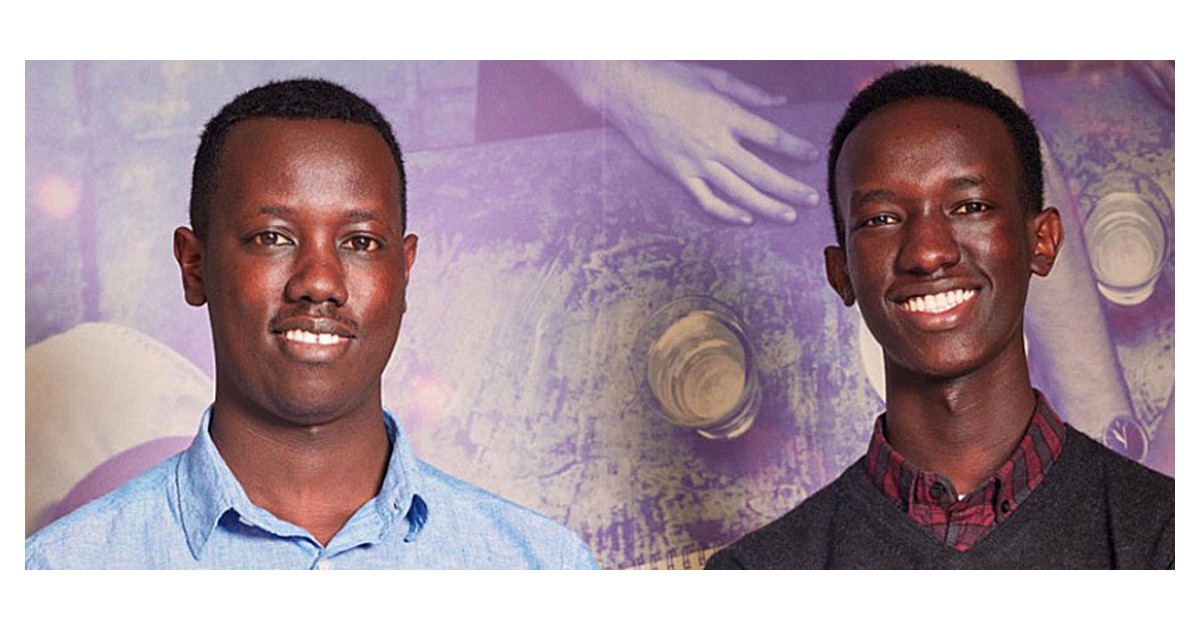
Then there’s Kayko, founded by two brothers, Kevin and Crepin Kayisire, who watched their mother struggle to access capital for her small catering business. “Banks said she was too risky, too small, didn’t have proper books,” one of the co-founders recalled. Today, Kayko has onboarded 8,500 businesses, with 500 of them paying monthly subscriptions. Their platform uses simple bookkeeping tools to help small businesses formalize their operations and build the financial history they need to access loans. The impact became real when we visited a local merchant using Kayko. “Before we were using paper, reports could fall or disappear,” the business owner explained. “Now it’s automatic from the system, and I can easily reconcile transactions. When I need to show the bank my records, everything is there.” Kayko’s approach is already attracting additional capital. After receiving support from the program, they secured a $500,000 investment from a South African angel investor, followed by funding from Luxembourg’s development fund and negotiations with a German funded firm investing in EAC— for a total of over $1.2 million, demonstrating how initial grant support can catalyze larger investments.
In the telematics space, SAWA Telematics is revolutionizing fleet management. Their hardware device, installed in vehicles, tracks driver behavior, fuel consumption, and maintenance needs in real-time. Fleet managers pay RWF12,000 ($9) monthly per vehicle for the proprietary software while SAWA retains ownership of the hardware—a sustainable model that’s gaining traction with transport companies across Rwanda.
Building the Support System
Startups don’t succeed in isolation—they need mentorship, networks, and business support to grow. That’s why the program takes a two-pronged approach: funding promising startups directly while also strengthening the entrepreneurship support organizations (ESOs) that nurture them. Catherine Njane from Rwanda Information Society Authority (RISA), who manages the program implementation, emphasized how the program’s flexibility has been key to its success. “We started with a pilot cohort to really understand what works and what doesn’t,” she explained. “That learning allowed us to refine our approach before scaling up to subsequent cohorts.”
Allan & Gill Gray Philanthropy Rwanda (AGGPR), another ESO, exemplifies the regional potential. Through their talent investor program, JASIRI, AGGPR has supported 320 individuals, incubating 108 active ventures across Rwanda, Kenya, and Ethiopia. “What we do is tailored community support,” their partnerships manager Aline explained. “Once entrepreneurs complete our 13-month program, we continue connecting them to resources and partners. They can still get follow-on support from other incubators, but JASIRI will always be part of their community.” AGGPR is receiving funding through the ESO Performance-based Grant Program to support their initiatives to enhance their capabilities in program delivery.
Meanwhile, Norrsken is pioneering a unique approach within the ecosystem: investment banking for startups. “We noticed companies with $2 million contracts that couldn’t access the $500,000 needed to deliver,” explained Pacific Tuyishime, their Chief Investment Officer. By blending grant capital with bank financing and structuring innovative deal frameworks, they’re unlocking transactions that neither traditional banks nor Venture Capitalists would touch alone. “We’re not reinventing the wheel—we’re bringing financial structuring principles that work elsewhere and adapting them to Rwanda’s context.”
The flexibility to support ESOs in developing these different, tailored approaches—rather than imposing a one-size-fits-all model—has been crucial to the program’s early success.
What’s Next
Leaving Kigali, I’m energized by what I’ve seen and clear-eyed about the challenges ahead. The program’s success will ultimately be measured not by money disbursed, but by sustainable businesses created, jobs generated, and problems solved.
The team is now focusing intensely on impact measurement and learning. “Now that we’re out of the woods in terms of implementation and committing funds, it’s time to focus on impact metrics,” one team member shared. “We’re measuring where we are on each indicator, understanding where we’re falling short, and developing strategies to improve.”
For those working on similar programs elsewhere: Rwanda’s experience shows that successful ecosystem building requires starting with a pilot, learning genuinely from that experience, and having the flexibility to adapt as you scale.
What challenges have you encountered supporting digital entrepreneurs in your context? Share your experiences in the comments below, or reach out if you’d like to learn more about Rwanda’s approach.
This blog was drafted by Justine White, with inputs provided by Kasia Jakimowicz, Magnifique Ishimwe, Catherine Njane, Isabella Hayward, Charlotte Mutesi and Cecilia Paradi-Guilford